
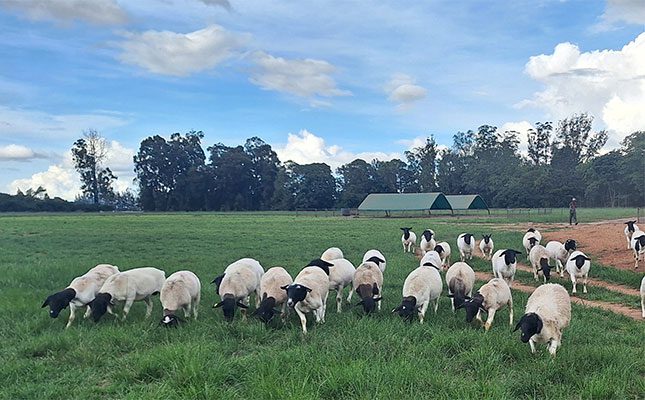
Zimbabwe Dorper Sheep Breeders Association chairperson William Hundermark told Farmer’s Weekly that Matabeleland had never hosted a Dorper sale before the one held on 28 November 2025 in Bulawayo.
He explained that during the land redistribution programme, Zimbabwe lost many of its established stud breeders through emigration. This affected the national stud industry, including the Dorper breed.
More recently, repeated outbreaks of foot-and-mouth disease have resulted in movement restrictions to contain the disease, which meant large livestock gatherings could not take place.
A major milestone
Hundermark added that the recent sale was a significant milestone and that it performed exceptionally well, beyond what was anticipated for a first-time auction.
“The top registered Type 5 ram sold for US$2 000 (around R33 864), and several others sold in the range of $1 800 to $1 850 (R30 476 to R31 322). Many rams achieved $1 500 to $1 550 (R25 397 to R26 244), and even the Type 4 unregistered rams made between $1 000 and $1 500 (R16 932 to R25 397). The Type 3 rams ranged from $600 to just over $1 000 (R10 159 to R16 932,” he said.
“For a sale with no prior track record in the region, these prices were phenomenal.”
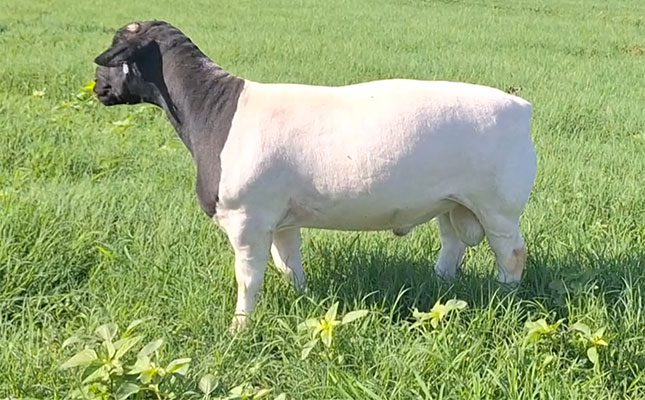
To put it in context, at the Zimbabwe Herd Book National Breed Sale in July 2025, the national Dorper ram price record was broken when a ram from Hundermark’s Northern Dorper Stud in Goromonzi in Mashonaland East province sold for $4 300 (R72 808), he explained.
The average ram price was around $2 700 (R45 716), while ewes sold for $550 to $600 (R9 312 to R10 159), with the top ewe reaching $700 (R11 853).
“What this tells us is that across Zimbabwe, demand for quality Dorper genetics is climbing sharply. Farmers are seeing the value in small-stock, and Dorpers keep proving themselves year after year,” he said.
Demand for breeding ewes, rams rises
Hundermark said demand for Dorpers is growing, especially for breeding ewes, and shortages are already being experienced.
He added that demand for rams has also risen steadily over the past three years at auctions and in private farm-to-farm sales.
If growth continues at this pace, the country may soon face a shortage of quality rams unless more breeders enter into the industry.
According to Hundermark, the Dorper breeders association has nearly 80 members, a significant increase from the six it had at its inception in 1958, and most are crossbreeders.
“Several more [members] are expected to register within the next 12 months. Compared to 10 years ago, the breed has grown remarkably in strength, quality, and national footprint,” he added.
Dorper sheep breeder Rose van de Ruit, who started in 1998 with 20 sheep and now has a flock of more than 400, brought Type 5 stud rams to the Matabeleland Dorper sale.
She said her flock is run with careful adherence to strict vaccine and dosing regulations and on a good nutrition programme, adding that for some years now, she has been growing her own maize silage.
“Over the years, I have learnt the importance of selective mating and the role genetics plays in the breeding of good animals,” De Ruit said.
She added that people’s attitudes in Zimbabwe are changing, as they now view sheep breeding as a farming enterprise that’s worth pursuing.
In line with these shifting attitudes, Hundermark said farmers prefer Dorpers, as they are exceptionally well-suited to Zimbabwe’s production conditions.
Amid the turnaround, some challenges persist
However, according to Hundermark, farmers face many challenges, including rising feed costs and shortages of vaccines when they’re needed most.
Part of the problem lies in poor planning at farm level, with many farmers delaying ordering vaccines until disease pressure is already high. By then, suppliers often have limited stock because they are reluctant to hold large quantities that might expire before they can be used.
“Access to land [is another issue], and a significant number of breeders are renting land or grazing space. This immediately increases their variable costs and pushes their cost of production up.
“Secure land tenure would greatly stabilise operations, reduce overheads, and improve long-term planning,” he added.
He said that at present, there is no meaningful finance scheme available for small-stock breeders, whether stud or commercial.
Access to credit for infrastructure, breeding stock, genetics, and pasture development is extremely limited, and without tailored financial products, the industry’s growth is naturally constrained.
“Overall, these challenges are real, but they can be solved with coordinated planning, industry unity, and supportive national policy,” Hundermark concluded.