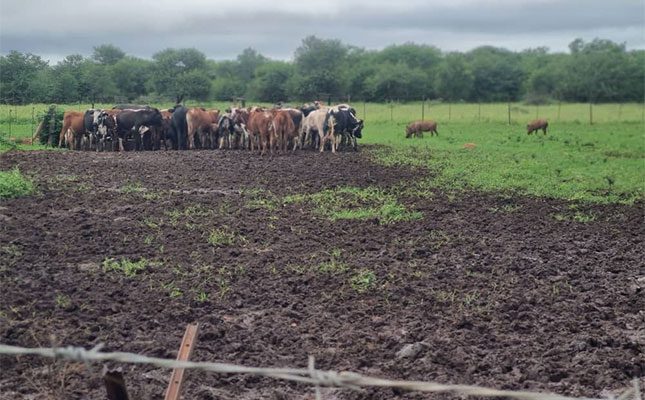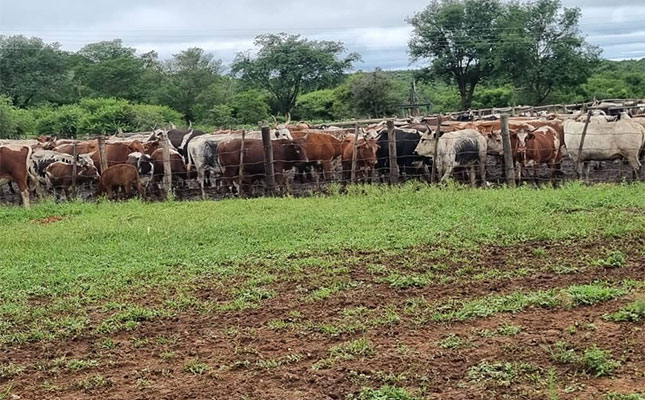


On 25 November 2025, the Bulawayo High Court in Zimbabwe heard a case in which South African farmer Dave Joubert is seeking to reclaim Portwe Farm in Bubi District, Matabeleland North, from where he was evicted by police in July 2007.
The court heard that Joubert previously carried out hunting and safari activities, as well as conventional farming, including vegetable production, on the land.
Police defied order to vacate farm
Joubert’s lawyer told the court that in November 2007, High Court Justice Nicholas Ndou issued an order requiring the law enforcement agents to vacate the farm.
Despite this, they remain on the property and have engaged in crop farming, animal husbandry, and tourism, forcing Joubert to return to court to have them held in contempt of Ndou’s order and to seek their eviction.
Before taking this action, Joubert spent years negotiating with the authorities. At one point, he proposed a compromise with the state through the Joint Venture Conservancy Project, originally approved by the government in 2000, which would have involved him, international investors, and local communities in a major tourism initiative. However, according to court papers, the Attorney General’s Office did not respond to his proposal, forcing him to seek legal recourse.
The case, in which the farmer says equipment and property he was forced to leave on the farm has fallen into disuse due to neglect, serves as a test of Zimbabwe’s commitment to the rule of law and respect for property rights, violated under Mugabe’s rule and which led to the flight of farmers from the country.
Speaking to Farmer’s Weekly, Bulawayo lawyer Josphat Tshuma, representing Joubert, said High Court Judge Justice Nokuthula Moyo, presiding over the current case, had reserved judgment after police opposed their eviction.
The Civil Division in the Attorney General’s Office, which represented the police, said it does not comment on matters before the court.
Meanwhile, Joubert is one of thousands of South African farmers still fighting to reclaim their properties or receive compensation after Mugabe launched the land reform programme more than two decades ago.
Mugabe’s successor, President Emmerson Mnangagwa, has introduced a scheme to compensate those affected, and in April 2025, the government announced that payments to dispossessed farmers had begun.
Under the current policy, foreign investors protected by Bilateral Investment Promotion and Protection Agreements (BIPPAs) signed before 2000 will be compensated for land and improvements made to the farms, while white Zimbabweans receive compensation only for improvements. South Africans, however, are treated like white Zimbabwean farmers under a separate arrangement.
Both groups are being offered a 10-year payment plan: 1% of the total in cash, with the remainder in Treasury bills over a decade.
Another South African, Mike Odendaal, said he lost five farms between 2000 and 2010. He had bought four of them before Zimbabwe’s independence and inherited another that had been in his family since 1923.
“In 2000, in the spirit of land reform, we offered one farm to the government, provided they let us continue our other enterprises. They initially agreed but later reneged,” he said.
Odendaal added that his operations included beef and dairy herds, coffee, macadamias, and tobacco across several irrigated farms.
“We lost our home, business, insurance, and pension overnight. All our personal effects, farm equipment, and vehicles were stolen,” he said.
Odendaal said the South Africa-Zimbabwe BIPPA excludes payment for land, unlike agreements with other foreign investors. “The Zimbabwean government needs to stop discriminating when it suits them. Everyone needs to be treated the same for compensation or restitution.”
Theo de Jager, executive director of the Southern African Agri Initiative, told Farmer’s Weekly that as many as 1 400 South African investors were affected by Zimbabwe’s land seizures. The South Africa–Zimbabwe BIPPA, signed in November 2009, does not protect claims that arose before that date.
“BIPPA holders from other countries receive full payment for fixed improvements, land, and interest, while others are treated as third-class citizens.
“The government of Zimbabwe has made token payments and disjointed agreements that disregard farmers’ rights. Farmers have only one option: take it or leave it,” he said.
Destitute SA farmers accept unfair compensation
De Jager added that about 50 destitute South African farmers have reluctantly accepted the compensation terms.
“They are sick, they are in bed, and they cannot pay for their medicine at the end of the month, so they would accept anything,” he said.
De Jager urged the government of Zimbabwe to treat all investors equally and implement legal reforms that would unlock international funding and restore confidence in the country by protecting property rights.
Zimbabwean farmer Ben Freeth, whose late father-in-law Mike Campbell owned Mount Carmel Farm in Chegutu, said Zimbabwean and South African farmers alike were subjected to “a kind of apartheid discrimination”.
When the Southern African Development Community (SADC) Tribunal ordered Mugabe’s government to allow Campbell to continue farming, the government rejected the ruling and engineered the tribunal’s disbandment.
“The SADC Tribunal served 400 million people as a court of last resort. President Mugabe’s decision to stop the court was a huge blow for human rights, democracy, and the rule of law in the region,” Freeth concluded.