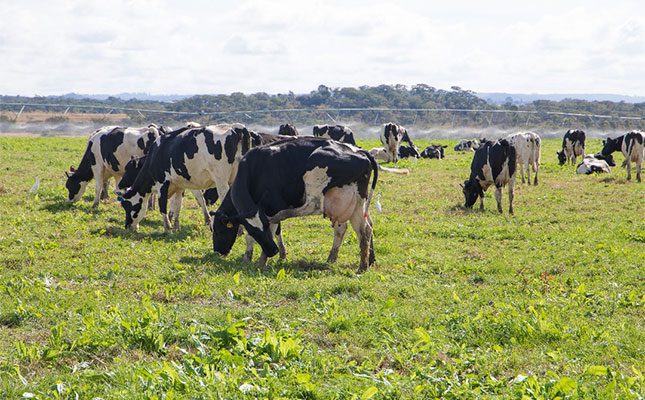
Zimbabwe Association of Dairy Farmers (ZADF) chairperson Edward Warambwa told Farmer’s Weekly that in 2024 the country produced 115 million litres of milk, against the national milk requirement of 130 million litres per annum.
Warambwa said the sector reached its peak in 1990, producing 262 million litres. During that year, the country’s milking herd stood at 50 314 cows, and this year it numbers 34 615 cows, he added.
Growth trend in milk production
“We are expecting milk production to continue on a growth trend in 2025. The target is to attain a 15% growth from the output of 2024 to reach a total milk output of 132 million litres, which is enough to meet Zimbabwe’s annual milk requirement,” Warambwa said.
The increase in milk production can be attributed to a good 2024/25 rainfall season, which improved reliable feed and water access. Moreover, farmers continue to adopt cost-effective ways of maximising milk yields at the lowest possible feed cost. Also, the constant provision of government extension services on dairy production, genetics, animal health and nutrition has helped to boost yields.
“We are confident that if pressing issues relating to milk pricing, cost of feed, and power challenges are addressed, coupled with good rainfall, milk production will continue on a growth trajectory,” Warambwa said.
The cost of production has continued to go up over the years from around 56c/litre (R9,39) in 2021 to the current 63c/litre (R10,56). Producer prices over the period have not responded, but have remained at an average of 60c/litre (R10,06), and even went down to 58c/litre (R9,72) in June this year.
Retail prices over the period have fluctuated from around Z$1,10/litre (R18,44) in 2021 to a high of Z$1,75/litre (R29,34) in 2024, and currently averages Z$1,35/litre (R22,64).
Warambwa said supporting dairy farmers through improved infrastructure, technology, and training is crucial for enhancing efficiency, sustainability, and profitability in the industry.
Investments spur milk production
Warambwa said medium- and large-scale farmers are investing in modern barns and housing with improved ventilation, comfortable bedding, and climate control in efforts to help reduce animal stress, improve cow welfare, and increase milk production.
“Some farmers are investing in upgrading of milking parlours with modern, efficient systems like rotary parlours to improve efficiency while ensuring milk quality. Other investments through development partner support for small-scale farmers are being channelled towards an improved cold chain, like efficient bulk milk coolers and solar systems, which are essential for maintaining milk quality and safety from the farm to the processor,” he added.
He said the ZADF, in collaboration with the Livestock Department in the Ministry of Lands, Agriculture, Fisheries, Water and Rural Development and other stakeholders, are offering ongoing training programmes for farmers, providing best practices in dairy production, business management, animal husbandry, breeding, nutrition, hygiene protocols, and disease prevention. The training helps farmers adopt the latest, most effective farming techniques.
Breeding strategy supports dairy breeders
There is ongoing adoption of new breeding technologies in Zimbabwe, which include artificial insemination programmes. Work and research is also ongoing to ensure semen harvesting technology is adopted on dairy farms, as well as ensuring increased use of modernised pregnancy diagnosis equipment.
Research is also being done on the use of robotic milking systems and how they can assist the industry in improving efficiency in terms of milking, quality testing and grading.
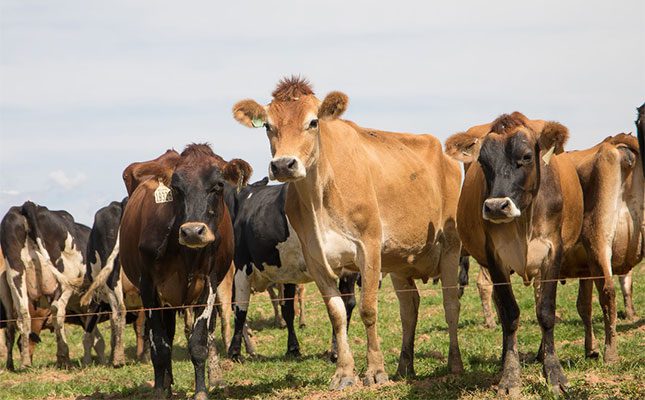
Warambwa said 12 representatives from the ZADF recently embarked on a week-long tour to Australia. The group visited leading research institutions as well as farms with Holstein, Jersey, Australian Red and crossbred animals.

“The group engaged in discussions on breeding strategies in Australia as well as feeding and management, with the objective to see how best to help improve the genetics and productivity of dairy farming in Zimbabwe,” he added.
The ZADF is also actively involved in lobbying relevant decision-makers and agencies to protect and serve the interests of all classes of farmers, and this includes imploring the relevant authorities to help reduce the cost of production and promoting farm feed production and formulation by dairy farmers to cut expenses.
Lands, Agriculture, Fisheries, Water and Rural Development Deputy Minister Davis Marapira told Farmer’s Weekly that the confidence which farmers have in the country’s land tenure system is pushing them to invest more in the sector.
“This confidence aids milk production. Investing in heifers is a long-term thing; it takes time to build a herd. The population of our heifers had gone down. We’re allowing some heifer imports from South Africa,” Marapira said.
Since President Emmerson Mnangagwa came to power in November 2017, stability has been returning to the agriculture sector, with farm invasions that brought instability coming to an end.