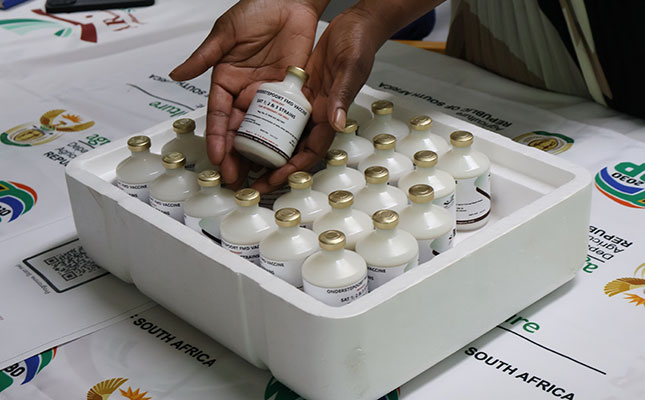
The Onderstepoort FMD Vaccine, developed and produced by scientists and technical experts at the ARC Onderstepoort Veterinary Institute (ARC OVI) Transboundary Animal Diseases Campus, marks the first time South Africa has manufactured its own FMD vaccine for local use.
A total of 12 900 multi-strain doses have been released in this initial batch. Until now, South Africa has relied largely on imported vaccines to manage outbreaks.
Speaking on behalf of the FMD vaccine production team in a press statement, Dr Faith Peta said the release of the vaccine was the result of long-term investment in local science and infrastructure.
“This first batch represents many years of research and commitment. While production is still at a small scale, it shows that South Africa has the capability to develop safe and effective vaccines that meet regulatory standards and respond to local disease challenges,” she said.
According to Peta, two decades of research and government support culminated in the vaccine being registered as a stock remedy under the Fertilizers, Farm Feeds, Seeds and Remedies Act (No. 36 of 1947) and the vaccine meets required quality, safety and efficacy standards.
She said local production offers several advantages, including faster response times during outbreaks, closer matching of vaccine strains to those circulating in the region, and improved control over supply.
Peta said design work has also been completed on a new production facility, which is intended to support future vaccine self-reliance in line with government disease-control plans.
Industry stakeholders have welcomed the development, but have also highlighted ongoing challenges.
Speaking to Farmer’s Weekly, Dr Mark Chimes, manager of the Animal Health and Welfare Programme and veterinary adviser for Milk South Africa (Milk SA), said Milk SA welcomes the production of the first 12 900 doses of FMD vaccine.
“We congratulate them on the massive effort they obviously put into delivering the vaccine a month sooner than originally anticipated. According to reports, it is an excellent vaccine that provides strong immunity against circulating strains of the FDM virus in South Africa. We trust that production will increase rapidly to assist farmers in the current outbreak.”
He said however, the ARC “squandered” the world-class lead in FMD vaccine production that OVI-TAD had until 2010.
“If we had an operational production facility, South Africa could have prevented the disastrous levels the current FMD outbreak has reached. This crisis has highlighted how dependent the country’s food security and economy are on a well-funded and efficient state veterinary service to ensure animal disease control.
“The next question is, who is going to receive vaccines first? The volumes of the Onderstepoort vaccine fall far short of the required amount. However, the Dollvet vaccine should reach us shortly, with the BVI and Biogenesis vaccines to follow. As much as I would like to see dairy farms given priority, given the severity of symptoms in dairy cattle, this cannot be done at the expense of other animal production enterprises, such as beef or stud farmers.”
He said in certain circles, there are calls to use the initial doses of the Onderstepoort vaccine to pre-emptively vaccinate the herds of cattle kept at Kaalplaas, which are used to produce blood vaccines for heartwater, redwater and gall sickness.
“FMD outbreaks are creeping closer to these herds. Should Kaalplaas become infected, production of these vaccines would cease, leading to additional livestock losses from these disease at a time when cattle farmers can least afford it. Another concern is the cloven-hoofed animals at the University of Pretoria’s Veterinary Faculty in Onderstepoort, where future veterinarians are trained. These are the scientists of tomorrow who would need to prevent and control similar outbreaks of animal diseases. We cannot afford for these facilities to be quarantined.”
Wandile Sihlobo, Agbiz chief economist, said the outbreak has spread aggressively since 2019, affecting eight of the country’s nine provinces and severely disrupting the commercial livestock value chain in many areas.
“The disease will result in lost gross production value and affect animal welfare. The emotional toll on livestock and dairy producers is massive. Many producers will face financial disaster. Speeding up and scaling up the domestic vaccine production is key. The ARC’s efforts are appreciated, but more work is needed. We also need to accelerate the imports. There is a real crisis on the ground.”
@farmersweeklysa @ARC South Africa has taken a major step in South Africa’s fight against a widespread, costly foot-and-mouth disease (FMD) outbreak, releasing the first batch of a locally produced FMD vaccine. The vaccine, developed and produced by scientists and technical experts at the ARC-Onderstepoort Veterinary Institute of Transboundary Animal Diseases. A total of 12 900 multi-strain doses have been released in this initial batch. Dr Faith Peta, chief research technician in the Vaccine Production Programme for Onderstepoort Veterinary Institute, said the release of the vaccine was the result of long-term investment in local science and infrastructure. “This first batch represents many years of research and commitment. While production is still at a small scale, it shows that South Africa has the capability to develop safe and effective vaccines that meet regulatory standards and respond to local disease challenges,” she said. Visit farmersweekly.co.za to read the full article. #FarmersWeeklySA #agriculturetiktok #footandmouthdisease #fmdvaccine #onderstepoort ♬ Education, science, technology, quiet(855385) – zomap