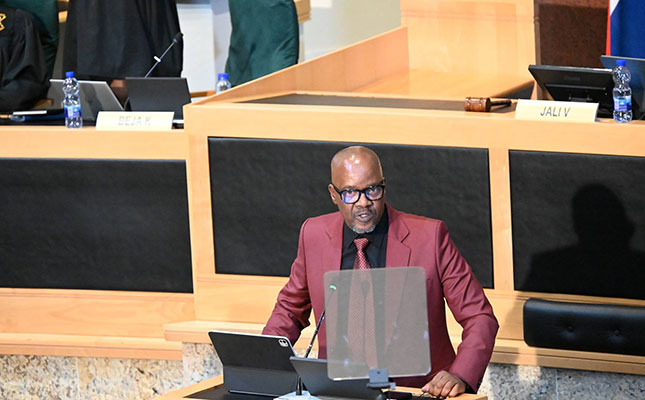

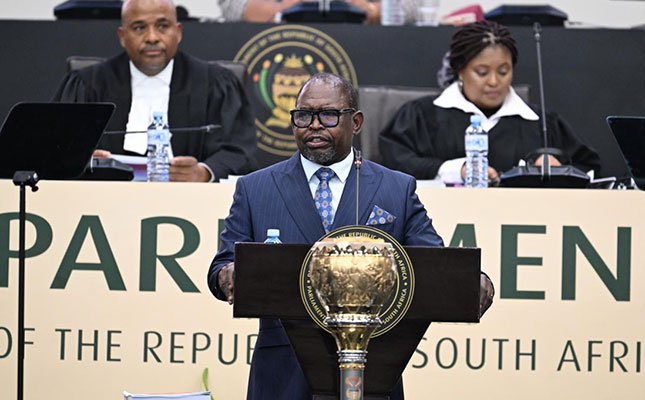
This was according to Finance Minister Enoch Godongwana, who delivered the 2026 Budget Speech in Parliament on Wednesday.
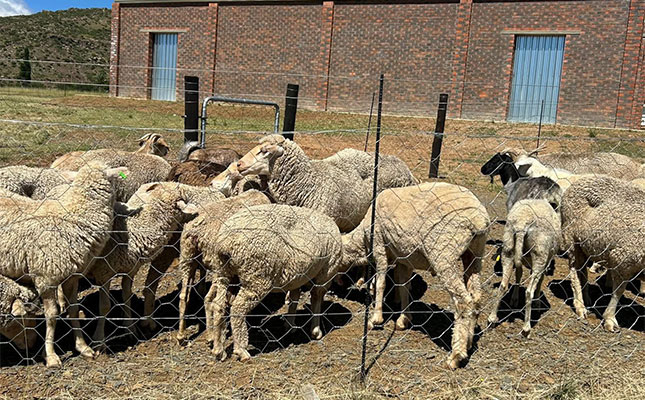
However, he warned that persistent logistics bottlenecks, weak public infrastructure, and the foot-and-mouth disease (FMD) outbreak continue to weigh on economic activity.
He said the 2026 budget is aimed at restoring fiscal stability while carving out space for economic growth, infrastructure investment, and structural reform.
With government debt set to stabilise for the first time in 17 years, government is focusing on containing spending pressures, accelerating public investment, and addressing bottlenecks in energy and logistics, while maintaining support for agriculture and land reform.
Good news for consumers is that the proposed VAT increase put forward in the May 2025 Budget, and scheduled for implementation this year, has officially been withdrawn. Godongwana said this was due to higher tax revenue over the past year.
For 2025/26, gross tax revenue was revised up by R21,3 billion compared with the estimate in the 2025 budget.
Consolidated government expenditure is projected to increase from R2,58 trillion in 2025/26 to R2,89 trillion in 2028/29, with education remaining the largest item, accounting for 23,2% of total spending over the medium term.
Capital payments, mainly linked to infrastructure spending, are the fastest-growing category, rising by 9,7% over the period ahead.
Structural reforms
Godongwana said structural reforms will continue to be pushed in key sectors to boost economic growth. In energy, reforms are aimed at stabilising electricity supply and building a competitive and reliable market.
“Regulatory changes have opened the door to greater private investment, speeding up new generation capacity and supporting the shift towards renewable power,” he said.
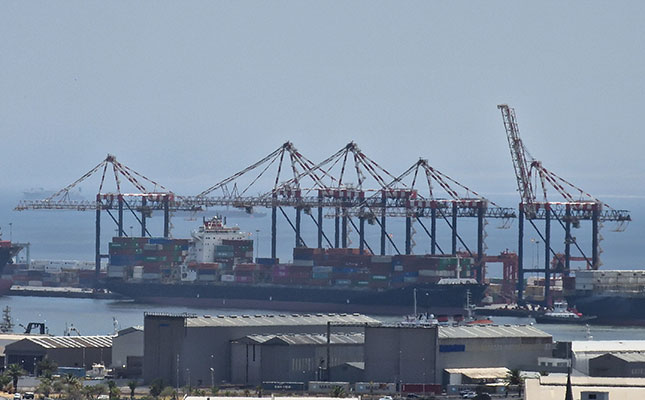
In logistics, reforms are focused on rail and ports, where inefficiencies have constrained exports and driven up costs. Government intends to increase public-private investment in rail operations while keeping rail infrastructure in state hands, with the aim of moving goods faster, more reliably, and at lower cost.
At local government level, reforms include shifting to a performance-linked utility model for water and electricity services.
Excise duties increases
Excise duties and fuel levies for 2026/27 will increase in line with inflation:
- The tax on a 20-pack of cigarettes will rise from R22,81 to R23,58.
- Pipe tobacco will rise by R0,28 per 25g.
- Cigarette tobacco will rise by R0,87 per 50g.
- A 340ml can of beer or cider will increase by R0,08.
- A 750ml bottle of wine will increase by R0,15.
- A 750ml bottle of spirits will increase by R3,20.
- The general fuel levy will increase by R0,09/ℓ for petrol and R0,08/ℓ for diesel.
- The carbon fuel levy will increase by R0,05/ℓ for petrol and R0,06/ℓ for diesel.
- The Road Accident Fund levy will increase by R0,07/ℓ.
Agriculture expenditure
The Estimates of National Expenditure released with the budget indicate that the Department of Agriculture’s (DoA) expenditure is expected to increase at an average annual rate of 1,9%, from R7,9 billion in 2025/26 to R8,4 billion in 2028/29. Transfers and subsidies account for 57,2% of projected spending over the medium term, while compensation of employees makes up 21,3%.
Over the medium term, the DoA will focus on research and development to improve market access, reduce biosecurity risks, and strengthen production.
To curb animal diseases and plant pests and ensure compliance with export standards, annual surveillance will be conducted for three major animal diseases – FMD, goat plague, and Newcastle disease – and three plant pests: exotic fruit fly, citrus greening, and banana bunchy top virus.
The Animal Production and Health subprogramme was allocated R1 billion over the medium term, while the Plant Production and Health subprogramme received R443,5 million.
Access to primary animal health services will be strengthened through the deployment of 155 veterinary graduates to rural areas by March 2028 as part of their compulsory community service.
Onderstepoort Biological Products was allocated R580,1 million over the medium term to develop and produce new vaccines and improve availability. This will also include the opening of 18 new distribution points.
Land reform and rural development
The Department of Land Reform and Rural Development’s expenditure is projected to increase at an average annual rate of 1,8%, from R10,5 billion in 2025/26 to R11 billion in 2028/29. Transfers and subsidies account for 41,4% of spending over the period, including R8,3 billion for land reform and restitution grants and R3,5 billion for entities.
Over the medium term, R8,2 billion has been allocated to settle about 985 land restitution claims. The department plans to allocate 144 000ha of strategic land for redistribution at an estimated cost of R4,6 billion, prioritising suitable state land and fair beneficiary selection. In addition, 869 outstanding land claims lodged before 1998 are set to be finalised at an estimated cost of R11,9 billion over the medium term.
For farmers, the budget signals steady albeit limited growth in agricultural spending, alongside a stronger focus on biosecurity, land reform implementation, and infrastructure reforms aimed at improving the broader operating environment.