
Lindi Botha

Lindi Botha is an agricultural journalist and communications specialist based in Nelspruit, South Africa. She has spent over a decade reporting on food production and has a special interest in research, new innovations and technology that aid farmers in increasing their margins, while reducing their environmental footprint. She has garnered numerous awards during her career, including The International Federation of Agricultural Journalists (IFAJ) Star Prize in 2019, the IFAJ-Alltech International Award for Leadership in Agricultural Journalism in 2020, and several South African awards for her writing.
Latest articles

FMD will never be controlled on the current path, farmers warn
South Africa faces the prospect of living with foot-and-mouth disease (FMD) indefinitely unless government urgently improves disease surveillance, and farmers take greater responsibility for reporting infections and vaccinating their herds.
Sugar industry needs protection, not just diversification
South Africa’s sugar industry needs urgent intervention to restore profitability and protect its future, as cheap imports, the sugar tax, and underinvestment in sugar mills threaten the viability of growers and millers alike.

Royal Show returns with an eye on the next generation
After a two-year absence, the Royal Agricultural Society opened the gates to its new home at Tweedie Hall in Howick, KwaZulu-Natal, on Wednesday, marking the start of a new chapter for one of South Africa’s oldest agricultural shows.
New markets no quick fix for SA’s growing avocado crop
South Africa’s growing avocado crop faces a tougher marketing environment this season as heavy competition in the EU squeezes prices, while newly opened markets remain too small to absorb significant volumes.
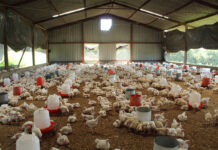
Layers or broilers: choose the business before the bird
Broilers offer a short production cycle, while layers provide a regular stream of eggs, but neither guarantees easy profits. Feed, markets, infrastructure, and management can quickly erode margins. Farmers need to know not only what it costs to produce a bird or egg, but exactly how they will sell it before investing.
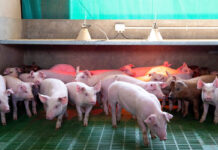
Pig welfare and farmers’ profitability find common ground
Opening the doors of a commercial piggery to a group of NSPCA inspectors could make any farmer apprehensive. But when inspectors visited Taaibosch Piggery to conduct training for NSPCA staff, the exercise offered both sides an opportunity to test perceptions against what was actually happening inside a farm.
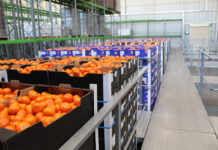
Fruit industry must turn rising volumes into better returns
South Africa’s fruit export industry is entering a new phase in which producing more fruit is no longer enough to secure stronger returns, with market access, logistics, and the timing of exports becoming increasingly important for profitability.
Timing could be farmers’ best defence against price shocks
In an increasingly volatile operating environment, farmers can protect their margins by paying closer attention to when they buy inputs and market their produce, according to Absa’s AgriTrends 2026 Spring Edition report.
Farmers cannot carry regenerative agriculture costs alone
Farmers could not be expected to shoulder the financial risk of transitioning to regenerative agriculture regenerative agriculture on their own, with financiers, retailers, and technical partners needing to help make the shift commercially viable.
Farmers urged to chase profit, not tons
Farmers need to shift their focus from maximising production to maximising profit as tightening margins leave increasingly little room for financial inefficiency, according to Dawie Maree, head of agriculture information and marketing at FNB.
Nampo Cape builds momentum as farm pressures mount
Nampo Cape continued to prove its value as a meeting place for agriculture on Friday, as industry leaders grappled with mounting pressure on commodity prices, government support for emerging farmers and the challenges facing food production.

Voters urged to put delivery before party loyalty to protect rural economies
South Africa’s municipalities needed to be judged on their ability to deliver basic services rather than political promises, as failing towns increasingly threatened the communities and businesses that depended on them.

Wheat industry ‘heading for tragedy’ without urgent reform
South Africa’s wheat industry was heading towards a tragedy unless long-standing structural problems were urgently addressed, with producers warning that it should not have taken a crisis to force reform.

Worst El Niño yet? SA agriculture enters from strong base
Farmers can no longer rely on historical patterns to guide decisions in an increasingly unpredictable agricultural environment, making access to timely market, weather and geopolitical information more important than ever.

‘Agriculture’s tiny budget shows where government’s priorities lie’
During a recent panel discussion on the Land Bank’s role in financing agriculture held at Nampo Cape 2026, panellists warned that inadequate funding and support for agriculture were undermining efforts to develop new farmers and grow the sector.
Plunging prices leave little to celebrate on World Macadamia Day
Friday, 4 September, marks World Macadamia Day, but the industry has little to celebrate this year. Growing global volumes have yet to be matched by demand, leading to price decreases and uncertainty over when nuts will be sold.
RCL’s revenue drops 4,1% as consumer demand continues to decline
Pressure on cash-strapped consumers and mounting challenges in agricultural markets converged in RCL Foods’ (RCL) latest results, contributing to a sharp decline in earnings for the year ended June 2026.
How smarter breeding is reshaping tomorrow’s crops
From crops that can better withstand extreme weather to varieties that stay fresher for longer or require fewer inputs, plant breeding is undergoing a technological revolution. Advanced sensors, big data, and precision gene editing are giving breeders powerful new tools to develop the next generation of crops.

Anton Pelser: bringing youthful energy to innovation
In a world of decreasing farm margins, every hectare, every input, and every rand invested must earn its place. This is the philosophy that guides Anton Pelser, the Agri Mpumalanga Young Farmer of the Year 2026. He spoke to Lindi Botha about the data, discipline, and long-term thinking that guides every decision.
Why electric tractors aren’t yet viable for SA farmers
Electric tractors are often promoted as the future of farming, promising lower emissions and reduced fuel costs. But while the technology continues to advance abroad, industry experts say the economics simply don’t add up for South African farmers.