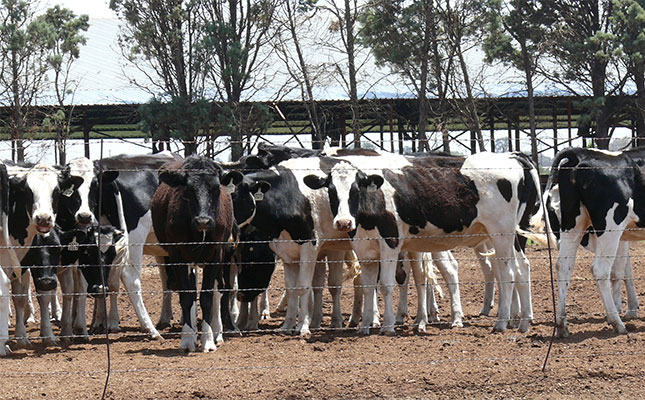

Reflecting on the programme, many believe the phased implementation will not get the rapid spread of the disease under control quickly enough, and that farmers will continue to suffer under severe financial pressure while the DoA implements a decade-long supply programme.
In a press statement, Nick Serfontein, chairperson of the Sernick Group, said: “The livestock industry is deeply concerned that FMD is being managed as a technical veterinary issue rather than the national crisis it has become.”
Although Steenhuisen has announced that the DoA will be tabling a Cabinet memorandum declaring FMD a national disaster, no current guarantees have been made to ease farmers’ concerns about the priority of vaccine distribution and possible compensation for extreme losses already incurred.
Agri North West CEO Naudé Pienaar issued a statement pleading with state representatives to meet with industry heads and financial institutions to discuss the financial implications on farmers.
Request of decentralised control
According to a statement from TLU SA, the livestock industry is concerned that the proposed strategies stretch the vaccination programme over 10 years, directly undermining efforts to curb cattle losses and threatening South Africa’s food security.
The organisation also believes that regulatory and administrative delays will make vaccine distribution inefficient, exacerbating the crisis.
“The state continues to cling to centralised control but simply does not have the ability to apply it at the scale required. The private sector stands ready with capacity, expertise, and infrastructure. What is lacking is the political will. Time is a luxury we no longer have,” the statement read.
Frik van Rooyen, Eastern Cape chairperson of the Red Meat Producers’ Organisation (RPO), concurred, saying there is no industry representation in the task team, which he believes will discourage cooperation between the industry and state.
“The industry stands on four legs: the primary producer, the upcoming producer, the feedlot unions, and the abattoir unions. None of these are being directly represented. We do not see how the task team will take action as swiftly as needed without the insight of these sectors,” he explained.
Access to reliable vaccines
Responding to the announced vaccine rollout timeline, Angus Williamson, vice-president of Kwanalu and second vice-chairperson of the national RPO, said the rollout plan makes unsustainable claims, questioning why imported vaccine samples were not sent to the Pirbright Institute in the UK for testing before the announcement.
“The industry requested testing in May 2025 for imported FMD vaccines. We still have no concrete progression. A large part of the vaccine updates given [at the briefing] were frustratingly similar to the statement released in November 2025,” he said.
Williamson has seen the worst of the country’s FMD outbreaks first-hand in KwaZulu-Natal. He believes the risk would decrease dramatically if government allowed FMD vaccines to be supplied directly to farmers, enabling widespread administration within a short period, similar to the brucellosis vaccine.
He added that traceability and surveillance could still be maintained without complete state control by allowing certified private and state veterinarians to supply vaccines to producers under oversight.
“In my experience, state veterinarians have done fantastically. Their service is reliable, but with the level of government administrative backlog and delays that will likely occur in the vaccine distribution process, the veterinarians will not be able to do their job. We need the private sector to step in,” he said.
North West RPO Chairperson Nico Kilian agrees that slow processing through government entities needs to be evaluated. He added that lengthy laboratory turnaround times for FMD tests are a major contributor to the rapid spread of the disease, leading to uncertainty among producers and bringing their operations to a standstill while they wait for test results.