
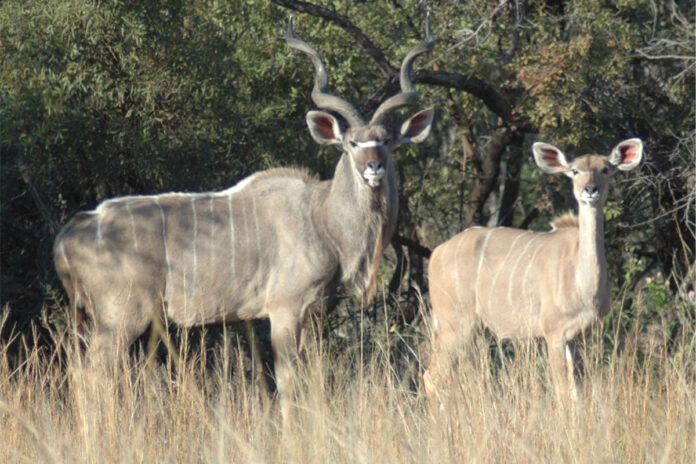
Between 5% and 10% of the kudu population at Addo Elephant National Park (Addo) near Gqeberha in the Eastern Cape is showing signs of lameness following the confirmation of FMD in two of the animals.
Speaking to Farmer’s Weekly, South African National Parks (SANParks) veterinarian Dr David Zimmerman said red hartebeest and eland had also developed clinical signs, although FMD infection had not been confirmed in these species.
He added that the entire park, covering approximately 180 000ha, is under quarantine as veterinary authorities monitor the outbreak and assess the risk to other susceptible wildlife, particularly buffalo.
Infection detected near park boundary
According to Zimmerman, FMD has progressively spread southwards from the Eastern Cape’s northern border. In July, the disease was detected on a property in the Paterson area, near Addo’s north-eastern boundary.
“Wildlife in areas that were previously free of FMD have become infected through exposure to infected livestock,” Zimmerman said, adding that the specific source of infection in Addo had not been established.
SANParks confirmed the outbreak on 13 October after follow-up diagnostic testing returned positive results.
Zimmerman said a kudu bull and cow, both displaying lameness, a common sign of FMD, were sampled on 1 September and tested positive. A warthog sampled on the same day tested negative.
Initial investigations were prompted by increased lameness among kudu detected through SANParks’ wildlife health surveillance programme. The first FMD tests were negative, but subsequent testing confirmed infection.
Other wildlife showing clinical signs of FMD
Zimmerman said the affected kudu were mainly older bulls and cows.
“Since the initial clinical signs in the kudu population, other species such as red hartebeest and eland have also shown clinical signs,” he said.
Given the highly contagious nature of FMD, he considered it likely that other susceptible wildlife had also been exposed to the disease.
However, clinical signs alone do not confirm infection, and further testing would be needed to determine whether the disease has spread to these species.
Zimmerman said FMD generally had a low mortality rate among wildlife, although affected animals could become more vulnerable to predators because of reduced mobility.
He added that surveillance was therefore focused on monitoring susceptible species for lameness and associated lesions, while assessing the progression of the outbreak.
Risk to buffalo populations
The potential spread of FMD to buffalo is a particular concern because African buffalo are recognised maintenance hosts of the FMD virus in Southern Africa.
Zimmerman explained that infected buffalo could carry the virus without obvious clinical signs, with viral persistence documented for several years in some animals.
“Given the presence of confirmed FMD cases in kudu within the park, the risk of transmission to buffalo cannot be excluded,” he said.
However, Addo extends over more than 100km across and consists of several separately fenced sections, three of which contain buffalo.
The Darlington Dam section, approximately 40km from Addo Main Camp, is separated from the main section by at least three game fences and the Zuurberg mountain range.
Zimmerman said these barriers could reduce opportunities for transmission between infected kudu and buffalo.
The areas could potentially be treated as separate epidemiological units, provided that wildlife movements, fence integrity, and possible indirect transmission pathways were assessed.
However, Zimmerman cautioned that geographical separation alone could not guarantee protection against transmission.
Biosecurity and livestock protection
According to Zimmerman, Addo remains under quarantine, with restrictions on animal movements and measures to prevent contaminated vehicles, equipment, personnel, and materials from moving between affected and unaffected sections.
Susceptible cloven-hoofed animals may not enter or leave the park without veterinary authorisation following a risk assessment.
Tourism operations remain open, subject to the park’s biosecurity requirements.
Zimmerman said the movement of wildlife across property boundaries presented an additional challenge for neighbouring livestock producers.
“Wildlife species such as kudu can jump over game fences, while warthogs can burrow underneath or pass through them, making it difficult to prevent their movement between properties.”
He urged farmers bordering the park to maintain strict biosecurity and ensure livestock were vaccinated in collaboration with state veterinary services.
Eastern Cape state veterinarian Dr Lungile Jali previously reported that 418 176 farm animals had been vaccinated across the Sarah Baartman District and Nelson Mandela Bay municipalities.
However, vaccination coverage immediately surrounding Addo, including the administration of required follow-up doses, has not been independently confirmed.
National response
Zimmerman said SANParks was working with veterinary authorities to determine the appropriate response.
The Department of Agriculture has appointed a Ministerial Task Team to advise on the management of FMD outbreaks, including a dedicated Wildlife/Buffalo Subcommittee to address disease risks involving wildlife.