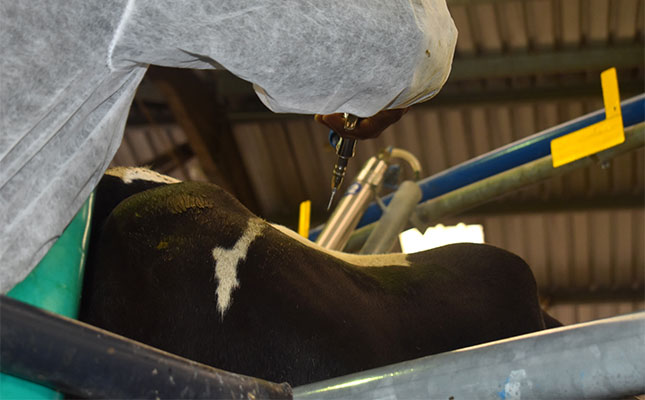
Speaking to Farmer’s Weekly, Eastern Cape MEC for Agriculture Nonceba Kontsiwe confirmed that the province officially began administering vaccines on 27 February after receiving an allocation of 150 000 doses from the National Department of Agriculture (DoA).
According to her, vaccination teams had begun targeting areas most vulnerable to further spread: “A total of 12 525 vaccine doses have been administered to date, with high-risk areas prioritised.”
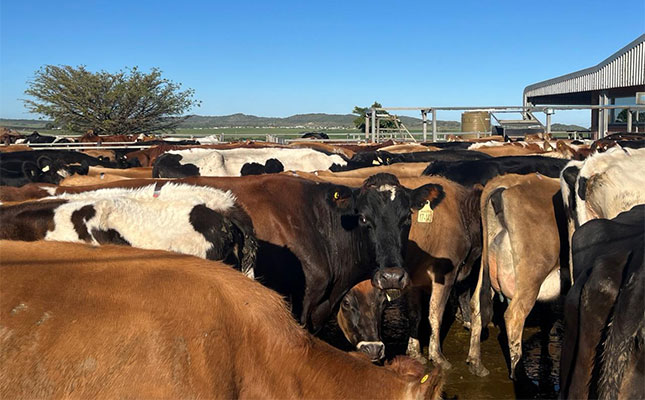
Kontiswe added that the initial phase of the vaccination campaign is focused on border municipalities, hotspot districts, and dairy farms located within a 10km radius of outbreak areas.
“We expect to finish borders in four to five weeks, making allowance for inclement weather. Vaccinations have started at various sites simultaneously, so the completion timeline should remain the same.”
She added that on-the-ground vaccination operations are coordinated through the province’s veterinary services network.
“Each team at local municipalities is led by a state veterinarian, assisted by a technical assistant manager and animal health technicians. These teams report to the district manager for veterinary services, and their progress is monitored through weekly Joint Operations Committee [JOC] and technical meetings involving officials from agriculture and external role players,” she explained.
Industry warns of insufficient vaccine supply
While the province has begun vaccinating in high-risk areas, organised agriculture has raised concerns that the response may be too small to contain the outbreak if it spreads beyond current hotspots.
Brent McNamara, CEO of Agri Eastern Cape (Agri EC) and vice-chairperson of the Red Meat Producers’ Organisation (RPO) Eastern Cape, told Farmer’s Weekly that the current allocation is far from adequate.
“While significant progress has been made, with one million doses from Biogénesis Bagó [in Argentina] distributed across the provinces, including 150 000 for the Eastern Cape, this is far from enough to contain the spread of FMD,” he explained.
McNamara added that delays in distributing additional vaccine shipments are further complicating the response.
“The 1,5 million doses of the Dollvet vaccine that arrived [last] weekend have not yet been delivered to Onderstepoort Biological Products [for distribution] due to wranglings between the importer and government over payment procedures.
“Every day that distribution is delayed due to administrative processes, the situation at ground level gets worse.”
He said the Eastern Cape may need far more doses in the coming months.
“Over the medium term, at least 2,9 million doses will be required for sufficient pre-emptive vaccinations to contain FMD,” he added.
For the red meat industry, McNamara warned that delays in containing the outbreak could have serious implications for the livestock industry, exports, and investor confidence.
“South Africa needs to send clear signals that the situation can be controlled. Getting excited about rolling out one million doses when our cattle population is about 14 million, and small stock and pigs aren’t even being addressed, is simply window dressing,” he said.
Collaboration guides vaccination strategy
Despite these concerns, he acknowledged that cooperation between the provincial DoA and industry bodies has been constructive.
“We are confident in the coordination and support at a provincial level. The Eastern Cape Department of Agriculture is doing everything it can with the limited vaccine supply,” he said.
He added that industry organisations like RPO, the Milk Producers’ Organisation and Agri EC have been working with government through weekly technical meetings and JOC structures to guide the response.
“The prioritisation of affected municipalities and hotspot areas is done in consultation with industry bodies. We are satisfied that the department’s vaccination rollout strategy and hotspot risk identification are correct.”
Containment strategy and producer concerns
McNamara said that once vaccination coverage improves, the buffer zone strategy along the KwaZulu-Natal border should help slow transmission.
However, he warned that delays in implementing movement control regulations remain a major risk.
“The Eastern Cape province requested the minister [of agriculture] to gazette Section 9 [of the Animal Diseases Act (No. 35 of 1984)] movement restrictions weeks ago. The delay in doing this continues to increase the risk of further outbreaks due to uncontrolled high-risk animal movements,” he explained.
Uncertainty around animal movements is also affecting livestock markets. “The failure to implement risk-assessed movements will continue to hamper auctions and market access due to buyer uncertainty and the fear of spreading the disease,” McNamara said.
He added that although the Eastern Cape provincial government has allocated R55 million towards vaccine procurement and the rollout programme, the industry believes additional funding is needed to sustain the response.
Producers are calling for long-term biosecurity reforms to prevent recurring outbreaks, including finalising the national FMD plan, rolling out legally sanctioned vaccination schemes, and enforcing official animal movement controls.