On 27 February, Agriculture Minister John Steenhuisen announced at a farm in Karkloof in the KwaZulu-Natal Midlands that South Africa had shifted “from defence to offence” in its response to foot-and-mouth disease (FMD). He said the mass vaccination campaign was under way, with the first one million doses from Biogénesis Bagó in Argentina having arrived six days earlier. Additional shipments are expected, and permits are being fast-tracked.
After the engagement, farmers and livestock industry stakeholders questioned Ramasodi about why the second Section 21 authorisation, necessary to release an additional six million doses of Dollvet doses from Türkiye, hadn’t yet been advanced by the South African Health Products Regulatory Authority (SAHPRA).
Ramasodi replied: “Show me the drop. I want to see the drops.” He added that he would not press SAHPRA on the next approval until the first batch had arrived.
What section 21 does, and who controls it
Section 21 of the Medicines and Related Substances Act (No. 101 of 1965) allows unregistered medicines to be imported under controlled conditions. SAHPRA administers approvals; Ramasodi does not sign them off.
However, the DoA can engage SAHPRA, push for urgency, and request accelerated processing, especially after the current FMD outbreak was declared a national disaster under the Disaster Management Act (No. 57 of 2002). SAHPRA granted authorisation for the first Dollvet consignment on 13 February and confirmed a second application was under assessment.
Steenhuisen’s supply schedule
At Karkloof, Steenhuisen outlined the vaccine supply schedule: 1,5 million Dollvet doses by end-February; one million Biogénesis Bagó doses already delivered; five million additional Bagó doses by mid-March; and six million more Dollvet doses by late March into early April, for a near-term total of 13,5 million toward a 28-million-dose target.
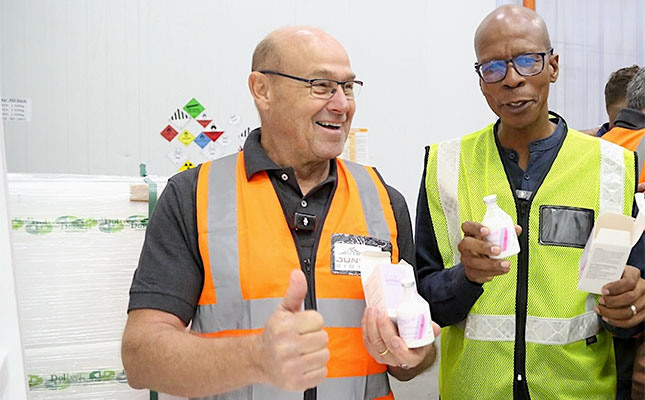
On 1 March, the DoA issued a media statement confirming that 1,5 million Dollvet doses had arrived at OR Tambo International Airport on 28 February. The shipment from Türkiye, facilitated by South African biotech company Dunevax as authorised agent, was delayed by tensions in the Middle East and restricted Gulf airspace.
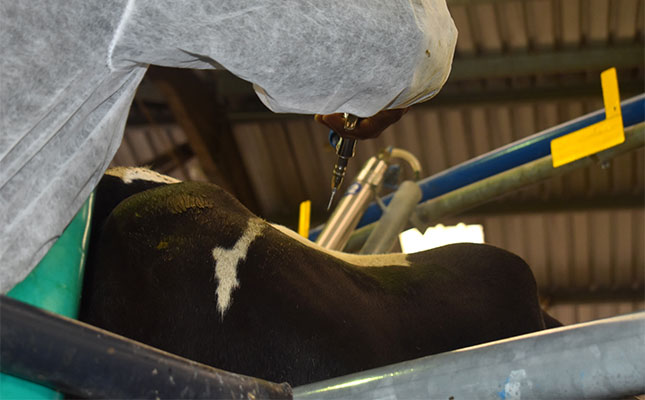
The Biogénesis Bagó doses were immediately dispatched to provinces, with vaccination under way in high-risk areas. The timing of the next batches depends on regulatory approvals.
Why timing matters
Vaccine manufacturing runs on fixed biological timelines. Production slots, batch testing, quality control, cold-chain preparation, and export clearance take weeks that cannot be compressed. Regulatory certainty – when a manufacturer knows that a product is authorised – determines when production can begin.
If advocacy for the second Section 21 approval only starts after the first consignment lands, the manufacturing clock for the next six million doses may begin later. Steenhuisen called for parallel processing, while Ramasodi indicated the next approval would start only after the first batch arrived.
The pace of the next approvals will determine whether the DoA can meet Steenhuisen’s projected vaccine schedule, with millions of doses still needed to reach high-risk areas.