
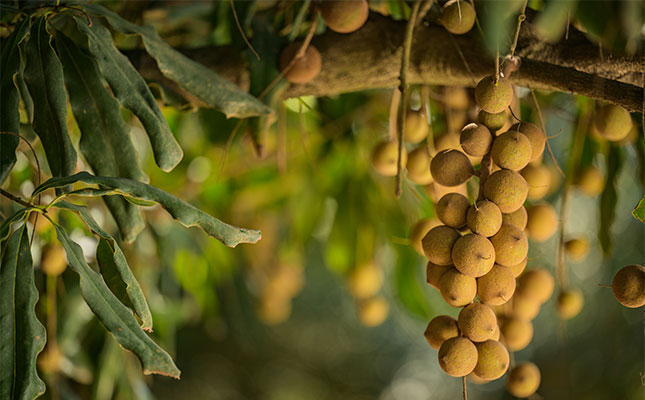
Speaking at the Global Macadamias notional pricelist release in Nelspruit, Mpumalanga, on Wednesday, Waldo de Klerk, the company’s grower liaison manager, announced a 4,4% increase in the US dollar price paid for whole kernels, from US$13,50/kg (around R254/kg) last year to US$14,10/kg (R233/kg) this year.
Despite the higher dollar price, the strengthened rand (from R18,25/US$1 for the 2025 season to R16,50/US$1 at the start of the 2026 season) reduces farmers’ income this year.
Prices paid for nuts that cracked into halves and pieces decreased by 8,7%, from US$9,90/kg last year to US$9,04/kg this year. The growing volumes of half nuts, combined with the still-developing market for these nuts, have widened the gap between prices paid for halves and whole nuts.
Returning market confidence
Market conditions are set to improve this year with the removal of import tariffs in the US and China. Demand from Asia, Europe, and the Middle East is also increasing.
Giving an overview of market conditions, Graeme Taylor, Global Macadamias’ corporate general manager, said the biggest growth in demand this year is expected to come from the US, as confidence in macadamias is returning among buyers.
“At the start of last year, macadamia sales were really gaining momentum, but [US President Donald Trump’s] ‘Liberation Day’ tariffs, and the volatility that followed, scared a lot of buyers. Now that the tariff has been reduced to zero, at least for this year, we are seeing a lot more interest in macadamias.
“Buyers are quite confident that the tariff debacle will settle down, and as confidence in macadamia supply rises, so too will demand, and potentially prices down the line.”
This demand is especially important for lifting sales and prices of kernel halves, since the US is the largest buyer of these nuts.
Expanding into Asia and Europe
Inroads have also been made in Asia and the Middle East. “When the US market paused, the rest of the world kept moving. We’ve been able to open markets and sales channels in previously unserved regions, including those in Singapore, Kuala Lumpur, and Japan.
“Sales to Europe are also expanding, both within traditional areas like Spain and France and new countries like Poland and Lithuania,” Taylor said.
He noted that the expected removal of the 12% tariff on South African macadamia nuts exported to China this year bodes well for sales. “Both inshell and kernel sales into China are expected to rise this year, although caution is needed to avoid overreliance on this market.”
While exports to the Middle East also expanded last year, Taylor said the current conflict there is expected to have a negative, albeit temporary, effect.
South Africa faces a 30% tariff for macadamias exported to India, so little growth is expected in this market this year. Taylor noted that, with Australia facing a lower tariff, it is likely to supply India.
“The upside is that Australia is educating the market on macadamias, and if South Africa’s tariffs are lowered, we will be able to enter a market where there is already demand for the product,” he added.
A significant win for the industry was the inroads Global Macadamias made in the Australian market last year, when adverse weather reduced that country’s crop, causing contracts with local buyers to be shorted.
“We took the opportunity to fill the gaps with South African nuts, and they were exceedingly well received. Now that [Australia] has experienced our quality, they are happy to keep sourcing from us, and we expect to increase market share going forward,” Taylor added.
Looking ahead, he said South Africa’s growing volumes from new orchards coming into production means the industry is moving from being a niche product to a major component of the global tree nut basket.
“The larger volumes give buyers and product developers confidence, which stabilises demand and prices.
“The removal of tariffs in the US and China has removed trading barriers and, together with the vast diversification in markets, will bring a lot of opportunities to grow demand.
“Higher stocks of halves have dampened prices this year, but we are working hard to educate customers on the versatility of this nut style. We are also working with product developers to incorporate these nuts into product lines. As these campaigns continue, demand is expected to follow.”