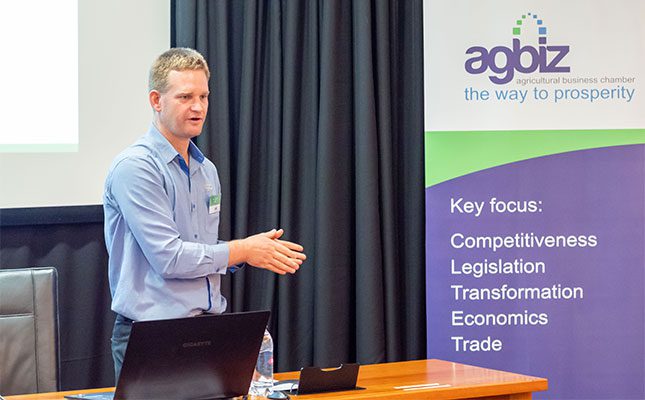
Boshoff said the year began with a wave of disinformation on a range of policy matters. Following the ratification of the Expropriation Act in January, social media was flooded with speculation about its potential impact.
“We know there are risks, huge risks, associated with the implementation of the Act. However, we have decided to watch closely how it plays out over the coming year. Monitoring how this legislation is used will be one of our priorities in 2026,” he said.
Another issue that drew a lot of attention was the debate around crop protection chemicals.
“This emotional topic, fuelled by activists, entered the policy space this year and even reached the portfolio committee, putting pressure on regulators,” Boshoff noted.
Adding to the uncertainty was the publication of sector-specific employment equity targets in the 15 April Government Gazette.
“The broader business community, through BUSA [Business Unity South Africa], has always supported employment equity and the setting of appropriate targets. Unfortunately, the consultation process required to ensure realistic targets was not followed. As a result, many of the proposed targets would have been extremely difficult to meet,” Boshoff explained.
“BUSA mounted significant legal challenges to have these targets revisited, but the Act was nevertheless published in its final form.”
He also referred to the stir caused in April by social media posts about the US’s so-called ‘Liberation Day Taxes’.
“Fortunately, the US has since slackened some of those inflationary measures,” he added.
International trade: momentum building
Turning to global trade, Boshoff highlighted promising developments.
“We’ve been rather busy through Nedlac, specifically in discussions with the Department of Trade, Industry and Competition about which trade partners we would like to prioritise. We are optimistic that many opportunities will be coming to South Africa,” he said.
He added that Nedlac is working strategically to strengthen South Africa’s international trade position. Beyond the country’s traditional partners, namely the UK and EU, new opportunities should be explored with Japan, South Korea, Southeast Asia, and the Middle East.
Local priorities beyond 2025
Looking at South Africa, Boshoff said Agbiz is engaging with proposals to reform the Expanded Public Works Programme to include agricultural priorities.
“This is one of the strategic projects Agbiz aims to take on. I know Minister of Public Works and Infrastructure Dean Macpherson is keen to partner with the private sector on this,” he said.
Other policy areas on Agbiz’s radar include commenting on the revision of the 1998 White Paper on Local Government, the Violence Prevention Initiative, and renewed momentum behind road-to-rail strategies.
Boshoff highlighted a pilot rural-roads initiative involving Infrastructure South Africa, AgriSA, and several other partners. The focus is on influencing provincial government priorities to ensure the most economically important roads receive attention.
“Early indications are that, in the Free State alone, there are several roads that cost the province’s agriculture sector an estimated R180 million per year,” he said.