The benchmark analysis, compiled in collaboration with Wageningen University in the Netherlands, was first conducted in 2015 and updated in 2017, 2022, and 2025. It compares the competitiveness of major poultry-producing countries: the Netherlands, Germany, Poland, the US, Brazil, and South Africa.
South Africa has consistently outperformed European producers in the analysis while historically ranking behind Brazil and the US. In the latest assessment, however, local producers also surpassed their US counterparts.
Izaak Breitenbach, CEO of the South African Poultry Association’s Broiler Organisation, attributes this improved performance to significant investment following the signing of the Poultry Sector Master Plan in 2019, which drove broad-based gains in production efficiency.
He told Farmer’s Weekly that the industry committed to investing R1,5 billion upon signing the master plan but exceeded this pledge by investing R2,2 billion over a four-year period.
Efficiency gains
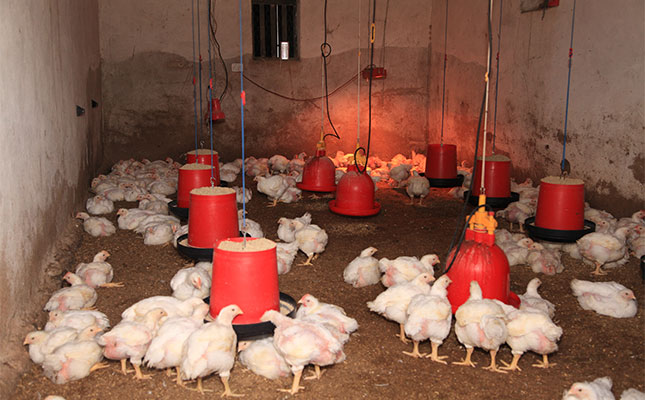
The report found that South Africa achieved the lowest feed conversion ratio among all benchmarked countries, meaning local producers use less feed to produce 1kg of chicken than their global competitors.
“Feed conversion efficiency has improved by 14,1% over the past decade, underscoring continuous advancements in genetics, management practices, and production technology,” Breitenbach said.
South Africa also recorded the shortest production cycle, averaging 31,5 days, while carcass weights increased by 4,5% over the same period.
Input costs account for about 70% of the cost of rearing a bird, with feed the dominant driver. However, the report noted that efficiency gains have cushioned much of the impact of price volatility.
Although the nominal price of feed rations in 2024 was 26% higher than in 2015, the feed-related cost per kilogram of chicken produced rose by only 8%, largely due to improved feed conversion.
While the cost of producing chicken in South Africa remains higher than in Brazil, the world’s leading exporter, it is now lower than in the US and substantially below that of all three European benchmark countries, despite the significant government subsidies available in those markets.
The cost differential with Brazil narrowed steadily until 2023. Although it widened again in 2024 due to drought-related feed price increases in South Africa, the long-term trend points to a strengthening competitive position. Feed costs remain the largest variable in this comparison, and further improvements in local soya bean processing are expected to support additional gains.
The cost of feed and day-old chicks together accounts for just over 80% of total production costs, in line with global norms. The report attributed South Africa’s relative cost improvement to feed efficiency gains and lower slaughter and labour costs, which have offset higher input and housing costs.
Operating in a challenging environment
BFAP noted that the review period was marked by significant headwinds. Load-shedding in 2023 increased the cost of feed milling and hatchery operations, while the drought in 2024 reduced maize and soya bean production, pushing feed prices above export parity levels at a time when global prices were declining.
The report also recorded the substantial impact of the 2023 outbreak of highly pathogenic avian influenza (HPAI) in South Africa, which resulted in the culling of 3,5 million broiler breeder birds (around 45% of the national flock) and temporarily drove up day-old chick prices. Imports of fertile eggs were permitted to ensure continuity of supply.
Housing and capital costs rose sharply due to higher interest rates, while depreciation of the rand compounded imported input costs.
“Despite these pressures, the broiler industry managed to maintain production growth and preserve its competitiveness,” Breitenbach said.
Looking ahead
Breitenbach believes future growth will depend largely on export expansion as domestic demand stabilises and opportunities for import replacement diminish.
“South African production increased by 11,8% over the past decade, outpacing local consumption growth of 8,8%. Where we produced 19,7 million chickens per week in 2019, production capacity has now reached 23 million chickens per week, demonstrating our ability to fully supply local demand,” he said.
After a prolonged period of rising imports, which peaked in 2018 and led to the industry being declared in distress, chicken imports, particularly bone-in portions, have declined sharply. Volumes fell from 287 000t in 2018 to less than 40 000t by 2024.
Total chicken imports exceeded 500 000t in 2018, but following changes to the tariff structure and intermittent HPAI outbreaks in several exporting countries, imports dropped to below 400 000t by 2024. Mechanically deboned meat, which is not produced at scale in South Africa, currently represents about 50% of total imports.
Breitenbach said South Africa currently exports about 55 000t of chicken annually. Roughly 4% is destined for the United Arab Emirates, with the remainder sent to neighbouring African countries. Inspections to enable exports to the UK have been finalised, and the industry is awaiting the outcome, while inspections for access to the EU and Saudi Arabia are pending.
Another prerequisite for future growth is wider access to HPAI vaccines. Breitenbach explained that current biosecurity and monitoring regulations are too restrictive and need to be relaxed to enable broader uptake. At the time of writing, Astral was the only company permitted to vaccinate, and only on a single farm.
Uneven regulatory treatment
Breitenbach criticised what he described as inconsistencies in how government applies vaccination programmes across livestock sectors.
“Foot-and-mouth disease [FMD] vaccinations are being implemented without a clearly defined vaccination and surveillance protocol, while the poultry industry struggles to negotiate more practical and affordable rules than those currently imposed by government,” he said.
There is also special and accelerated registration for vaccines against all three known FMD strains. For poultry, only vaccines for the H5 strain of HPAI have been registered, with no approvals yet for H7 or H9, both posing a material risk to the local poultry industry.
Breitenbach also highlighted the disparity in financial and logistical support. “State veterinarians are being deployed to assist cattle farmers with vaccination, and funding of about R1,8 billion is reportedly being sought to support the cattle industry.
“Poultry producers, however, are expected to carry the full cost of vaccination, surveillance, and the employment of animal health technicians.”
The issue, he said, is not opposition to regulation but the risk that uneven and impractical rules could erode the very competitiveness the industry has worked to rebuild.