
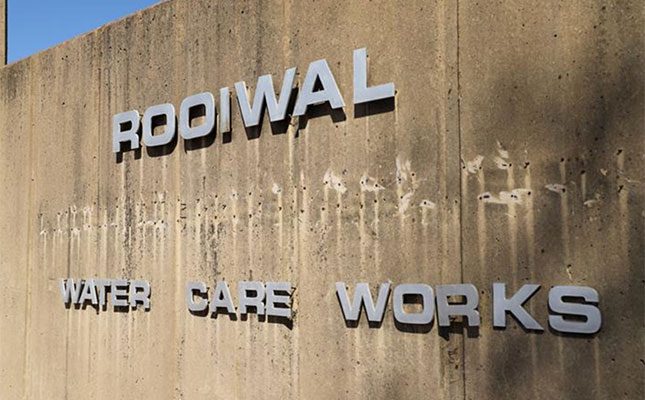
For farmers in the Rooiwal area north of Pretoria, water insecurity has become a day-to-day operational risk rather than an occasional inconvenience. The prolonged failure of the Rooiwal Wastewater Treatment Works (WWTW) has left boreholes and surface water polluted, forcing producers to rely on erratic tanker deliveries to keep livestock alive and limited farming activities going.
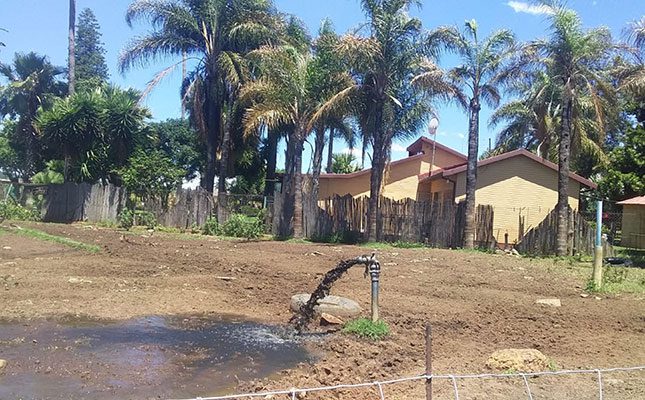
Rooiwal WWTW treats an estimated 40% of Tshwane’s wastewater. When it malfunctions, untreated or poorly treated effluent flows into the Apies River system, contaminating soil and water resources used by nearby farms.
From warning signs to full-blown crisis
Farmers first raised concerns about sewage spills from the Rooiwal plant as far back as 2005. By 2011, the City of Tshwane had already started supplying water by tanker to some affected properties, after groundwater sources became unsafe for human consumption.
More than a decade later, the situation has deteriorated further. Boreholes on several smallholdings are contaminated with sewage, irrigation water is unusable, and farmers are unable to plan production because water deliveries are inconsistent.
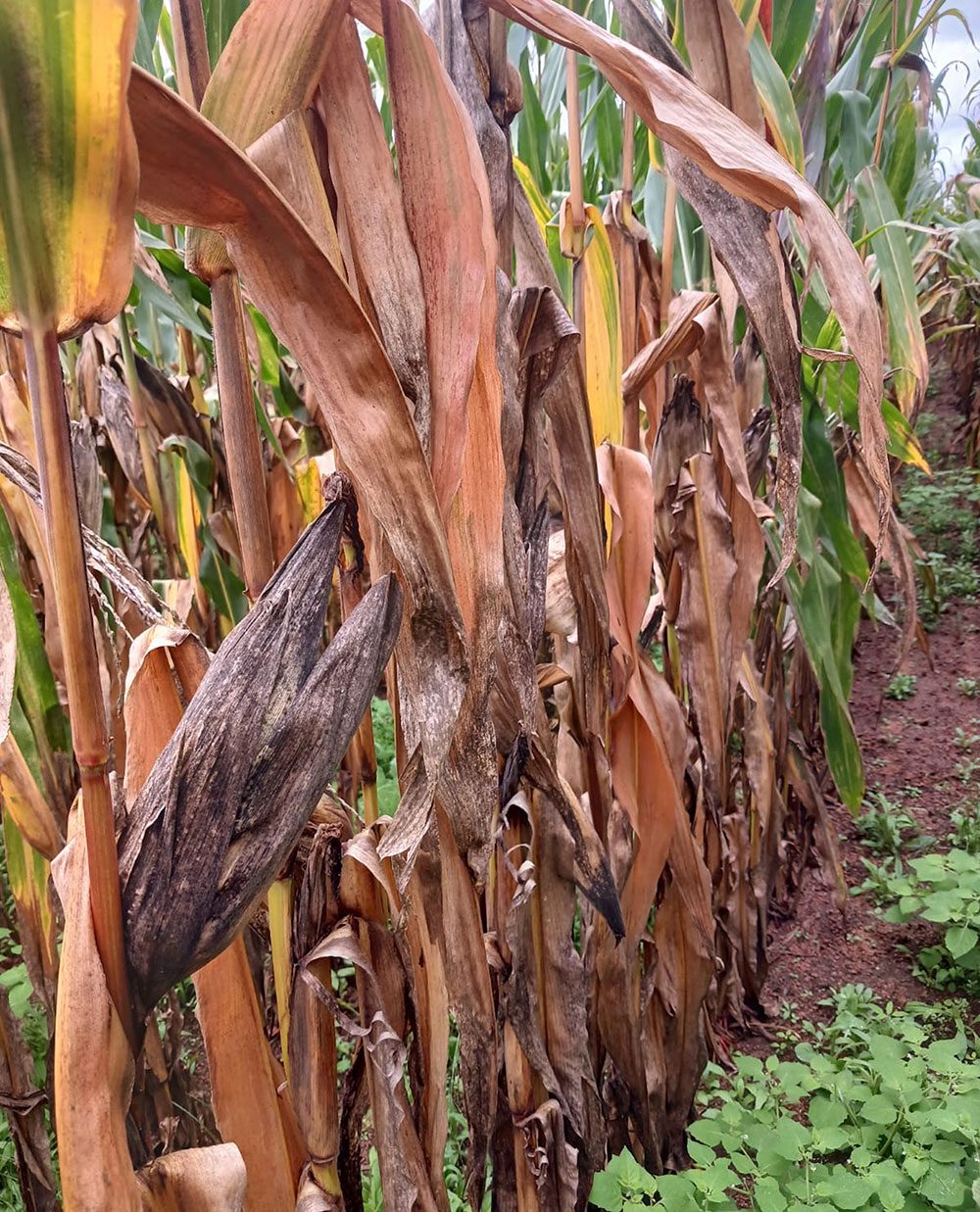
Grain farmer Theunis Vogel, who farms close to the plant, told Farmer’s Weekly that he began losing crops after raw sewage entered his irrigation system.
“My maize cobs turned pitch black, and I lost four wheat crops when sludge stuck to the leaves and E. coli was detected,” he explained.
Livestock producers under strain
For livestock farmers, the impact is immediate and severe. Clean water is essential not only for drinking but also for animal health, hygiene, and productivity.
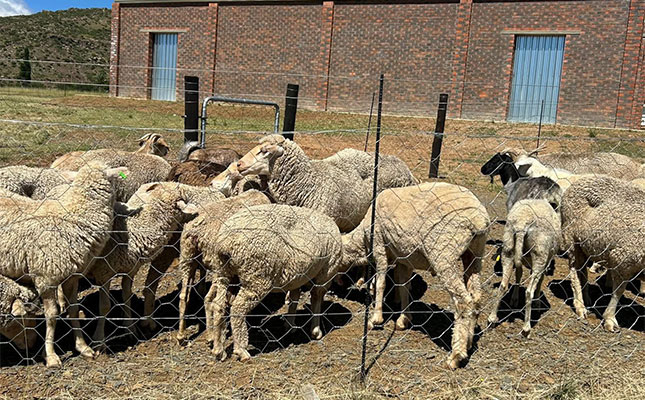
Adriane de Gouveia, who runs cattle, sheep, goats, and pigs on a smallholding near Rooiwal, said tanker deliveries fall far short of what is needed.
“My allocation is 10 000ℓ, but [the City of] Tshwane only delivers every second or third day. My boreholes are polluted, so I cannot use them at all,” he explained.
According to De Gouveia, the suggestion that farmers should collect water from communal points is unrealistic. “You cannot move hundreds of animals kilometres for water. Without a constant supply, this becomes an animal welfare issue, not just a service delivery problem.”
Farmers have warned that prolonged water shortages are forcing them to reduce herd sizes, abandon certain enterprises, or consider exiting farming altogether.
Farming by court order
Instead of focusing on production, many farmers have spent years pursuing legal action to secure a basic water supply. Court orders obtained in 2008, 2012, 2014, and 2023 required the City of Tshwane to provide water and address pollution from the plant.
In December 2025, Vogel obtained yet another court order against the city. The Gauteng Division of the High Court recorded undertakings by the municipality to supply water tankers up to six days a week. However, the city stopped short of guaranteeing deliveries, citing budget constraints, tanker availability, and water shortages.
For farmers, this uncertainty makes long-term planning impossible. “You cannot manage livestock or crops on promises that may or may not materialise,” Vogel noted.
Cholera highlights wider risk
The consequences of Rooiwal WWTW’s failure were thrust into the national spotlight during the 2023 cholera outbreak in Hammanskraal, which claimed more than 30 lives. While the precise source of the outbreak was never conclusively identified, authorities acknowledged that heavily polluted raw water made effective treatment extremely difficult.
During a site visit in June 2023, just after the cholera outbreak, President Cyril Ramaphosa admitted that government had failed the people of the area.
The right to water and sanitation is a fundamental human right that is provided for in the Bill of Rights. Chapter 2 of the Constitution of South Africa provides that: “Everyone has the right to have access to sufficient food and water.”
To give effect to this right, Parliament has enacted the Water Services Act (No. 108 of 1997). This Act recognises that the right of access to basic water supply and basic sanitation services is necessary to ensure sufficient water and an environment that is not harmful to the health and well-being of people and animals.
Ramaphosa admitted that government had failed to maintain and expand the Rooiwal plant in line with population growth. He also pointed to irregularly awarded tenders that left upgrade work incomplete.
For farmers upstream, the cholera outbreak confirmed long-held concerns that failing wastewater infrastructure poses risks far beyond municipal boundaries.
Costly delays and failed upgrades
Attempts to rehabilitate Rooiwal WWTW have repeatedly been derailed by procurement failures. A major 2019 upgrade contract, valued at close to R300 million, was later cancelled after forensic investigations found it had been irregularly awarded.
Less than 60% of the work was completed, despite substantial payments having been made. At one stage, about 70% of the machinery was non-functional, including critical sludge-handling equipment.
As the population of northern Tshwane has grown, the cost of repairs has escalated sharply. Estimates to fully rehabilitate and expand the plant now run into several billion rand.
2025: progress on paper, pressure on farms
By 2025, the City of Tshwane had restarted the phased refurbishment of Rooiwal WWTW, reporting progress on urgent mechanical and civil works. Oversight bodies have acknowledged some improvement, but the plant is still not operating at full, compliant capacity.
On farms, the reality remains unchanged. Water deliveries are irregular, alternative water sources remain polluted, and farmers continue to operate under severe constraints.
Political parties and agricultural stakeholders argue that the ongoing failure threatens food security and rural livelihoods and have called for stronger national intervention. In an urgent email addressed to Minister of Agriculture John Steenhuisen, Bennie van Zyl, general manager of TLU SA, urged Steenhuisen to intervene for the sake of animal welfare, food production, and agricultural sustainability.
An agricultural warning sign
The Rooiwal crisis illustrates how failing wastewater infrastructure directly undermines agricultural sustainability. Without reliable access to clean water, farmers cannot maintain livestock welfare, protect crops, or invest with confidence.
For producers in the Rooiwal area, the hope is that rehabilitation work will finally translate into measurable improvements on the ground. Until then, farming continues with uncertainty, with water, the most basic input, in critically short supply.