
The flashpoint came when mega-farmer Nick Serfontein, chairperson of the Sernick Group, publicly accused government of failing to implement the very plans industry experts spent months developing. His comments triggered a strong response from members of the ministerial task team, who pointed directly to two senior state veterinary officials accused of blocking urgent action.
At the centre of the controversy are Dr Mpho Maja, director of animal health, and Dr Mike Modisane, chief director of animal production and health, at the Department of Agriculture.
According to several members of the Industry-Government Task Team on Animal Disease Prevention, Management, and Control, formed in September by Agriculture Minister John Steenhuisen, these two individuals control the only office legally mandated to approve foot-and-mouth disease (FMD) protocols, vaccine import permits, and national disease-control strategies. Without their signatures, nothing moves.
“Things get blocked there and simply are not signed off. It is tragic, but that is the reality,” Dr Dirk Verwoerd, Karan Beef Feedlot veterinarian, and Dr Danie Odendaal, director of the Veterinary Network, told Farmer’s Weekly.
A critical announcement
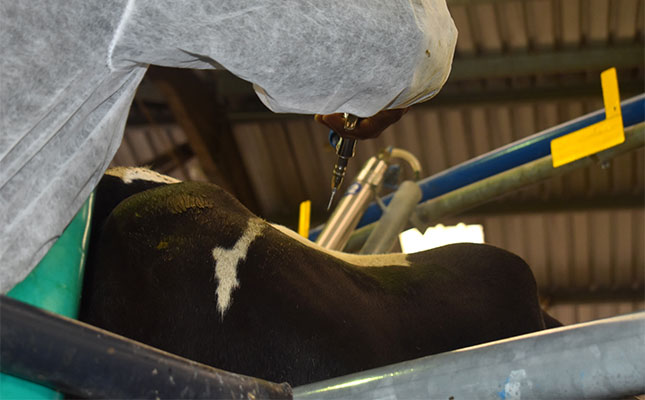
On 26 November, Steenhuisen made an announcement that many called a ‘watershed moment’ for national disease control: the entire national cattle herd would be vaccinated. He stated that the first two million doses of vaccines were expected by the end of February and that an additional 1,5 million would be manufactured locally.
But not everyone is convinced by the announcement.
According to media reports, Serfontein says he has no confidence that the plan will ever be implemented: “I asked a task team member if there were objectives, timelines, budgets, resources. Three months later, still nothing. I am stating that there is no plan.”
While he welcomed the policy shift, his point of view is that unless the private sector drives the programme, it will fail.
“Hundreds of farmers will go bankrupt. The spread is not going to stop. Steenhuisen is committed, but he is being blocked by officials,” Serfontein added.
Serfontein believes that the crisis warrants a state of emergency.
Task team frustration: expertise without authority
The ministerial task team consists of 30 leading veterinarians and experts from the public, private, and academic sectors. According to Verwoerd, the group “was quick out of the blocks,” and by the end of October had already submitted a fully structured preventative vaccination programme.
This new strategy will shift South Africa away from the long-failed ‘outbreak-by-outbreak’ approach towards:
- Broad preventive vaccination
- Repeated booster programmes
- Updated standardised protocols
- Earlier activation of vaccine reserves
- Emergency access to alternative vaccine suppliers
However, none of these plans, proposals, or programmes can be enacted without approval from Maja and Modisane.
“These proposals are being blocked, which means they’re not being signed off within a week or two, and the disease spreads fast, especially in the dairy sector,” Odendaal warned.
The delays have real consequences. Vaccine shortages have already crippled the country’s ability to respond. The feedlot industry alone procured 650 000 vaccine doses from Botswana, but they remain unused, held in storage at Onderstepoort Biological Products (OBP), awaiting departmental approval.
“Every day we wait takes us closer to the edge. We need to start [vaccinating] tomorrow,” Verwoerd cautioned.
Dairy sector at breaking point
The Milk Producers’ Organisation (MPO) escalated matters further this week with an urgent public statement warning that KwaZulu-Natal, home to 30% of South Africa’s milk production, is facing an ‘escalating outbreak’ without sufficient vaccines.
The MPO highlighted that severe shortages and the current reactive-only control threaten milk supply stability and put rural livelihoods at risk.
Compounding the issue is the growing uncertainty around the approval of the Dollvet FMD vaccine import permit. Conflicting communication around whether Maja will sign it off has caused widespread concern. If not approved within days, the arrival of the vaccine could be delayed by at least another month.
The MPO also criticised South Africa’s 25-year failure to submit FMD field strains to the Pirbright Institute, a World Organisation for Animal Health reference lab. This non-compliance limits global vaccine manufacturers’ ability to support South Africa, undermines vaccine innovation, creates dependence on a single supplier, and breaches international obligations.
The organisation appealed directly to President Cyril Ramaphosa, urging immediate intervention to restore leadership and accountability.
Veterinary profession sounds the alarm
In a desperate move, Odendaal published an open letter to veterinarians nationwide, accusing state veterinary leadership of ‘alarming decline’ and ‘years of poor management’.
He cited:
- Weakened disease-control structures
- Compromised surveillance
- Chronic failure at OBP and Onderstepoort Veterinary Institute
- Administrative paralysis
- Inadequate staffing and oversight
He warned that the consequences were now ‘unmistakable’ in the uncontrolled FMD crisis. “Farmers cannot plan, invest, or grow when they are vulnerable to preventable outbreaks and bureaucratic delays. It is time for capable leadership, and it is time for decisive action.”
Government investigating claims
In TV interview, Steenhuisen said he is investigating the claims that Maja and Modisane are obstructing recommendations. “If this is the case, action will be taken,” he said.
However, he rejected assertions that no plan of action exists: “A plan has been finalised. Vaccination has begun. It is challenging, but we are on a new path.”
According to media reports, Modisane said his role is to ensure ‘financial prudence’, which should not be viewed as obstruction, and Maja said she doesn’t sign off on anything that isn’t supported by scientific evidence.
Two years of hard work ahead
Even with immediate action, Verwoerd predicts that South Africa will battle FMD for at least two more years before applying for FMD-free status again. “We will fight this war for years, but with the right tools, we can win,” he added.
For now, however, the country is stuck between political intent and administrative paralysis. Farmers, veterinarians, and industry bodies are united in their message: South Africa urgently needs leadership, vaccines, and transparency.
The industry is firm that the national herd’s protection hinges on what transpires over the next few weeks.