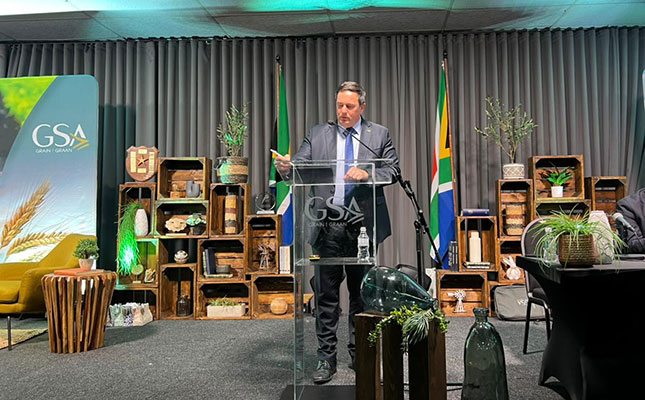

However, in a detailed media briefing on 18 December, Steenhuisen moved to allay these concerns, insisting government now has a realistic, science-based blueprint to contain foot-and-mouth disease (FMD) and rebuild confidence in the livestock sector.
“South Africa now has a realistic and technically sound roadmap to realise its goal of FMD-free status with vaccination. This is a crucial step for restoring confidence in export markets and stabilising this R80 billion livestock industry.
“It will take time, and it will require cooperation from the entire industry,” Steenhuisen said.
A shift in policy direction
Central to the plan is a decisive policy shift towards FMD-free with vaccination. This approach emerged from the FMD Indaba convened in July 2025, hosted jointly by the Department of Agriculture and the Agricultural Research Council (ARC).
More than 400 stakeholders from government, academia, research institutions, and industry attended the meeting.
The indaba concluded that South Africa can no longer rely primarily on quarantine and movement controls. Instead, participants recommended a phased, multidisciplinary approach aligned with the Progressive Control Pathway for FMD developed by the Food and Agriculture Organization of the United Nations.
This includes securing reliable vaccine supply, accelerating livestock identification and traceability, tightening movement controls, expanding diagnostic capacity, and rolling out national awareness campaigns.
Medium- to long-term priorities include upgrading veterinary infrastructure, strengthening regional cooperation, and ensuring sustained funding for animal health services and research.
Following the indaba, Steenhuisen appointed an Industry-Government Task Team on Animal Disease Prevention, Management, and Control to translate these recommendations into an operational plan.
Targets and timelines
According to Steenhuisen, the task team’s strategy aims to reduce FMD incidents by about 70% in high-risk areas over the next 24 months. Vaccination targets include 90% coverage in communal areas, commercial farms, and feedlot regions, and 100% coverage in dairy cattle. Certified compartments and progressive vaccination zones will be established to enable safe domestic and export trade.
To date, close to 950 000 animals have already been vaccinated using government-procured vaccine stock.
The vaccination rollout will be phased according to risk. Mass vaccination will start in KwaZulu-Natal (KZN) and Gauteng, which are regarded as the highest-risk provinces, targeting communal farmers, commercial producers, and feedlots from early February 2026. Limpopo and Mpumalanga will follow, and Free State, North West and the Eastern Cape thereafter.
At the same time, government plans to establish protection zones in FMD-free areas, particularly in the Eastern Cape, Northern Cape, and Western Cape, to prevent further spread.
Vaccine supply secured
One of the main concerns raised by farmers was whether sufficient vaccines would be available. Steenhuisen said the Botswana Vaccine Institute (BVI) had confirmed its ability to supply one million doses per month from mid-January 2026.
He added that this will enable South Africa to complete vaccination in critical areas of KZN, Mpumalanga, Limpopo, and parts of Gauteng.
Locally, the ARC is also expanding capacity. While fundraising continues for a large-scale manufacturing facility, a mid-scale plant is on track to produce 20 000 multivalent doses by the fourth quarter of 2025/26, increasing to between 150 000 and 200 000 doses by the first half of 2026/27.
Diagnostics, enforcement, and manpower
Diagnostic capacity at the Onderstepoort Veterinary Laboratory will be strengthened through the appointment of additional veterinary technologists, while other laboratories may be utilised to relieve pressure. Diagnostic kits and vaccines will be imported where necessary.
Awareness campaigns will be rolled out nationally in partnership with industry and farmer organisations, coordinated by the University of Pretoria’s Biosecurity Hub and provincial agriculture departments.
Law enforcement will also play a greater role. The national Department of Agriculture (the department) will work closely with the South African Police Service and other agencies, with formal briefings scheduled for the third week of January.
In addition, unemployed animal health graduates will be trained and deployed to support vaccination efforts.
Dairy sector tensions
The department also responded to concerns raised by the Milk Producers’ Organisation (MPO) regarding vaccine availability. Steenhuisen noted that the dairy industry had been offered the opportunity to order vaccines in September, but did not take it up.
When FMD later spread through dairy herds, the MPO negotiated access to vaccines via Red Meat Industry Services (RMIS). A further 50 000 doses became available from BVI in October, with the MPO given first option to purchase them. Of these, the MPO has only used 20 000 doses so far, according to the media statement.
“We urge the MPO to vaccinate with speed to ensure all doses are administered by the end of December,” Steenhuisen said.
Traceability and regulation
Early 2026 will also see key regulatory developments. The Livestock Identification and Traceability System, developed by the Council for Scientific and Industrial Research, will be implemented nationally by the second week of January. Using geolocation, the system will allow authorities to track the movement of vaccinated animals.
A Section 10 scheme under the Animal Diseases Act (No. 35 of 1984) will be announced by the end of January, setting vaccination parameters for the dairy and feedlot industries. Regulations governing emergency vaccine imports, quarantine measures, and animal branding will be reviewed, alongside the introduction of an incentivised post-vaccination branding system.
Funding has also been reprioritised. All unspent Comprehensive Agricultural Support Programme (CASP) funds will be redirected towards biosecurity and FMD control, with 5% of future CASP allocations earmarked specifically for FMD.
Disease status remains serious
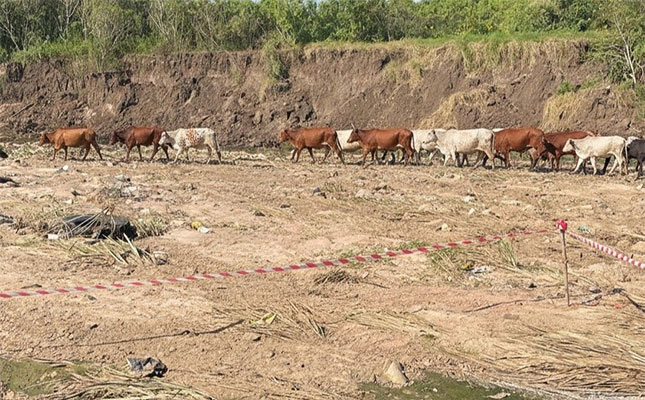
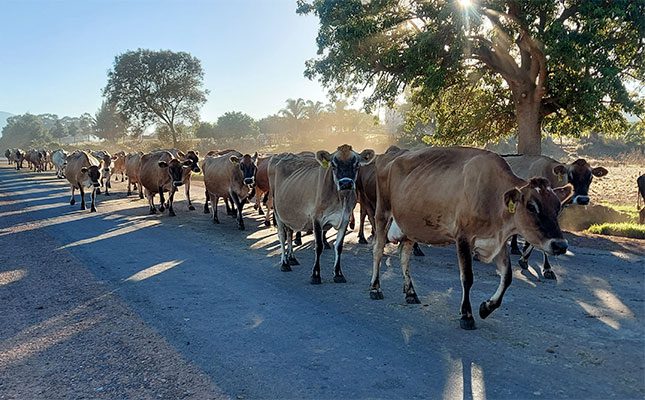
Despite the new plan, FMD remains active in seven provinces: KZN, Limpopo, Mpumalanga, Gauteng, North West, Free State and the Western Cape. KZN remains the epicentre, with 207 confirmed outbreaks, of which 187 are still unresolved.
Recent cases in Limpopo, Gauteng, Mpumalanga, North West, and the Free State underline the scale of the challenge. Multiple SAT2 and SAT1 strains are circulating, affecting communal areas, commercial beef and dairy farms, feedlots, and even game reserves.
“Achieving FMD freedom with vaccination is a monumental task. It requires sustained effort over many years, zero tolerance for illegal animal movement, and strict biosecurity from every stakeholder. But we are optimistic that we will turn the tide,” Steenhuisen said.
MPO challenges Steenhuisen’s FMD vaccine figures
The MPO has challenged the department’s statements regarding the availability and use of FMD vaccines for dairy cattle, saying key assumptions are not supported by the facts.
According to MPO CEO Fanie Ferreira, the claim that only about 20 000 doses of FMD vaccine have been used is incorrect.
“The MPO communicates weekly with officials on the number of vaccine doses still unused. It is therefore extremely strange that it is assumed only 20 000 doses have been used, when just 9 000 doses of the original 50 000 remain,” Ferreira explained.
He added that about 400 000 dairy cattle in KZN still need to be vaccinated.
Ferreira said there was also uncertainty surrounding events in September relating to vaccine supply. At the time, the MPO sought clarity from the department and RMIS on whether it was lawful for a private entity to possess FMD vaccines, as governed by legislation.
“Despite repeated engagement, we could not obtain clear answers on the legal position,” he said.
Ferreira stressed that the offer to procure vaccines privately did not originate from the department. FMD is a state-controlled disease, and the handling, distribution, and use of vaccines are subject to strict regulatory controls.
He added that the prevention and control of FMD remain the responsibility of the state, which should have ensured sufficient vaccine availability at all times.
“There is no justification for shifting this responsibility onto the shoulders of the industry,” Ferreira said.
According to him, the MPO submitted a proposal to purchase around 200 000 vaccine doses from BVI, at an estimated cost of R14 million, to its advisory committee and legal representatives. Both advised that proceeding with the purchase would have been unlawful.
Instead, the MPO facilitated engagement between Onderstepoort Veterinary Institute and BVI, which resulted in the procurement of 50 000 vaccine doses for dairy cattle.
The MPO currently has a co-operative working agreement with the KZN Veterinary Services. Vaccinations are taking place daily in about 10 municipal areas in the province, in line with agreed protocols.
Ferreira said the organisation remained committed to supporting dairy producers affected by the ongoing FMD crisis.
“The MPO will continue to assist milk producers to the best of its ability under extremely challenging circumstances,” he said.
For farmers, the message is clear: the blueprint is now in place. Whether it succeeds will depend on good communication, disciplined implementation, and industry-wide cooperation.