
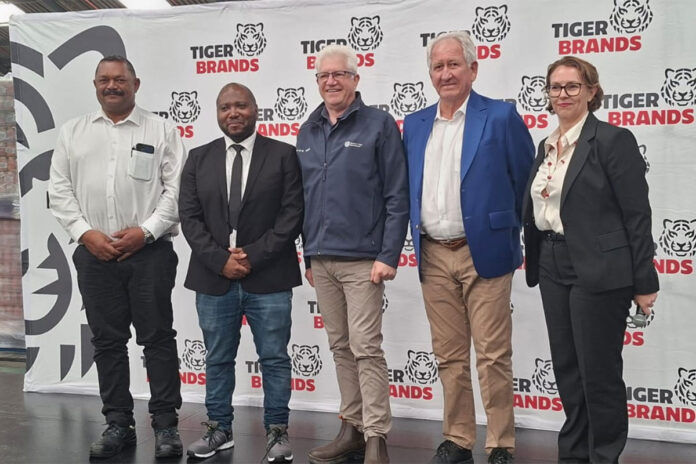
Unveiled on 27 July, the single site consolidates vinegar production, Mrs Ball’s Chutney manufacturing and a recyclable polyethylene terephthalate (PET) jam packaging line.
Tiger Brands CEO Tjaart Kruger, who approved the three projects shortly after his appointment in November 2023, said the investment formed part of the company’s strategy to modernise manufacturing capabilities and strengthen competitiveness.
The localisation of production not only improves supply security and production efficiency, but also supports local agricultural value chains.
“It’s all about competitive manufacturing. We know our consumers will not pay a 30-40% premium. We must have production facilities that can give us a competitive edge where we’ve got competitively priced products on the shelf and still give shareholders the returns they are looking for,” Kruger said.
The new vinegar plant has the capacity to produce 3 million litres a year and will supply a significant portion of the vinegar used in products such as Mrs Ball’s chutney, All Gold tomato sauce and Crosse & Blackwell mayonnaise, reducing reliance on external suppliers.
The production of Mrs Ball’s chutney has been brought in-house for the first time. Previously manufactured by a third party in Gauteng, the facility can produce up to 145t a day and brings production closer to Western Cape dried fruit producers.

A new recyclable (PET) packaging line completes the trifecta, enabling Tiger Brands to replace cans with screw-top PET containers in the jam category.
The company was working closely with key players across the value chain, from farmers to retailers, to strengthen local production. “We want to use local produce in manufacturing. We don’t necessarily want to import. But local production must be competitive. In the last two years we have made great progress,” Kruger said.
The facility sources raw materials from qualified local growers, including strawberries from Paarl and Stellenbosch for All Gold and Hugo’s jams; onions from Villiersdorp and Grabouw as well as dried apricots, peaches, and other fruit from Langeberg for Mrs Ball’s products; and Seville oranges from Ceres for KOO Seville jam. These crops are supplied by seven Western Cape farmers who collectively employ more than 300 permanent workers and around 700 seasonal workers.
The Paarl transformation forms part of Tiger Brands’ wider capital investment programme.
“We are in the process of spending about R1,5 billion annually on capex projects over the next three years, with peak investment reaching R2 billion. A lot of those investments are in the Western Cape, with a mill in Bellville expected to turn soil in January 2027,” Kruger said.
Western Cape Premier Alan Winde said it was exciting to see the narrowing of the value chains to improve efficiencies.
“The Western Cape government’s apex priority is ‘G for J – growth for jobs. Investment equals jobs.
“Agriculture is a big generator in our economy. Fifty-eight per cent of South Africa’s agricultural exports come out of this province, agro-processing and value addition are how we really add jobs,” Winde said.