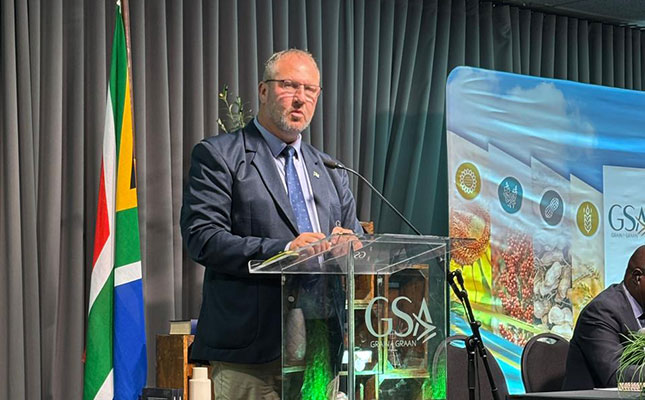

In a media statement published on 13 January, Bredell said a formal disaster declaration, ultimately issued by the National Disaster Management Centre, would significantly strengthen the Western Cape’s ability to respond to the worsening situation.
“A disaster declaration […] will allow us to focus across line functions and also to move funding quickly between programmes if and when needed,” he said.
His announcement followed a briefing by the Knysna Joint Operations Committee (JOC), which highlighted the town’s water crisis, with the Akkerkloof Dam, Knysna’s main water source, at just 15% capacity. Without rain or alternative supplies, Knysna is operating with an estimated 10-day water buffer, down from 13 days a week ago.
According to the JOC, the town is consuming approximately 12 million litres of water per day, exceeding the available supply.
Bredell warned that urgent cooperation from all residents was needed to avoid a ‘Day Zero’ scenario.
“We need to get consumption down to 50ℓ per person per day,” he explained.
He added that short-term emergency interventions are under way to supplement Knysna’s water system. These include developing several natural springs with good-quality water, refurbishing seven municipal boreholes requiring cleaning and new pumps, finalising agreements to access 10 boreholes on private land, and securing water from a borehole at a local mosque.
Challenging wildfire season
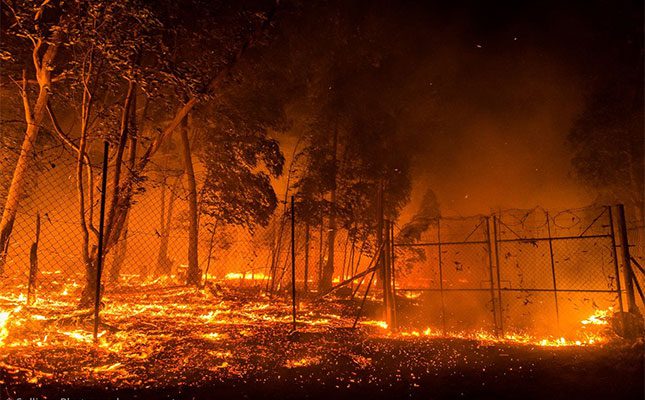
While drought tightens its grip on the Western Cape’s southern region, the province is simultaneously dealing with one of its most demanding wildfire seasons in recent years.
Bredell said the province’s aerial firefighting budget of R17 million for the current season has already been depleted, necessitating internal financial adjustments to keep the fleet of 21 firefighting aircraft operational into April and May.
He added that more than 100 000ha of land across the Western Cape have already been destroyed by fires. In the Overstrand and Cape Winelands areas, more than 500 firefighters have worked tirelessly to protect lives, infrastructure, and biodiversity.
The agricultural impact has been particularly severe in the Overstrand, with the municipality calling on residents and farmers to evacuate affected areas where necessary.
According to media reports, municipal manager Dean O’Neill said that since 4 January, fire-related costs were estimated at between R6 million and R7 million, with more than 33 000ha burnt in Pearly Beach and just over 4 000ha in Stanford.
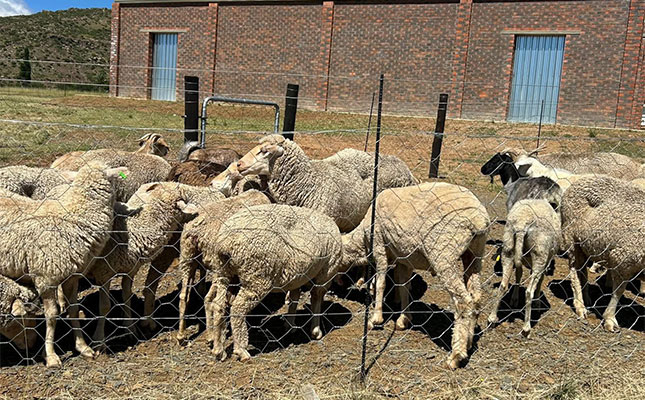
Farmers in the Pearly Beach and Stanford areas have suffered extensive losses, with grazing land destroyed and vital infrastructure such as water pipes, troughs, and containers melted in the fires.
O’Neill said farmers are urgently in need of feed, particularly lucerne in small or round bales, to keep livestock and game alive.
Overstrand Executive Mayor Archie Klaas emphasised the importance of support from the wider agricultural community in helping farmers begin to recover.
Looking beyond the immediate crisis, Dawie Maree, head of agriculture information and marketing at FNB, previously warned that escalating veld fires could have knock-on effects for food prices, particularly meat, as losses of grazing, feed, and livestock added to already high production costs.
With drought and fire risks converging, Bredell said a provincial disaster classification could be key to accelerating relief, improving coordination, and supporting farming communities facing mounting losses.