
The history of the Brahman Cattle Breeders’ Society of South Africa is a tale that spans continents, beginning in India, finding momentum in South America, and reaching its full potential on the southern tip of Africa.
Since their first arrival more than six decades ago, Brahman cattle have established themselves as one of the most resilient and economically valuable breeds in South Africa’s livestock sector.
Historic journey to Southern Africa
Speaking to Farmer’s Weekly, Wayne Porter,former president of the Brahman Breeders’ Society of South Africa, says the journey of Brahman cattle to local soil started in 1954 when Jürgen Krantz travelled to Texas, US, to investigate this hardy breed.
“He imported 10 heifers and seven bulls from Edgar Hudgins, and two additional bulls from Vernon Frost. These animals arrived by sea in Cape Town and were then transported to Namibia, where Krantz farmed,” Porter explains.
Soon after, two of the bulls were sold to South African breeders, a historic transaction that marked the formal introduction of Brahman cattle to the country.
Bred for harsh climates
Porter says the main reason for importing Brahman cattle was their suitability for tough climates.
“They are from Zebu origin, known for their ability to withstand harsh, hot, tick- and fly-infested environments that made them an excellent choice for Southern African regions like Namibia, the Kalahari, and Limpopo,” he says.
According to Porter, the early imports came from well-known US breeders such as JD Hudgins Inc, JT Garrett, Afton Burke, Norris Cattle Company, Gerry Stack, WH Stuart, and Andy Duda & Sons.
These foundation animals laid the genetic base for a thriving Brahman population in the region.
Proven performance locally
Right from the beginning, Brahmans displayed exceptional adaptability. “They showed hardiness and resistance to parasites like ticks, and performed well under natural and even dry climatic conditions,” says Porter.
The breed quickly spread across areas such as Limpopo, the Free State, North West, KwaZulu-Natal, and the Kalahari.
“These areas were ideal because of the hot, dry, and tick-infested conditions that Brahman cattle thrive in,” says Porter.
Pillar in crossbreeding
Over the years, Brahman cattle have played a pivotal role in crossbreeding programmes across the commercial sector.
“The Brahman is popular for its ability to generate hybrid vigour, which is why it features prominently in synthetic breeds like the Beefmaster, Brangus, Braford, Simbra, and Santa Gertrudis,” he says.
Porter further mentions that the breed is also widely embraced in the communal farming sector.
“Its ability to survive in harsh climates and its low-maintenance traits make it extremely popular among communal farmers. There’s also a strong market for Brahman calves, both for breeding and for feedlots,” he says.
Evolving with the environment
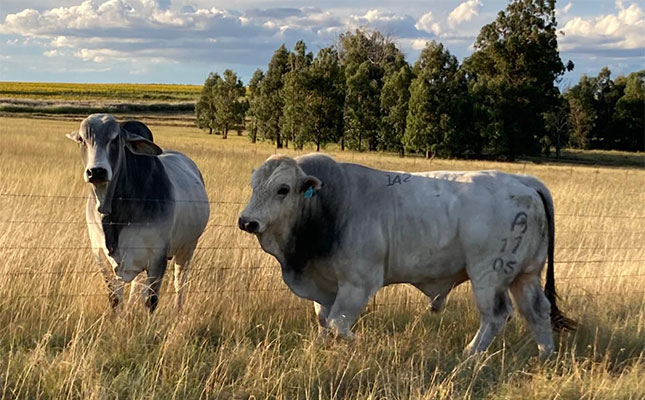
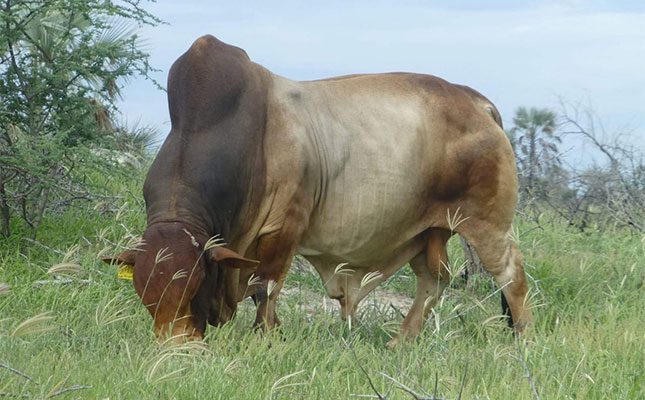
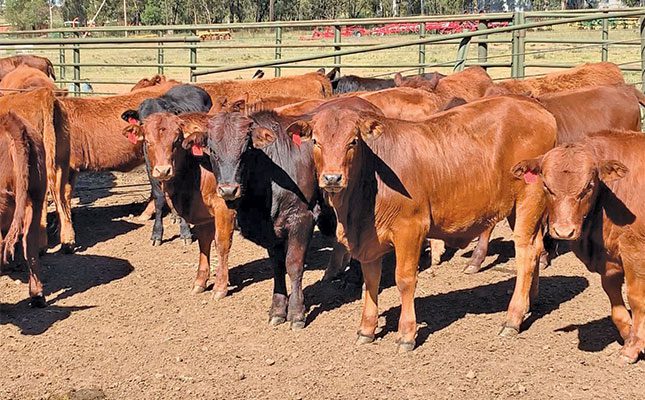
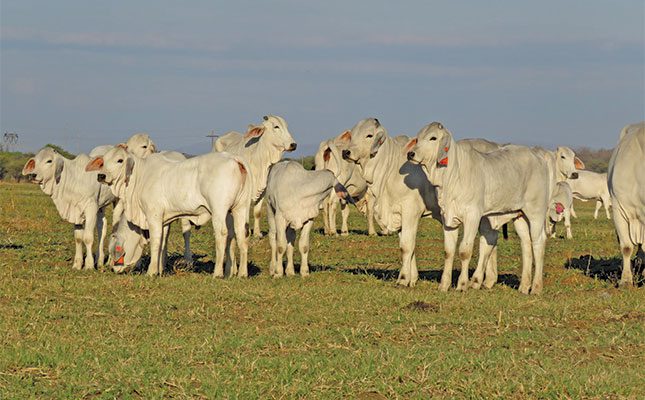
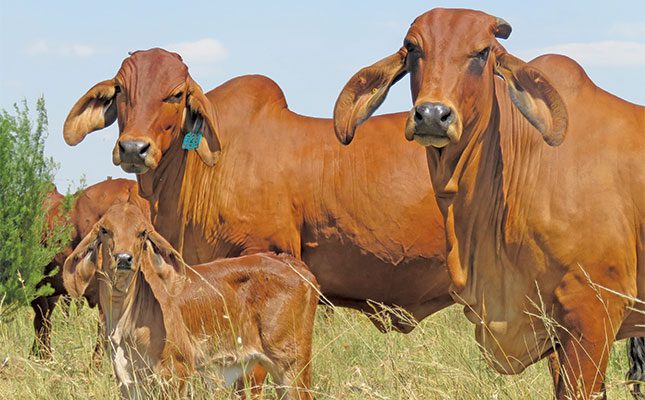
Today, South Africa is home to two recognised types of Brahman cattle: the red and the grey (white). Porter explains that selective breeding under local environmental pressures has led to the development of a more compact, productive animal.
“The South African Brahman has evolved into a medium to large animal that is intelligent, easy to care for, and shows excellent mothering abilities. Compared to Brahman cattle in other countries, ours are smaller, but more efficient beef producers,” he says.
Genetic powerhouse
The Brahman’s contribution to South Africa’s beef industry goes well beyond pure breeding. According to Porter, Brahman cattle have played a fundamental role in developing many synthetic breeds that are now central to commercial beef production.
“The Brahman has been used in creating breeds like the Brangus, Braford, Santa Gertrudis, Charbray, Simbra, and Beefmaster. It’s widely used in crossbreeding programmes to produce F1 and F2 cows, especially for their hybrid vigour and resilience,” says Porter.
In fact, he mentions that Brahman influence is dominant in modern feedlots across the country.
“Today, more than 60% of all animals in feedlots are Brahman or Brahman-type animals,” he says.
This genetic foundation continues to shape the structure and performance of the beef sector.
A number of these crossbreeds have even acquired official breed status.
“We’ve seen new breeds such as the Brahmousin (Brahman x Limousin), Brangus (Brahman x Angus), and Simbra (Brahman x Simmentaler) gain traction. Others like the Brahorn (Brahman x Shorthorn), Bravon (Brahman x Devon), South Bravon (Brahman x South Devon), Bra-Swiss (Brahman x Brown Swiss), Sabre (Brahman x Sussex), and Braford (Brahman x Hereford) may not have breed status, but are still widely used for commercial beef production,” he adds.
Third-largest registered breed
Over the decades, the Brahman breed has gained a solid footing in South Africa’s formal livestock sector.
“It’s currently the third-largest registered breed in the country, with over 56 000 animals and 360 active breeders,” says Porter.
But the real impact of the breed is even larger when its genetic contribution to synthetic and commercial breeds is taken into account.

“When you include the influence of all the synthetic breeds, there’s no doubt the Brahman has had the most influence on the South African beef industry over the past 60 years,” he adds.
Porter also mentions the breed’s reach beyond the commercial sector. “A significant percentage of communal breeding stock are either Brahman- type or contain some portion of Brahman genetics. This proves just how adaptable and valuable the breed is across different farming systems.”
Cultural and symbolic use
Despite its widespread presence, Brahman cattle are not commonly used for symbolic or cultural purposes in South Africa.
“We’re not aware of any formal symbolic associations. We have had the odd request where Brahman animals were bought for weddings or funerals, but even those were probably not for symbolic reasons, but most likely due to their stature and value,” he says.
Evolving with sa conditions
Over the decades, the Brahman breed in South Africa has evolved significantly, both through live animal imports and the use of advanced reproductive technologies.
“There will still be a small percentage of the original Brahmans left, but we’ve also imported live animals, semen, and embryos from countries like Mexico, Australia, Namibia, and the US,” Porter points out.
This genetic diversity has helped shape the South African Brahman into a distinct and functional breed.
“Our Brahmans have been developed specifically for our harsh conditions; they are fertile, functional, and well-adapted to thrive in every part of the country,” he says.
A future built on genetic strength
Porter remains confident in the Brahman’s future in South Africa.
“This breed has proven over and over again that it’s not just about survival but about performance. Whether you’re farming commercially or communally, the Brahman continues to offer unmatched value, and its genetics are deeply embedded in the future of South African beef production,” he says.
Adapting beyond the tropics
While the Brahman breed has demonstrated exceptional adaptability to harsh and dry environments, one of its biggest challenges in South Africa has been adjusting to colder regions.
“I think that the biggest challenge has been to adapt to the colder climates in South Africa. The Brahman was originally bred as a tropical climate breed, so moving into cooler provinces required generations of careful selection and adaptation,” says Porter.
Despite this, breeders in provinces like the Free State and high-altitude areas have made great strides in producing animals that can thrive in variable climates, without compromising the genetic strength of the Brahman.
A legacy marked by milestones
The Brahman’s journey in South Africa has been marked by several defining moments.
“The traditional cattle areas like Limpopo, the Kalahari, and parts of KwaZulu-Natal became strongholds for the breed early on. These regions played a critical role in grounding the Brahman’s legacy here, both commercially and communally,” he says.
These milestones reflect more than just cattle movement; they reveal how a breed foreign to Africa has embedded itself deeply into the continent’s beef production system.
Science-driven breeding
Porter mentions the society’s commitment to science and innovation, particularly through data-driven breeding practices.
“We use the Breedplan performance evaluation system from the Agricultural Business Research Institute in Australia. It records all data from birthweight, 200-, 400,- and 600-day weights, mature cow weights, net feed intake, and carcass quality,” he explains.
This rigorous data collection allows for the calculation of estimated breeding values, which are crucial for predicting the genetic potential of animals.
In a major scientific breakthrough, the Southern African Brahman societies began calculating genomically enhanced estimated breeding values (GEBVs) for the first time in November 2023.
“The Southern African Brahman was one of the first beef breeds to reach this milestone. GEBVs are now published monthly for all breeders who participate in performance recording.”
The key advantage of GEBVs lies in their precision. “They’re calculated using the Single Step methodology, which combines pedigree, performance, and genetic information simultaneously,” Porter explains.
Looking ahead with confidence
As the Brahman Breeders’ Society of South Africa continues to blend heritage with innovation, the future of the breed looks secure and promising.
“The combination of our history, our resilience, and our commitment to science-based breeding ensures that the Brahman will remain a key player in the beef industry,” concludes Porter.
For more information email the Brahman Breeders’ Society of South Africa at [email protected].
Get trusted farming news from Farmers Weekly in Google Top Stories.
➕ Add Farmers Weekly to Google ✔ Takes 10 seconds · ✔ Remove anytime