
The ancient Romagnola cattle breed is a relatively new beef cattle breed in South Africa, but has the potential to add exceptional value to the country’s beef cattle production industry in the long term.
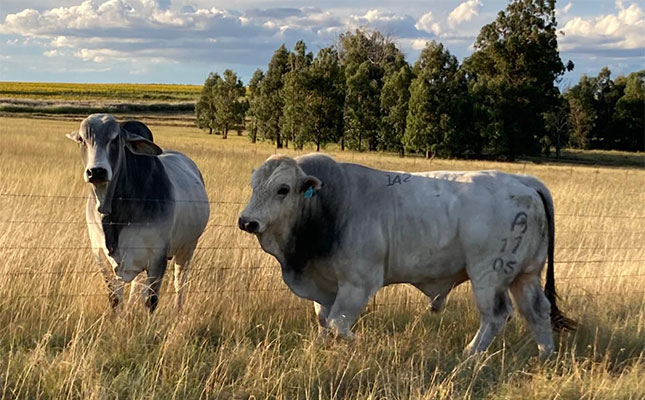
This is underscored by the outstanding weaner weights achieved by Marnus Lessing, owner of Romagnola and Brahman studs. Lessing, who farms near Lindley, pushed up weaner weights markedly by crossbreeding his JML stud Romagnolas with his Manso white stud Brahmans.
Magnificent breed
“I fell in love with the Romagnolas as a young man, after visiting the Nampo Harvest Day some years ago. Even at that age I envisaged myself farming this magnificent breed should I ever have the opportunity to farm. To cut a long story short, I was eventually able to purchase my own land and started breeding Romagnolas in 2022. I bought my first two stud cows and bull from Armando Balocco, who introduced the breed to South Africa in 1995.
“Later I acquired two more stud cows at an auction held by Dial van Rensburg, a stud breeder in North West. My herd now stands at 60 breeding cows,” says Lessing.
Crossbreeding
Lessing started crossbreeding the Romagnolas and Brahmans from the onset, although on a small scale with only four Brahman cows. The significant weight gain of the offspring prompted him to expand the crossbreeding programme to eight cows in 2023, followed by 15 cows in 2024.
The crossbred weaners’ stellar growth became evident by the fact they achieved an average weight of 220kg at the age of five months. Lessing maintains a single breeding season with the bulls being put with the cows from December until February.
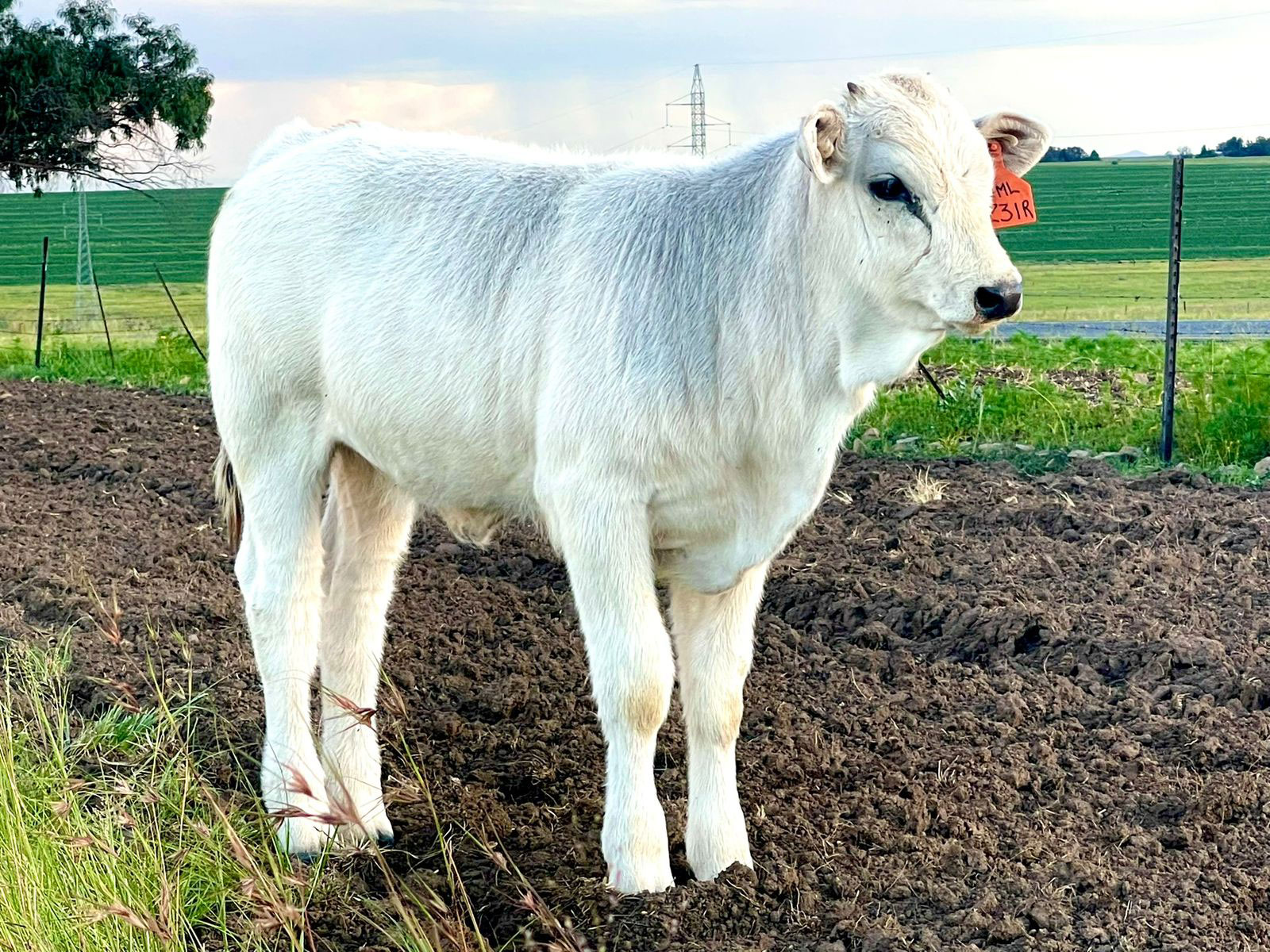
According to him, Romagnolas are well suited to crossbreeding with all breeds of cattle, resulting in calves characterised by top-of-the-range conformity, elevated feed conversion rates and vastly improved growth rates.
Lessing explains that Romagnola crosses are highly sought after by the feedlot industry because of their exceptional growth and carcass quality, with a dressing percentage of between 62% and 65%. The beef is lean and tender with a fine grain.
Muscling
The exceptional performance of the breed stems from its outstanding muscling, developed over millennia.
“The Romagnola originated on the steppes of Eastern and Central Europe. The animals carry both the Bos taurus and B. indicus genes. For centuries, the breed was used as draft animals, resulting in well-developed bone structures, muscular skeletons and strong hooves. This changed during the second half of the 20th century as increased mechanisation steered selection towards beef and carcass characteristics. Over time, the Romagnola consequently evolved into a beef cattle breed of note,” Lessing explains.
He emphasises the fact that the breed’s gentle disposition and adaptability indicate the animals’ intelligence, which makes handling and management easier.
Adaptability and hardiness
The large-framed breed is white with shades of grey. Romagnolas develop a thick coat during winter months and a short covering in summer, making them adaptable to a wide range of production conditions. The breed is known for ease of calving, given their long bodies and relatively small heads. Romagnolas are early-maturing and heifers can be put to the bull as early as 18 months.
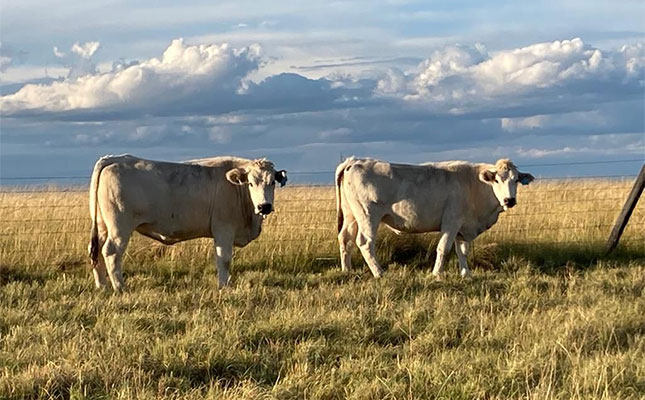
The calves are born strong and start nursing rapidly after birth. The mothers’ excellent milking ability enables them to successfully raise their calves even under challenging conditions.
Romagnolas are indiscriminate feeders and excel on various types of grazing. They are, for instance, performing excellently on Lessing’s farm, which consists of 50% sweetveld and 50% sourveld. The soil types include moderately deep red and yellow apedal soil, combined with sandy soil. The region’s maximum temperatures vary from around 35°C in summer to 17°C in winter, and occasionally the winter temperature can drop to a minimum as low as -12°C.
Depending on the condition of the veld and the availability of grass bales and crop stover, Lessing maintains, on average, a carrying capacity of one mature livestock unit to 3ha. The grazing is augmented with grass bales in winter. The farm is divided into eight camps of between 25ha and 30ha, each with its own watering point. Two of the camps have natural springs while the water in the rest of the camps comes from a borehole.
Fertility
“Fertility is the most important selection criterium in my farming business. Although I love the animals and am passionate about farming, sound economics remain the cornerstone of my enterprise. A cow that does not drop and raise a calf annually is nothing more than a pet that costs a lot of money. Secondly, calving ease is of the essence,” says Lessing.
“Any stud breeder’s breeding philosophy should be based on strategic selection according to, among others, the correct traits within the breeding standards as set out by the respective breeders’ societies. Ongoing strategic breeding supported by objective data gained through performance recording and functionality plays a decisive role in ongoing genetic improvement. Visual appraisal on its own is not good enough.”
Evaluation
Key principles on Lessing’s farm include the use of meticulous performance recording, ongoing trait evaluation, setting breeding objectives, and the removal of subpar performers without exception.
“It is also important for a stud breeder to acquaint himself or herself with the demands of his target market and to avoid marketing hype. The production of quality animals forms the foundation of any beef cattle production concern.
The motto of JML farming is sic parvis magna, translated as ‘greatness from small beginnings’,” says Lessing.
Ethical farming
“JML farming is more than a mere cattle farm. This business is dedicated to raising exceptional cattle that reflect our commitment to quality and excellence. We are committed to ethical farming practices coupled with a passion for sustainable farming and believe in stewardship, and nurturing the land and animals with respect and care,” says Lessing, who also practises as an attorney in Bethlehem.
His mission is to breed top-performing, functional cattle by selecting breeding stock for economically important traits, such as reproduction, growth rate, and feed efficiency. The JML animals are weighed once a month and are genomically tested to speed up genetic improvement, through the detection of economically important traits such as general health and production efficiency.
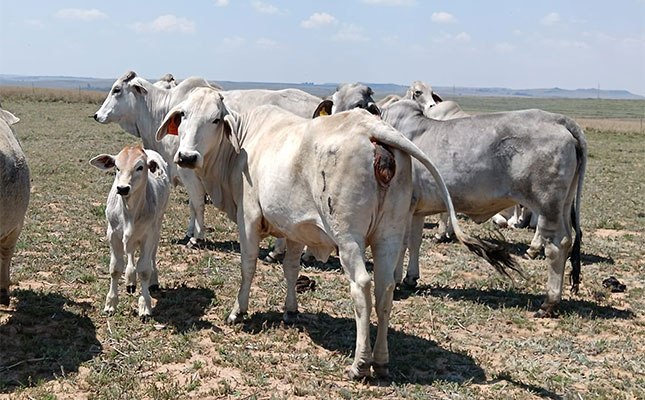
In addition to top-quality feed, the JML animals have access to a production lick, a phosphate lick and a salt lick throughout the year. Lessing also follows a strict vaccination programme, which includes vitamin and mineral supplementation. For optimal functionality, the breeding cows are treated with Multimin, a trace mineral supplement, one month before calving.
The herd is furthermore injected every 90 days with Kyroligo, which contains oil- and water-soluble vitamins, for optimum bone development, immune response and reproduction.
Balance
“The Romagnola breed is known for its compact structure because of its balanced trunk with notable thickness, superb muscle development and extraordinary leg structure, coupled with a light and distinctive head. The ideal head shows a straight profile and a flat forehead with a broad muzzle that is well adjusted to the animal’s overall size, underpinning secondary sexual characteristics. An important benefit of the Romagnola is that the breed’s muscling occurs naturally and not by means of the use of hormones and growth stimulants,” says Lessing.
The breed is known for outstanding walking ability and agility, given the Romagnola’s long history as draught animals on the European steppes. The ideal Romagnola’s feet are sturdy, well pigmented and solid.
For more information email Marnus Lessing at [email protected].