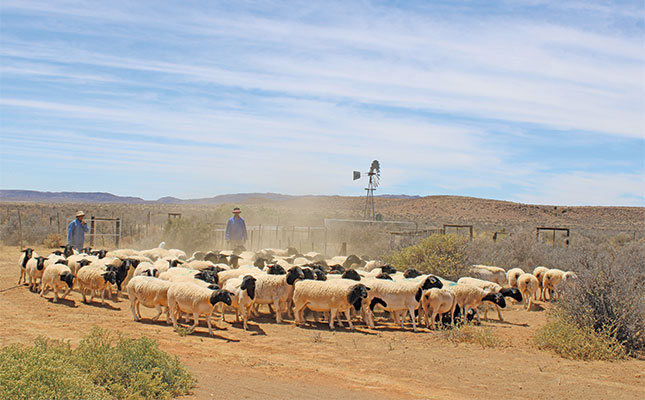
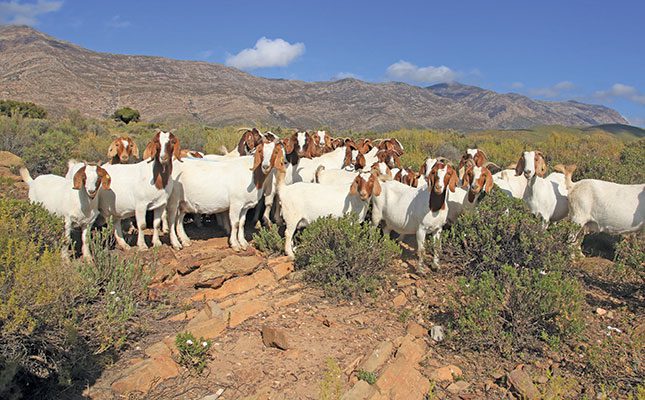
In the past, the Swiegers family was unable to produce any livestock on the rugged northern slopes of their farm, Witrivier, near Meiringspoort in the Groot Karoo, because of nenta succulents that grow there. These succulents poison any livestock that dare to eat it
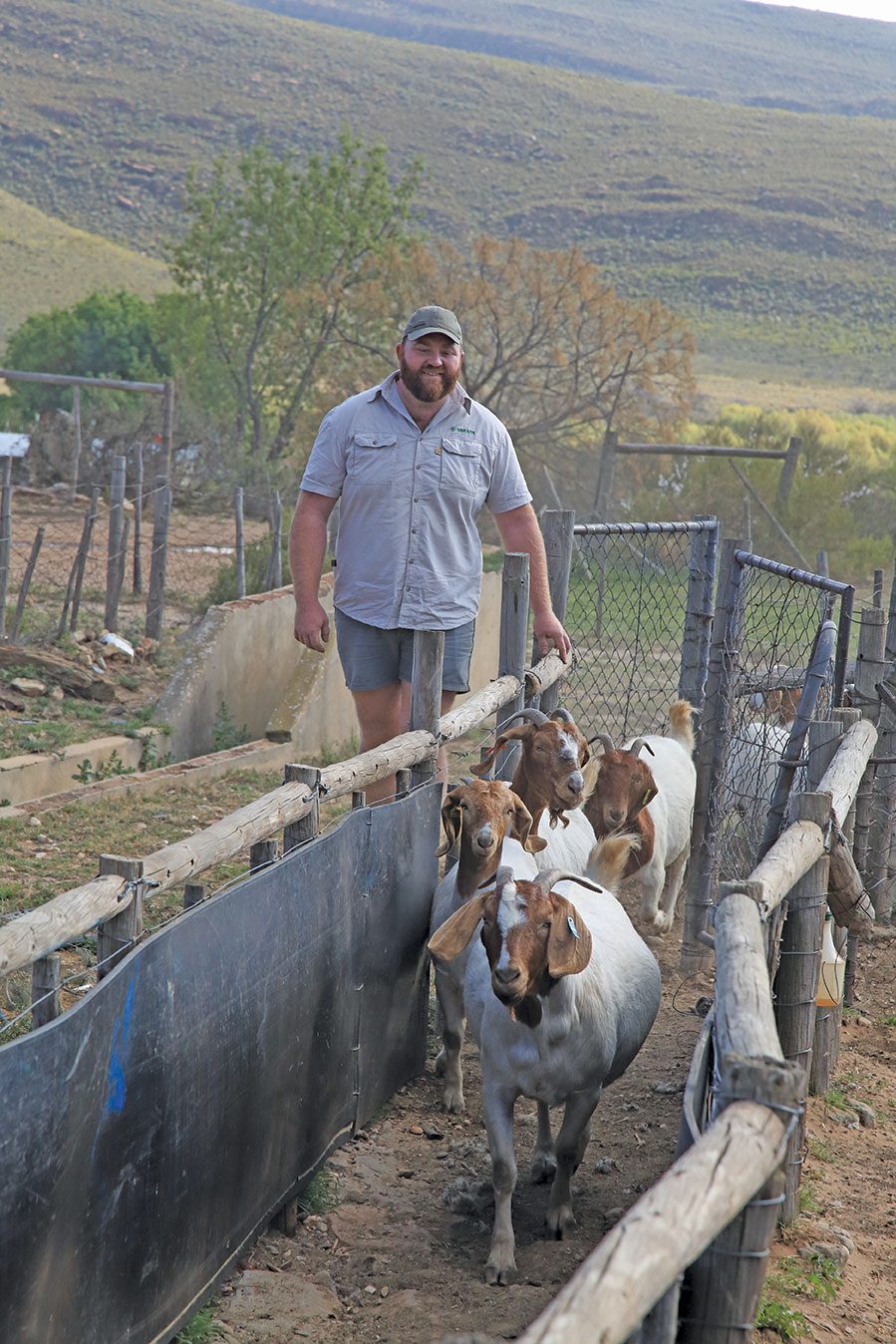
Giel Swiegers, third generation on the farm, explains that when eaten, the toxins in the plant attack the muscular and nervous systems of an animal, causing tremors, weakness and death if animals are not treated in time.
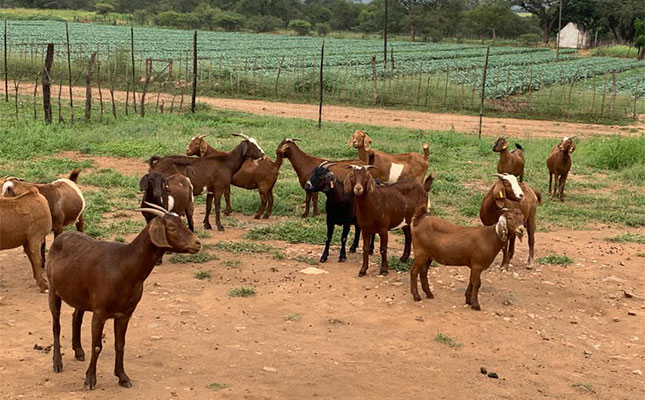
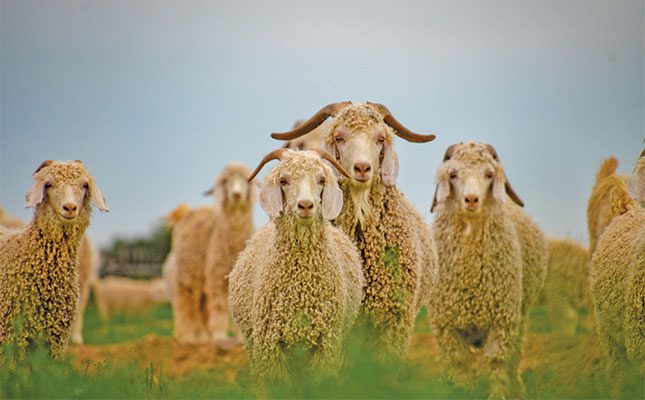
Fifteen years ago, however, Swiegers’s father, Guillaume, came up with the idea to keep Boer goats in these areas.
The experiment was a huge success. They had to treat one or two of the goats for poisoning at the start, but after that, never had problems again.
“Boer goats are incredibly clever. They learn what to avoid and teach their offspring to do the same,” says Swiegers.
Building a resilient business
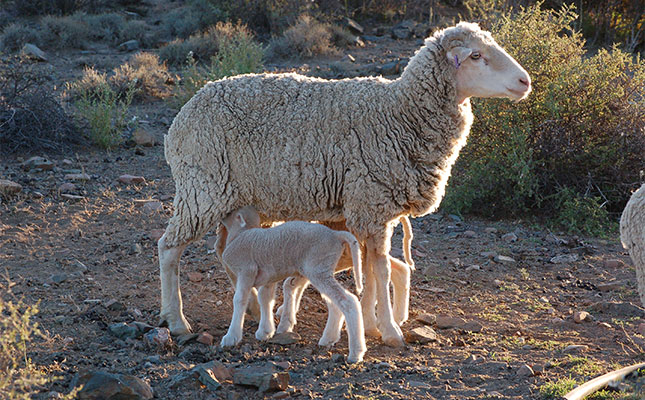
Boer goats, as such, have become a valuable addition to Witrivier’s diverse farming operations, which also includes vegetable seed production, ostrich chicks, Merino sheep and beef cattle.
“Managing such a mix is no small feat, but it allows us to use our land optimally and reduce climate and market risks. The livestock give us steady, reliable income, while seed production can be highly lucrative, but it’s seasonal and much riskier. One hailstorm and the entire crop is gone,” says Swiegers.
The main aim with his goats is to supply the live meat market, with about 90% of his marketable goats, consisting of ram kids weighing around 30kg at three to four months of age and culled ewes, being sold to speculators at a depot in De Rust or to buyers who collect at a central point.
No animals are sold directly from the farm for safety and biosecurity reasons.
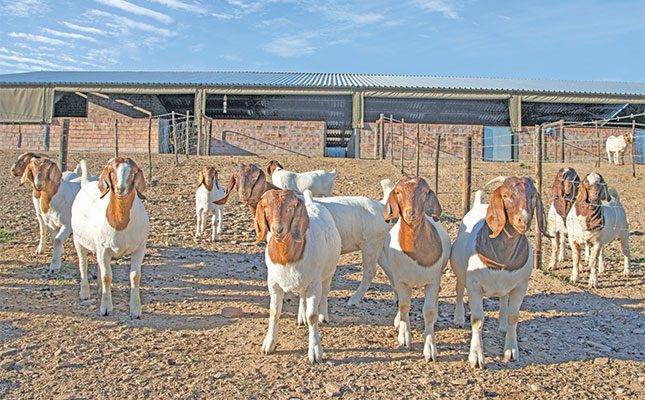
Four years ago, Swiegers registered the Witrivier Boer Goat Stud to strengthen his commercial herd. It also opened a new revenue stream, allowing him to sell high quality surplus animals to other farmers.
“There’s a good demand for our goats, because farmers know they are hardy, functional animals that can thrive under tough veld conditions. Our rainfall ranges between 250mm and 500mm per year, and during the dry years, our goats can walk far distances in search of food,” he says.
Today, he manages a carefully balanced herd of around 200 ewes and their offspring, with stud animals making up a quarter of the numbers.
Thanks to a combination of sharp selection and close management, Swiegers’s kidding percentages over the past five years have stayed impressively high at 200% to 220%.
Precision management
At Witrivier, kidding is a year-round, carefully managed affair. Ewes are managed to reproduce roughly every eight months, and success depends on meticulous timing, observation and a hands-on approach.
When it is time for kids to be born, pregnant ewes are moved into lucerne pastures in summer or, during colder months, into sheds where infrared lamps, borrowed from the ostrich chick operation, provide essential warmth.
“Without the lamps, many kids would freeze to death overnight,” says Swiegers.
Colostrum is tube-fed to the kids during these cold months to ensure every single one gets enough immunity to start strong.
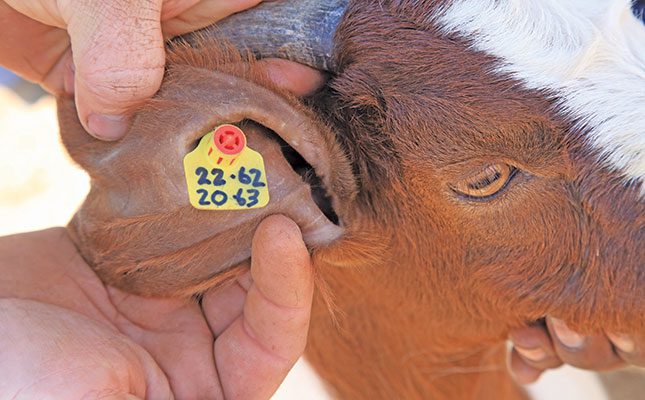
The newborn kids are checked multiple times during the night in winter.
“It is demanding work, but by a month old, the kids are tough and growing fast, even outperforming summer-born kids, who face more parasite problems in the veld because of the warmer conditions,” he says.
Within a day or two, the kids are strong enough to follow their mothers back into the lucerne pastures in summer or oats and barley pastures in winter.
Parasite and disease management is integral to this continuous kidding cycle. Goats are dipped preventatively up to three times to protect them against the Karoo paralysis tick, the area’s most destructive parasite.
Kids receive their first vaccinations against clostridial diseases, such as enterotoxemia (rooiderm), at around a month old, or earlier if any signs of illness appear. At the same time, they are dosed against internal parasites.
Ewes are dewormed and given a broad spectrum mineral and vitamin boost to ensure they are in peak condition when joining the rams. Nevertheless, they do not receive any supplementary feed, as Swiegers says this will eat away at profits over time.
“We are looking for Boer goats that thrive under veld conditions with minimal inputs.”
Swiegers credits his studies in animal production and health at Elsenburg Agricultural Training Institute for
providing a solid foundation to address both production and health challenges on the farm.
Ram management
Rams bred within his own Witrivier Stud are generally used for breeding with both the commercial and stud herds, but he occasionally brings in outside rams to avoid inbreeding and improve specific traits.
“It is difficult to select rams from outside as some breeders have started focusing more on the physical appearance of an animal than its functionality. A ram that is overfed and looks pretty will struggle to adapt under our hash conditions and walk the long distances required to mate with the ewes. Along with this, there is a real risk that they could die from nenta poisoning,” he says.
For this reason, Swiegers only buys rams from stud breeders who, like him, focus on breeding functional veld rams.
New rams spend three to four months in a dedicated pen on pasture to acclimatise, during which time the ewes are bought to them. Thereafter, the rams are allowed to accompany the ewes in the veld. Roughly one ram is used for every 30 ewes.
Each newborn kid is tagged, allowing Swiegers to track its pedigree and note whether it was part of a single, twins, or multiples.
Hand-written records are also kept of each ewe’s offspring, ensuring careful monitoring of the herd’s genetics and productivity.
For Swiegers, Boer goats have become more than just another income stream; they are proof of what thoughtful breeding, seasonal adaptation and old fashioned observation can achieve.
From reclaiming slopes once considered too dangerous to graze to building a stud herd that supports his commercial goals, the Boer goats of Witrivier are both a business asset and a testament to resilience in the Karoo.
For more information email Giel Swiegers at [email protected].