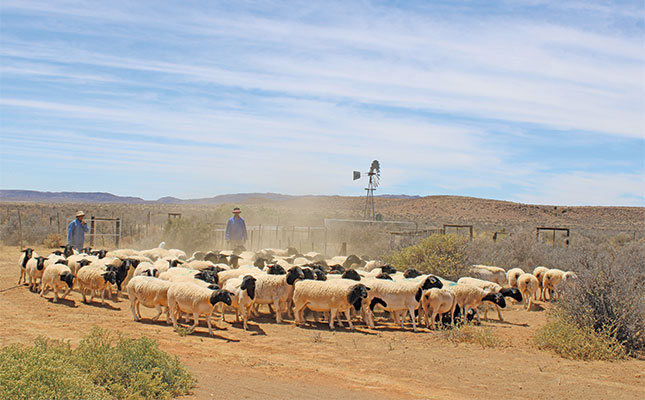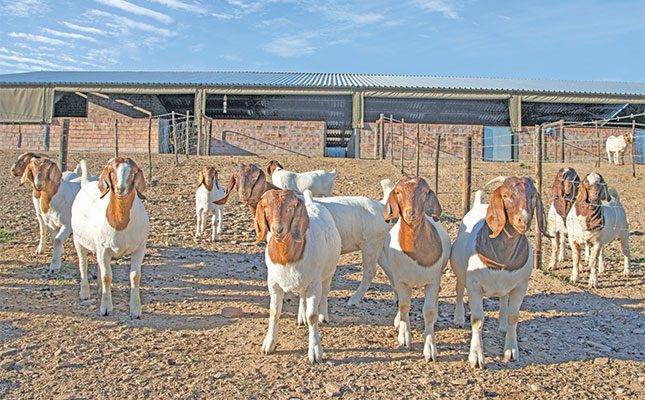

You can farm it on the veld. You can put it in a feedlot. Wherever it goes, the Dorper sheep produced by breeders involved in the Northern Cape Veld Ram Project (NCVRP) offers adaptability, performance, size to satisfy, and meat with quality to tempt the most discerning lamb connoisseur.
This is the gist of a conversation with Dorper stud farmer Christo van Deventer. He has been performance testing his bloodlines since 1992 when he first began entering his Dorper rams into the NCVRP.
Today, he has received numerous accolades, including Double Gold and Platinum recognition from SA Stud Book. In the past five years, two of his rams were sold for the highest price at the group sale, with average prices steadily climbing.
Van Deventer is proud of the bloodlines he and other breeders in the region have created, saying the results show in the performance. He is also excited by the growth in demand for their rams from buyers across the country in recent years.
Family operation
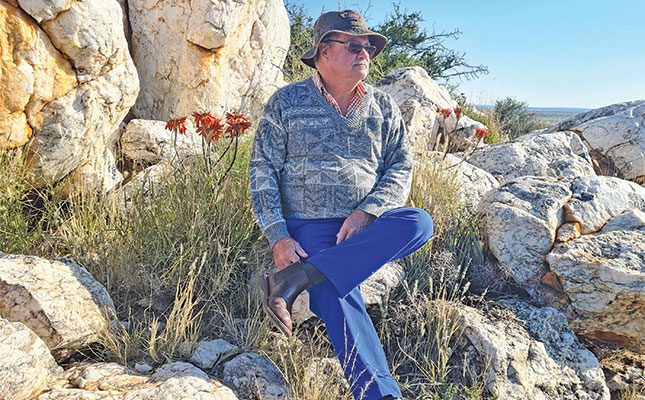
Van Deventer is a third- generation farmer on the farm Brakpoort in the Prieska region, where he runs his Dorper stud under the name CC van Deventer.
He grew up on the farm, which was first purchased by his grandfather and later farmed by his father, before he began farming there full-time in 1988.
Van Deventer says the family is not new to stud farming, with his father having operated a Karakul stud in the past. However, with the collapse of the hide market between the 1980s and the 1990s, they had to adapt.
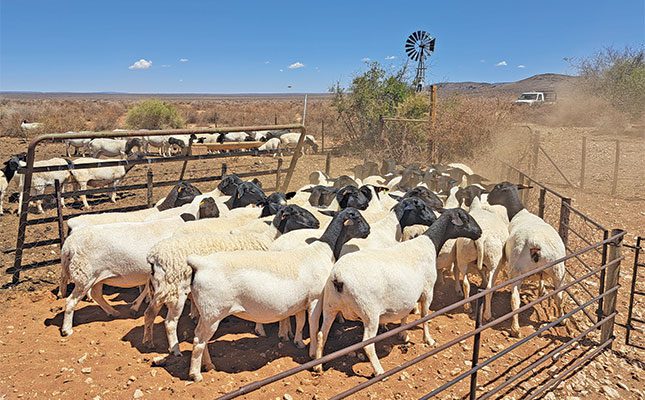
At that stage he began buying some ‘bont’ (black head, white body) Dorper ewes, mostly sourced from stock originally bred by the well-known Dorper breeder Koos Vermeulen. Van Deventer purchased a small flock of ewes from Vermeulen’s son in 1989.
“Over the years I then bought in a ram from here and a ram from there until we came to the point where we are today,” he says.
His stud flock has grown to between 400 and 500 ewes, and he also runs a commercial flock of about 200 ewes for slaughter lamb production.
Van Deventer’s daughter, Anel Liebenberg, is the fourth generation to farm there and runs her own Van Rooy sheep stud, as well as a slaughter lamb component. She joined the family farming operation following the untimely death of Van Deventer’s son at the age of 17.
He says it was a devastating time following his son’s death and that his daughter “saved” him. She had been studying for a BAcc degree and was just six months shy of finishing when she decided to return to the farm in April 2012.
“One day she came and attended a sale and said to me, ‘Dad, I want to come and farm’.
“I had almost thrown in the towel and she had noticed the gradual decline on the farm, but luckily she came to my rescue,” he remembers.
Dorpers bred for performance
The NCVRP is a group veld ram-sale project established in 1985, with the first sale hosted in 1986. According to its website, veldramme.co.za, bloodlines in the project animals, which include several sheep and goat breeds, can be traced to lineage records dating back to 1969.
Van Deventer explains that in the early days participating farmers would send their ram lambs to a single location after weaning for entry into the project. Those that were selected for participation would all be placed in a single group for six to eight months prior to a group sale. During this period they would be tested for performance on the veld and were offered for sale purely based on the data in the catalogue. The breeder remained anonymous.
“In those first years, when the hammer fell on that ram at the sale, you had no idea whose ram you had actually bid on,” Van Deventer reflects.
He says the format evolved around 1999 when a more formal type of performance testing was introduced, which would give each ram an index, as well as identifying its breeder as required for identifying breeding values based on Best Linear Unbiased Prediction (BLUP).
According to an article published by Dr Bernice Mostert for SA Stud Book, the Dorper Reproduction Index comprises about 17 different index points (including number of lambs weaned and inter-lambing periods), while the Dorper Logix Merit Index (LMI) combines a measure of growth and reproduction values comprising more than 22 index points.
Van Deventer says there are strict entry criteria for the project, and the rams undergo rigorous testing. “There are about 400 to 500 ram lambs submitted for entry and of these only about 200 will be accepted.”
He says today he is harvesting the fruit of years of participation. He knows everything he needs to know about his sheep, the breeding is correct, they can be sustained on the veld even in drought periods, but at the same time will perform brilliantly in a feedlot.
He also knows all the details with regard to lambing, from how many times the mother ewe has lambed to how her lambs have performed. “These sheep are well adapted and I know everything about them from the mother’s side and the father’s side,” says Van Deventer.
Data-driven decisions
Participants in the NCVRP focus on quantifying productivity through measurable traits and performance data. Although animals must conform to the breed standard in terms of correct type and conformation, they are selecting for performance rather than basing decisions on how big or impressive a ram, or an ewe, looks.
Much of this lies in the fact that a sheep can be fed to show condition and look incredible, but not deliver in terms of passing on desired traits to offspring, such as hardiness, mothering ability, lambing and weaning percentages, pre-and-post weaning growth rates and adaptability, among others.
Van Deventer thinks of his own experiences, saying sometimes you will get a ram that doesn’t look like much, but he will use it based on bloodlines he has curated over generations, as well as performance data. The bloodline breeds true and the progeny outperform lambs from ‘good-looking’ rams.
The same is true for his ewes.
Van Deventer says when his daughter first started farming with him, they conducted an exercise based on data and records. They looked at performance figures and indexes and then went through the herd, removing animals that did not meet the standards.
It was often the best-looking ewes that were not producing. These were ewes that weren’t delivering lambs, or were abandoning their lambs, for example.
“A lot of my most beautiful ewes were not performing up to standard and we had to cull them from the herd,” he says.
They have high expectations of their sheep and any ewe that fails to conceive, does not deliver or rejects her lambs will get a marker tag. If it happens a second time, she is culled from the herd as there is no place for ‘parasites’ that are consuming resources that could be better utilised by ewes who are performing.
“Many farmers struggle with ewes that have low lambing percentages or other issues, but we are not having that problem because we have been selecting for years to get rid of the parasites that are eating food but not producing,” Van Deventer explains.
He believes that both the ewe and the ram contribute significantly, and when using a ram, he also looks very closely at what its mother did.
“We look at how often she lambed, how many lambs were weaned, all those factors.
“If a ewe looks after her lamb, there is a strong chance that trait will be passed down to her offspring.”
Farming for efficiency
The Van Deventers operate on two farms with a collective area of around 8 077ha. He says this is small for the region, where the norm is around 20 000ha just to be able to survive. For this reason he also does not ‘farm big’.
“I am not chasing numbers. I rather focus on efficiency and productivity,” he elaborates.
The farms comprise a mix of bossieveld (scrub) and a strip of grassland on soft sandveld towards the mountains. Van Deventer says they have good rainfall for the region.
“Since I started recording rainfall data in 1992 we have had an average of 275mm per year.”
Camps on the farm vary in size from about 180ha to 350ha, with the portion utilised by his daughter divided into even larger camps.
He tries to use only two-thirds of available land for grazing each year, allowing the other third to rest for a year. However, if there is no rain, he has to utilise even these portions as the only other alternative would be to buy in feed.
Van Deventer does not have any irrigation or cropping land, relying entirely on the nutrition provided by the veld.
This is also where his commercial flock fits into the picture. He says in good years these ewes produce slaughter lambs that give him cash flow. In the best-case scenario, these sheep are loaded from the veld to be sent to an abattoir in Carnarvon, or are sourced by an agent from Cavalier to be sent to an abattoir in Pretoria.
If the veld is poor, he will buy in feed to round the sheep off in his own feedlot before sending them for slaughter.
The commercial ewes he describes as a “savings account” to protect his stud genetics.
“If we experience a drought, such as happened about six years ago, I have the option of selling off those ewes to relieve pressure on the grazing and save my precious stud bloodlines.”
Production practices
Ewes will lamb roughly three times in a two-year cycle, with three lambing periods timed to coincide with the three sales hosted by the NCVRP annually. These take place in Prieska in February, Kenhardt in May, and Griekwastad in September.
“The lambs for each specific sale need to be born at a specific time,” Van Deventer says. He therefore aims for lambs to be born in February/March, April to July and again in August to October.
“The ewes that lamb early in February/March will be put to the ram again to lamb in the September/October cycle.”
These ewes will then only lamb once the following year, with those that had lambed in the April to July period the previous year lambing twice the following year.
He says they also time the breeding carefully to prevent the arrival of lambs over November to January. This is because of the midsummer heat, with temperatures often climbing to 40°C and higher.
“It is too hot at that time and there is a risk of the lambs actually burning to death.”
The area can also get cold, but this does not have a negative impact.
Ewes lamb out on the veld and are not brought into lambing pens. Van Deventer also does not use artificial insemination, instead relying on live coverings. Although he did use laparoscopy in the past he has stopped this, and also does not confirm pregnancy through veterinary scans.
He does, however, use a veterinarian from Upington to test all rams for fertility, as well as drawing blood to ensure they remain free of damaging diseases such as brucellosis.
“It has been about 20 to 25 years that my rams have tested clean. I don’t have brucellosis in my herds.”
Van Deventer also focuses on strict record-keeping as this is mandatory for a stud operation.
He splits his herd across four camps for the mating season and places a single breeding ram with each group for a set period before rotating another ram. A teaser ram is placed with the groups at the start of the mating season for about 10 days to stimulate the ewes before putting the ram in.
“I then put one ram in – it doesn’t matter if it is 50 or 100 ewes. He stays there for 32 days and is then removed. After 10 days, I place another ram with the group.”
He can then refer to the records and determine parentage based on the number of the ram and each individual ewe, and the time at which he was with the ewes.
Towards the end of the breeding season when all ewes have been mated, Van Deventer runs the entire flock of 400 to 500 ewes together until lambing.
At lambing time, he will again separate them into flocks of roughly 100 ewes, which will remain in the smaller flocks until the lambs are weaned.
Van Deventer says lambs are tagged at between one and three days of age and are allocated a number. They are weaned at about three months of age, or around 100 days, and at that stage the lambs are weighed. Ram lambs are then compared in pairs to determine an index, as well as comparing growth.
At about five to six months of age, the ram lambs he has selected are then sent to another location where they are measured against lambs from other breeders as part of the NCVRP process.
Van Deventer does not really sell stud ewes, instead selecting for replacement stock for his stud flock as older ewes struggle to survive on the tough bossieveld. Those that are not up to stud or breeding standard will be sent to slaughter.
Dorper benefits
Van Deventer says he loves the Dorper breed, as they are hardy and adaptable.
“Meat is always in demand, you can’t go wrong with a Dorper,” he enthuses.
Aside from their hardiness, Van Deventer says the breed is a top performer in terms of body weight, lambing percentages and a tendency to deliver twins, or even triplets, when conditions are at an optimum.
“If we have good rain and you put the ram with the ewes during a growth phase, twins are very common,” he explains.
One of the big benefits of the Dorper, according to Van Deventer, is that it has good body fat.
“The other day a big farmer asked me what we are doing to get sheep that look this good. We told him that a sheep needs to have good body fat to survive in these dry parts.”
He says this distribution of fat across the entire body is also what enables the Dorper to perform well on any veld to which it is taken.
“Farmers buying rams from us tell us that our rams maintain equally well on their veld (in various parts of the country) and adapt really well,” he adds.
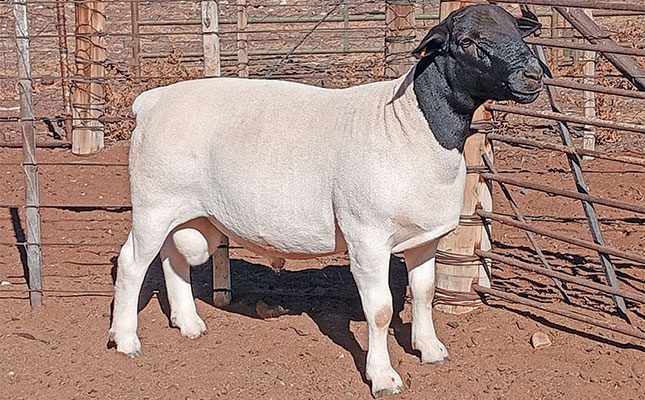
In terms of meat quality, he says Dorpers have big, impressive legs and soft, tasty meat. They grow quickly and have good fat distribution.
“If you want to put weight on, you can feed it [in a feedlot] and it will still grade well.”
In terms of weights, Van Deventer is achieving weaning weights of 36kg to 40kg. They are slaughtering at about 16kg to 17kg for a lamb off the veld, with a smaller animal more efficient in his conditions.
If Van Deventer aims for a weight of 20kg to 21kg slaughtered, it places too much strain on the ewe and he has to start supplementing with feed. In different conditions, however, the growth potential is there.
He says the sheep he and other breeders involved in the project are breeding are ideal for their conditions and have among the best genetics on offer.
Although he and others have tried introducing rams from big breeders who follow a feedlot approach, as well as top ‘embryo’ rams, to introduce new blood, these have not worked as well as their own rams.
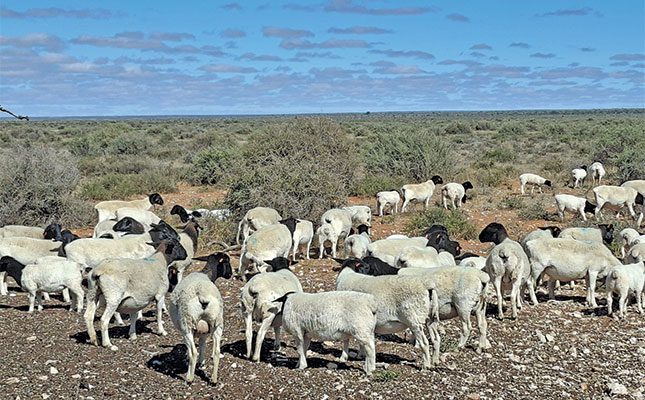
Van Deventer says when those rams are placed with the ewes, the resulting lambs do not adapt to the conditions under which he farms.
“When we put the lambs of those rams with lambs from our rams, they just don’t adapt. They stay small and skinny in comparison.
“It is actually a challenge for us because we don’t know where to go to get new blood that will work as well as our own bloodlines.”
He says when they have droughts in the region and have to put their lambs into a feedlot to round them off, they adapt and grow quickly.
“If we need to feed them, it is a pleasure. Even the old ewes do well if we round them off in a feedlot,” he says.
Steady price increase
Van Deventer says the rams produced by the NCVRP breeders are largely purchased by commercial producers looking to bring improvements to their flocks. Although they have lagged behind some of the big-name stud breeders in terms of prices over the years, recently even some of these breeders have started showing an interest in their veld rams.
The most recent sale in Griekwastad in September saw average ram prices climb to about R14 500 per animal. This was the average based on prices paid for both stud and commercial rams. Commercial ewes averaged around R2 500 per sheep.
Looking at other Dorper sales in the region, Van Deventer comments there has been a steady decline in prices, whereas the average for animals produced by NCVRP breeders have maintained a steady price increase.
“Somewhere we must be doing something right because we are drawing more and more interest. The adaptability of our sheep for any farmer in any area speaks for itself and our reputation is growing.
“I see a very bright future for the Dorper,” he concludes.
For more information email Christo van Deventer at [email protected], or WhatsApp him on 082 554 8446.