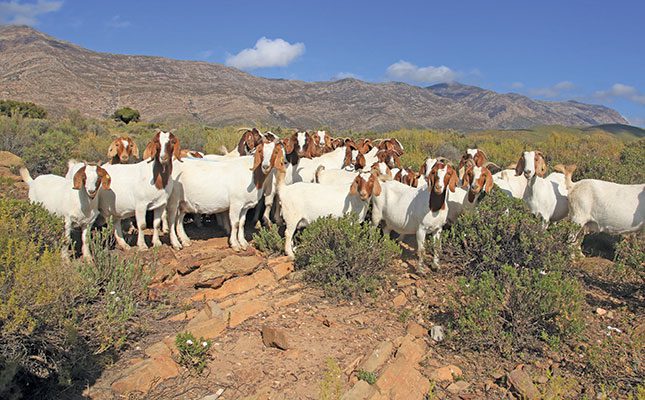
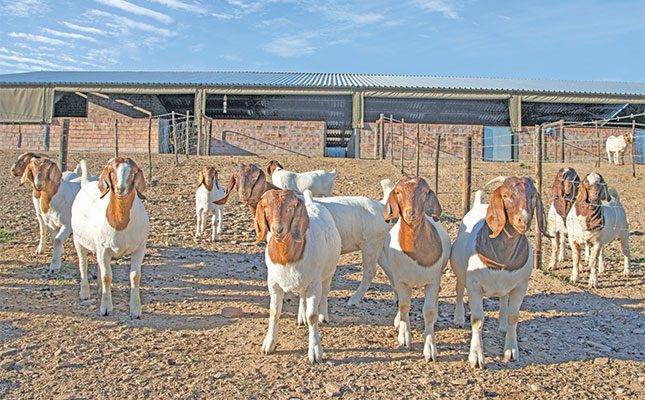
VEA Stud Breeders, near Bonnievale in the Western Cape, made headlines in May when they bought Next Level (762-22-1427) for R2,3 million from Lukas and Abraham Burger of Griekwastad, Northern Cape.
The sale followed Next Level’s crowning as eight-tooth world champion at the Boer Goat Breeders’ Society’s biennial world championships during the Bloem Show.
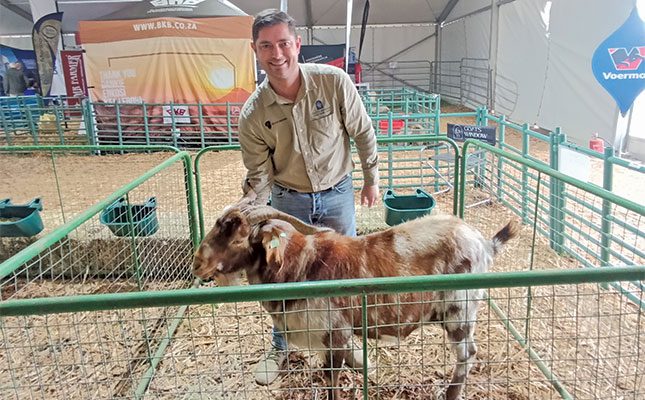
While some might consider R2,3 million an excessive price for a Boer goat, William Smit,
general manager of VEA Stud Breeders, sees it as a strategic investment in the stud, which was registered only last year.
As the name suggests, Smit believes Next Level will elevate their breeding programme: “Next Level is as close to the perfect Boer goat that one can find.
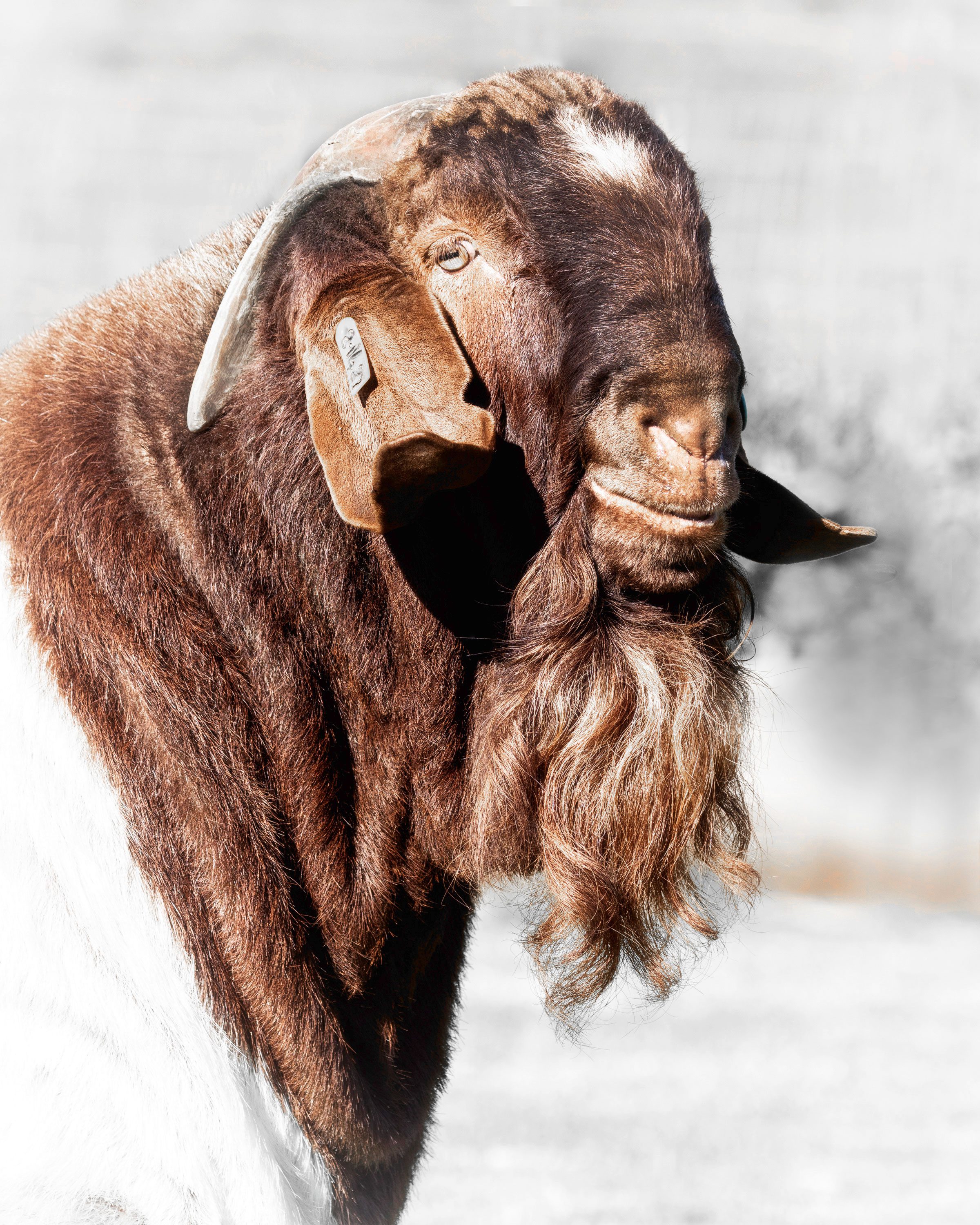
“He is not only impressive in appearance, with exceptional colour, a long, broad head and neck, and perfectly shaped horns, but his progeny are already proving his value at competitions.”
Since its registration, VEA Stud Breeders has selectively invested in top rams and ewes to build an ‘elite Boer goat’ stud, also paying R1,05 million last year for Formula One (762-21-467).
Mention this ram to Smit, and he immediately lights up, tracing its pedigree back several generations.
Also from the Burger Stud, Formula One boasts an award-winning lineage: his dam, Demi Lee (762-17-284), was Senior Reserve and Senior Grand Champion Ewe at the Northern Cape Championships in 2019, while his sire, Maserati (762-19-1002), was crowned World Champion Ram in 2021.
Formula One’s son (762-23-133) won the Junior Champion Ram Lamb title at this year’s world championships, while a daughter (762-23-539) was crowned Junior Champion Ewe at the Central Inland Regional Show in Vryburg.
Asked what traits he looks for when buying stud Boer goats, Smit says meat production is the main goal.
“We focus on goats with a big frame and strong genetics to improve both growth and reproduction. Our vision from this is to empower farmers and breeders with genetics that drive profitability, sustainability and long-term success,” Smit explains.
More than good looks
While record-breaking stud purchases have drawn attention, Smit stresses that the Boer goats are more than just show animals. They play a key role in the wider VEA Agri and Tourism business, contributing to income through both stud sales and meat production, while supporting sustainable land use.
“VEA Group Holdings bought the 1 683ha farm Brakkefontein in March last year. It was no longer in production and had about 700ha of old lands. This year, we planted oats on some of the dry lands, and in future, we will also plant lucerne and lupines to supplement feed for our Boer goat and Cape Lob Ear goat herds and Ankole cattle stud,” says Smit.
The farm also keeps a huge variety of game and breeds buffalo, springbuck, kudu and king wildebeest.
Animals not used in the breeding programme form part of the tourism experience on the southern part of the farm, which features the Goats Window Luxury Safari Lodge, consisting of self-catering eco-cabins, a luxury eco-safari lodge, and a group private retreat for up to 16 guests, ideal for family getaways, group celebrations and corporate escapes.
There is also a fine-dining restaurant, featuring seasonal South African cuisine and wine pairings, the Buffalo Bar, serving hand-crafted cocktails, premium spirits and local wines, and the Sable Sun Lounge, a tranquil sundeck with a scenic pool and fire pit for unwinding throughout the day.
The Eco Terrace forms the heart of the family zone, with a large swimming pool, a jungle gym and splash zone for little adventurers, and indoor and outdoor restaurants with panoramic views of the surrounding bushveld, a light menu, including wood-fired pizzas, gourmet burgers and kid-friendly options, as well as a fully stocked bar serving cold drinks, cocktails and wine.
Boer goats
Smit says they chose Boer because these animals thrive under the farm’s conditions.
“Boer goats work better than sheep or cattle here because they eat almost anything and can survive in harsh conditions. We receive less than 350mm of rain a year.”
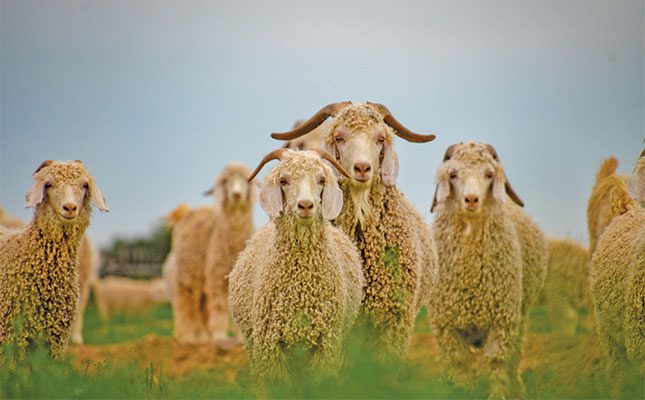
After observing how well the Boer goats performed on the farm and in the market, they decided to also invest in a Cape Lob Ear stud. So far, they have invested in 92 ewes and the rams Oorlog (XAN200006) and Oracle (DXE231082).
Profitability is another major advantage.
“Meat from both breeds sells for more than double the price of lambs. We sell most of our goat meat to abattoirs in Pretoria, where the best prices are currently attained. Additionally, commercial animals sell from R8 000 to R10 000 for an entry-level ewe, with top-quality animals fetching significantly more,” he explains.
Management
To support both commercial production and stud excellence, careful herd management is essential. The commercial Boer goat herd of about 1 700 ewes is managed extensively in camps ranging from 80ha to 200ha, while the stud herd of 370 top-quality ewes is managed semi-intensively on smaller camps.
All animals are brought into smaller camps with shelters at night to protect them from predators such as leopards and lynxes.
Feeding is tailored to veld conditions, body condition, and reproductive cycles, with supplements provided before the mating season to ensure optimal fertility.
“Ewes usually have a body condition score of around 3 when their offspring are weaned,” Smit explains. “We aim to bring them back up to 3,5 before mating. This ensures they have enough energy reserves to ovulate successfully, carry healthy pregnancies, and produce strong offspring.”
Mating is carried out year-round, with seven rams selectively used to produce top genetics from the stud ewes.
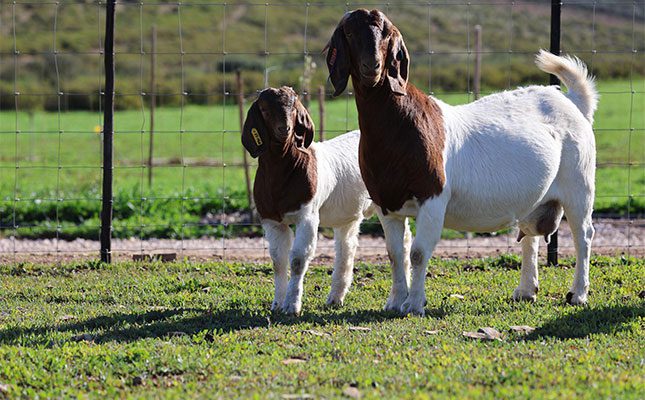
“The stud ewes are placed in small pens with teaser rams to help us identify when they are in heat,” says Smit. “Once in heat, each is placed with a ram carefully selected to accommodate her genetic and phenotypic strengths and weaknesses.”
In the commercial herd, one ram is used for 35 to 40 ewes.
Management intensifies around kidding. Stud ewes are moved to smaller camps up to four weeks before giving birth, while commercial ewes are relocated a few days prior. Singleton kids and strong multiples leave the kid cubicles a day after birth, while weaker multiples remain an extra day or two until strong enough to join the herd.
The future
Enforcing biosecurity can be challenging on a farm that also derives income from tourism operations. To overcome this challenge, the area aimed at tourism is kept separate from the areas used for production.
Visitors also must walk through foot baths and their cars are sanitised upon entering the farming operation to prevent them from bring diseases onto the farm.
There is a corridor between the wildebeest and the cattle to reduce the risk of the cattle contracting malignant catarrhal fever.
VEA plans to acquire two more farms, increasing their Boer goat herd to 2 500 ewes, to further strengthen the breeding programme and commercial production.
“Running such a diverse operation isn’t easy,” Smit admits, “but with a highly skilled and dedicated management team, we keep all the pieces together and continue building the future of our stud and farm.”
For more information email William Smit at [email protected].