

Annelie Coleman

Annelie Coleman represents Farmer’s Weekly in the Free State, North West and Northern Cape.
Agriculture is in her blood. She grew up on a maize farm in the Wesselsbron district where her brother is still continuing with the family business.
Annelie is passionate about the area she works in and calls it ‘God’s own country’. She’s particularly interested in beef cattle farming, especially with the indigenous African breeds.
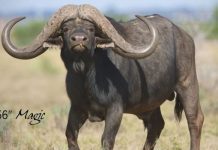
Buffalo bull with 56-inch horns sells for R22 million
Magic, a buffalo bull with 56-inch horns, was recently sold for R22 million at the Piet du Toit Wildlife Auction in North West. The bull was sold to four buyers.
Agri sector needs to focus on how budget allocation is spent – RPO
Over the past few years, the broader South African agriculture sector has been disappointed by the National Budget, according to Dr Frikkie Maré, CEO of the Red Meat Producers’ Organisation.
Small farmers need title deeds for sector to grow, says Steenhuisen
The imbalances in the South African economy must be addressed as a matter of urgency, and particularly so in the agriculture sector, according to John Steenhuisen, minister of the Department of Agriculture.
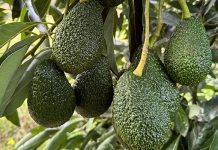
South African avocado production: a success story
Avocado production in South Africa has expanded markedly since the industry’s humble beginnings over 80 years ago. From a small grove planted in 1938 in what was then Nelspruit, the industry has blossomed to seven million trees planted on 20 000ha. Dr Guy Witney, project manager at Great Brak Avos, spoke to Annelie Coleman about the country’s avocado production.
Fly outbreaks in South Africa due to “unhygienic conditions”
The current fly outbreak in Gauteng is not an isolated incident, and outbreaks have been reported across all parts of South Africa, according to Dr Gerhard Verdoorn, operations and stewardship manager at CropLife South Africa.
Zimbabwe to conduct first agri sector census since independence
Zimbabwe is to conduct its first National Agricultural and Livestock Census (NALC) since the country’s independence in 1980, with the support of the Food and Agriculture Organization of the United Nations (FAO).
Rhino horn trafficker receives 18-year prison sentence for money laundering
High-ranking rhino horn trafficker, Francis Kipampa of the Democratic Republic of the Congo, recently received an 18-year prison sentence for money laundering offences related to rhino poaching.
Healthy soil means healthy cattle
Healthy soil plays an important role in cattle health and production. Dr Jan Myburgh from the Department of Paraclinical Sciences in the University of Pretoria’s Faculty of Veterinary Science spoke to Annelie Coleman about the numerous benefits of healthy soil in improving farm profitability.
Food scarcity takes its toll on hungry Zimbabweans
At the beginning of January 2025, Zimbabweans faced worsening food shortages due to delayed rains and the ongoing effects of drought.
Drought, through the eyes of farmers
Namibia is experiencing its worst drought in 100 years. Annelie Coleman spoke to several farmers in the Mariental district, who shared their experience of the impact of several rainless years.
Full red apricot variety shows big promise in SA
The arrival of the first full red apricot variety in South Africa holds huge potential for local producers and the expansion of apricot production, according to Michael Oosthuizen, International Plant Selection’s representative in South Africa.
The Brahman: a key player in Namibia’s beef production industry
The Brahman has played a pivotal role in the development of Namibia’s beef cattle industry. During the Namibia Brahman Breeders Society’s 70th anniversary, seasoned Brahman breeder Ryno van der Merwe spoke to Annelie Coleman about the breed’s influence on the country’s beef production.

Drought cuts into NWK’s profit
The drought over the past year had a markedly negative impact on the cash flow of agricultural producers, as reflected in the recently declared interim financial results of NWK.
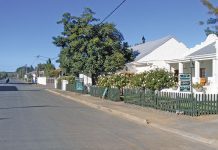
Seismic surveys in the Karoo and the possibility of fracking
Mineral and Petroleum Resources Minister Gwede Mantashe recently announced his department’s plans to conduct the first major seismic survey in 50 years in the south-central Karoo. Prof Raymond Durrheim, Emeritus Professor in the School of Geosciences at the University of the Witwatersrand, spoke to Annelie Coleman about this announcement and the possibility of fracking in the area.
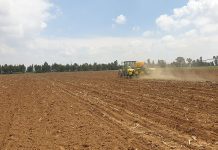
Diesel worth millions of rands stolen in SA every year
TLU SA has expressed serious concern over the widespread and growing illegal diesel trade in South Africa, with estimates suggesting it could amount to millions, if not billions, of rands annually, according to Erika Helm, chairperson of TLU SA’s Local Government Committee.
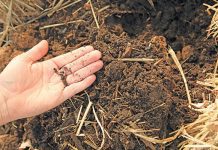
Importance of regenerative agriculture highlighted on World Soil Day
Soil provides nearly all of the world’s animals and humans with food and gives life to all of the world’s plants, which supply much of the oxygen that animals and humans need.
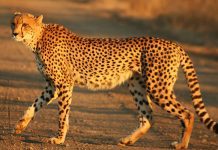
Greater efforts needed to protect cheetahs
On World Cheetah Day, observed annually on 4 December, attention was drawn to the cheetah’s vulnerability. With fewer than 7000 remaining, cheetahs now occupy less than 10% of their historic global range, including small populations in the Middle East and Asia, according to Wild Africa, a global wildlife conservation movement.
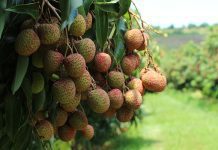
SA litchi price hike likely over the festive season
Between 40% and 50% of South Africa’s 2024 litchi harvest had been destroyed by adverse weather conditions, which would invariably push up the local litchi price significantly.
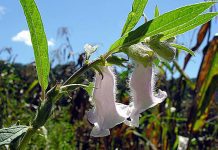
Japanese aid enabling Zim farmers to grow sesame
The United Nations World Food Programme welcomed a donation of R90 million from the government of Japan to support 37 000 smallholder farmers wrestling with the effects of climate challenges in five districts in Zimbabwe.
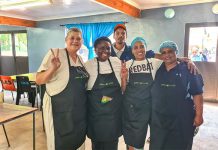
Green Monday launched in two Western Cape schools
Humane Society International/Africa (HSI/Africa) recently announced its Green Monday programme at two rural schools in the Genadendal Valley in the Western Cape.
- ADVERTISEMENT -
- ADVERTISEMENT -
MUST READS

- ADVERTISEMENT -



