As South Africa experiences increasing irregularity and intensity in summer rainfall across its primary grain-producing regions, it is important to reassess the role of indigenous, drought-hardy crops in supporting agricultural resilience.
Crops such as sorghum, cowpeas, amaranth, and Bambara groundnut have become part of local diets thanks to small-scale farmers and informal markets.
Bambara and Amaranth
Erika van den Heever, retired senior researcher at the Agricultural Research Council, told Farmer’s Weekly that Bambara groundnut is regarded as the second most important food legume in South Africa. It is commonly cultivated in Mpumalanga, though never on a commercial scale.
Seed availability remains an ongoing challenge. Despite this, Bambara groundnut is widely grown by small-scale farmers as an intercrop with maize, cowpeas, and melons, or on its own.
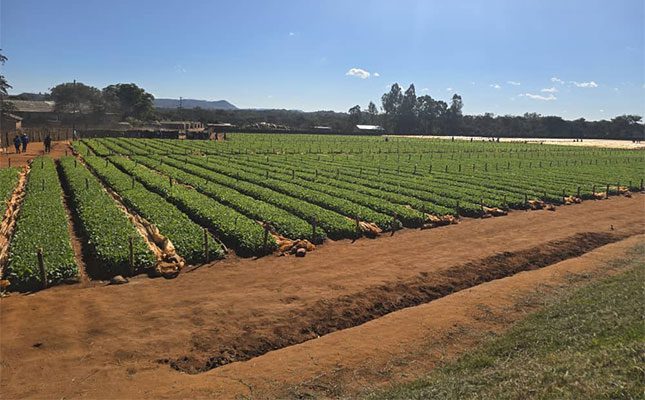
Amaranth is exceptionally nutritious compared with other leafy vegetables such as cabbage. It is considered a dual-purpose crop, serving as a grain and a leafy vegetable. However, its use as a grain is not widely recognised in South Africa, where the species currently available is primarily cultivated as a vegetable.
The prospects for large-scale commercial production of these crops remain limited. They may be better positioned as niche products, with expansion carefully managed to ensure sustainable market channels are in place before producers commit to entering these crop markets.
Sorghum and cowpeas
By contrast, sorghum and cowpeas have achieved a measure of success in the commercial sector. Sorghum, in particular, has a long tradition of commercialisation in South African agriculture, supported by established production knowledge and infrastructure.
Cowpeas, while less entrenched, have long been grown for animal feed, but they are becoming increasingly recognised for their agronomic and nutritional value, offering opportunities for domestic and export markets.
Importantly, both crops are traded internationally. This global recognition underscores their potential to contribute not only to local food security and climate resilience but also to broader market opportunities.
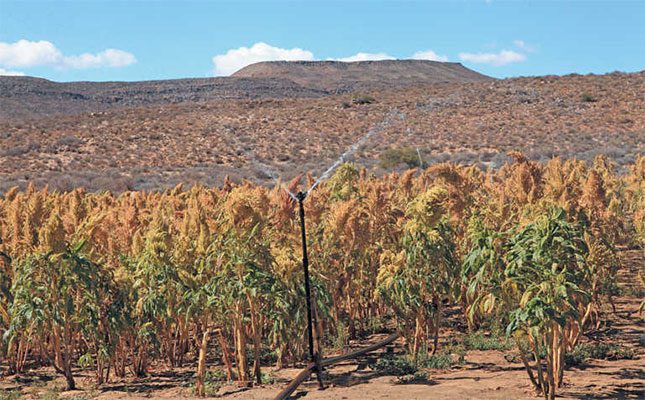
Sorghum remains one of the most resilient cereals in global agriculture, prized for its ability to withstand extreme heat and thrive with minimal rainfall. This hardiness makes it a natural fit for semi-arid regions of South Africa. Its physiology allows it to produce grain even under drought stress, and its deep root system and efficient water use make it a cornerstone of climate-smart farming.
Globally, sorghum production reached approximately 61,3 million tons in 2024, with Africa contributing nearly half of this output, as highlighted by Sorghum ID. Nigeria, Sudan, and Ethiopia dominate African production, while the US remains a major player despite declining yields, according to USDA reports.
According to the South African Grain Laboratory’s 2023/24 South African Sorghum Crop report, South Africa, by contrast, ranks only 13th worldwide, producing a long-term average of between 130 000t and 150 000t per year, a modest figure that reflects its limited hectarage and structural challenges in the domestic sorghum sector.
Commercial sorghum production in South Africa is divided between sweet and bitter sorghum. Sweet sorghum is processed into staple foods such as meal and rice, while bitter sorghum is primarily used in malting, particularly for traditional beer.
Demand for bitter sorghum has declined sharply over the past two decades as consumption of traditional beer has waned, undermining incentives for farmers to expand production. Compounding this decline is the fact that sorghum remains the only grain in South Africa that is subject to VAT, which raises consumer prices and discourages investment in new cultivars.
As a result, productivity has stagnated, and South Africa has become a net importer of the grain, sourcing more than half of its consumption from Botswana. Ironically, Botswana was once an export destination for South African sorghum, underscoring how domestic production has lost competitiveness.
Despite these challenges, sorghum offers significant market opportunities. Global demand for sorghum in food markets rose by a compound annual growth rate of 4,6% to US$8,2 billion (around R138 billion) in 2024, as reported in Emergen Research’s 2025 Sorghum Market Outlook report, driven by interest in gluten-free diets, health-conscious diets, and brewing industries experimenting with alternative sorghum-based products.
Majority of global production in Africa
The cowpea is one of Africa’s most important indigenous legumes, valued for its agronomic resilience and economic potential. It is a nitrogen-fixing legume that enriches soil nitrogen, making it a cornerstone of low-input farming systems across the continent.
In 2024, Africa accounted for about 70% of the world’s cowpea production, underscoring its strategic role in global supply. The crop’s growth rests on expanding trade partnerships that link African grain to processors in Asia and European markets.
Agronomically, cowpea thrives in hot climates and is highly drought-tolerant, capable of producing 1t of seed and 5t of hay per hectare with as little as 300mm of rainfall. Under more ideal conditions, it can yield 2t/ha of beans when produced for human consumption, or 18t/ha of green feed when grown for animal feed.
It is sensitive to frost but occupies a competitive niche in sandy soils and marginal lands throughout Africa, where other crops fail. Cowpeas do not tolerate excessive wetness, alkaline, or saline conditions, and are particularly intolerant of high boron levels.
The growing season varies by cultivar, but it can be up to 140 days for more prostrate cultivars, with hotter weather shortening maturity periods. These traits make cowpeas adaptable to diverse farming systems and valuable for rotation and intercropping to improve soil health.
On the market side, cowpea prices often move in tandem with chickpea and lentil prices, but the absence of futures exchanges limits hedging opportunities. Currency volatility in major cowpea-producing countries such as Nigeria and Argentina adds further uncertainty for processors, complicating budgeting and trade flows.
Mechanisation gaps remain a significant challenge, eroding profitability and limiting plantings. Homogeneous bean ripening is also a constraint, particularly in regions without sufficient heat units, leading to split pods and yield losses in dry bean production.
In West Africa, where most cowpeas are grown, the crop is still primarily consumed as green beans, while exports focus on dried beans and meal. In South Africa, where cowpeas are currently planted mainly for fodder, there is untapped potential to expand into grain production, green manure, and cover cropping for erosion prevention.
Improved varieties and better processing technologies could help overcome constraints such as the strong bean flavour in the meal and low digestibility, which have limited consumer acceptance in some markets.
Despite these challenges, cowpeas offer significant opportunities. Rising demand for high-protein meat alternatives and non-glutinous flours in global markets creates new outlets for African producers.
Strong potential, limited uptake
The broader narrative surrounding indigenous crop options remains consistent: despite their promise, they continue to face significant barriers related to market access, consumer perceptions, limited research investment, and policy gaps. These constraints hinder their transition from subsistence and small-scale farming solutions into commercially viable enterprises.
Sorghum and cowpeas illustrate this reality well. Even with established commercial infrastructure and local expertise, their growth potential is curtailed when supportive policies, research, and consumer awareness are lacking.
Indigenous crops nonetheless represent a powerful opportunity in modern South African agriculture. They are naturally adapted to South Africa’s semi-arid regions, thriving with minimal inputs and offering valuable genetic diversity for future crop breeding. This resilience makes them central to climate-smart farming strategies.
Economically, they open pathways for value-added products that can serve niche markets, particularly benefitting smallholder farmers who are increasingly engaging with urban consumers seeking organic and nutrient-dense superfoods.