
Latest articles

Too much regulation?
Some pundits maintain that our fresh produce markets are over-regulated. I confess that I cannot make up my mind on the issue.
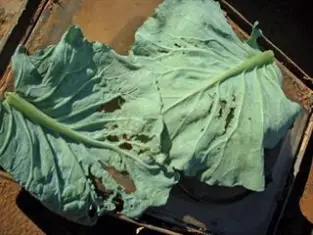
Mineral deficiencies in cabbages
It is very important to recognise and correct mineral deficiencies as soon as the first signs appear. Any delay is likely to have a profound influence on yield.
Fiduciary responsibility
Act 12 of 1992, which regulates market agents, places strong emphasis on what a market agent may and may not do with a producer’s money.

Be informed about Albugo (white blister)
White blister (Albugo candida) is also sometimes referred to as white rust.
Politicians and the markets
We have to face facts: politics plays a disproportionate role in fresh produce markets. I use the word ‘disproportionate’ because what politics contributes in perceived benefits is far outweighed by the very real disasters it brings to markets. (I’m happy to supply examples on request.)

Combating clubroot in cabbage
Clubroot is an extremely serious disease; if it gets into your lands, it can destroy the entire crop.
Price discovery at the markets
Many small-scale and other farmers seem to believe the only way to sell their fruit or vegetables is directly to a supermarket or wholesale buyer.

Get to understand Sclerotinia
In my initial 12 years of cabbage farming I never came across Sclerotinia. I had encountered it in beans before, but never cabbage.
Insight into the fresh produce sector
Occasionally I deviate from the norm and try to give readers some insight into the wider world of fresh produce.

Preventing blackleg in cabbage
Blackleg is a fungal disease that can be highly destructive. Fortunately, although there are no resistant varieties, it can be managed or prevented if you know how it spreads.

Fresh produce sector – looking forward
We’re into 2015. Time to haul out my crystal ball, give it a good shine and peer deep inside to see what lies in store for the year ahead.
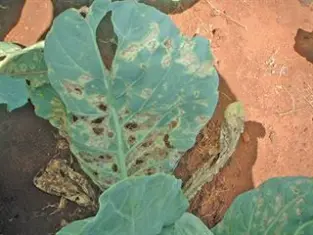
Cabbage disease: black rot
Black rot (Xanthomonas campestris) is the most important cabbage disease. Thriving in warm, wet conditions, it is most active at 25°C to 30°C and therefore more of a problem in late summer.
Work with market agents for best results
Some farmers think they can achieve good results only by sending their fruit or vegetables to one of the big markets.
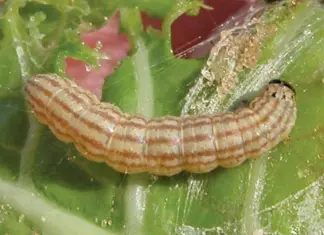
More sporadic cabbage pests
Before we start on cabbage diseases, there are still a few sporadic pests that we should look at. One is the cabbage webworm (Hellula undalis).
Consistency on the market floor
There’s a truism among market agents: ‘Product is power’. The more product and variety you have on your floor, the more buyers you can attract and the better you can do for your producers.

Sporadic, yet serious, cabbage pests
Several cabbage pests may be sporadic or seasonal. One of these is thrips.
Why all this wastage?
According to a 7 November Farmer’s Weekly news item, we throw away roughly one-third of all the food produced on the planet – about three billion tons – annually.

Dealing with aphids on brassicas
Aphids are a problem in two ways. Firstly, they cause physical damage when feeding on the crop.

Defeating the cabbage moth – biologically
Nearly everyone who has ever grown brassicas has had a problem with the diamondback moth (Plutella xylostella). Small wonder it is also called the ‘cabbage moth’.
Change and growth in the markets
The traditional route for a person entering the market agency business has seen the youngster working alongside an older person, receiving on-the-job training.