
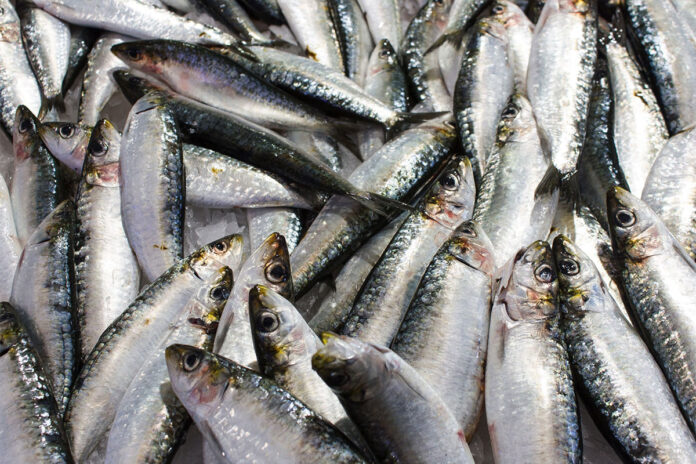
The increase, announced on 1 July, follows growing concerns from commercial fishing operators that a shortage of sardines west of Cape Agulhas had forced several processors to exhaust their quotas, reduce production, and place hundreds of jobs at immediate risk.
According to Michael Copeland, chairperson of the South African Pelagic Fishing Industry Association, one West Coast processing factory had already ceased operations, while several others were expected to close by the end of July if no additional quota was made available.
Industry stakeholders, including commercial rights holders, processing companies, labour unions, government agencies, and scientific bodies, warned that the shortage of sardines for processing was placing severe socio-economic pressure on coastal communities that rely on the small pelagic sector – which harvests small, schooling fish like sardines, anchovies, herring, and mackerel – for employment and income.
Speaking to Farmer’s Weekly, Copeland described the quota increase as “a significant and timely, science-based intervention”.
“It is estimated that the total economic benefit from 6 000t of sardines, including direct, indirect, and induced benefits, would be in the order of R500 million. This brings huge economic relief not only for West Coast communities but also for Gansbaai and Mossel Bay, where the canneries are located,” he said.
Iconic product
Canned pilchards (the larger variety of sardine) remain an iconic South African food product, providing consumers with a nutritious, affordable source of protein, as reflected in their VAT-exempt status.
The product also plays an important role in government’s National School Nutrition Programme, which provides daily meals to more than nine million learners.
“It is no secret that significant volumes of frozen pilchards are imported for canning in order to satisfy market demand. Increased locally caught pilchards would certainly ease supply chain constraints and, more importantly, help keep the product affordable and ensure it remains a key contributor to food security,” Copeland said.
Before approving the quota increase, then-Minister of Forestry, Fisheries and the Environment Willie Aucamp instructed the Small Pelagic Scientific Working Group (SWG-PEL) to investigate whether the total allowable catch (TAC) for sardines west of Cape Agulhas could be increased in the short term to help alleviate the industry’s challenges. Following its deliberations, the working group made its recommendation on 29 June.
Operating under the Department of Forestry, Fisheries and the Environment (DFFE), the SWG-PEL is one of South Africa’s principal fisheries advisory bodies. It comprises government scientists, university researchers, and industry representatives, providing science-based advice to support sustainable stock management and an ecosystem-based approach to fisheries management.
The fishing industry is represented throughout the SWG-PEL’s scientific deliberation process.
Responsible fishing practices
Copeland said the industry remains committed to sustainable and responsible fishing practices and supports decisions based on the best available scientific evidence.
“The scientific forum has an obligation to balance the needs of the ecosystem with the socio-economic impacts of quota decisions. These trade-offs are central to informing recommendations on TAC allocations,” he said.
Following the recent appointment of David Maynier as minister of forestry, fisheries and the environment, Farmer’s Weekly asked Copeland about the industry’s priorities for future pelagic quota allocations and broader ocean governance.
“We hope for a fully funded fisheries branch within the DFFE to ensure that sound scientific research and effective resource management can continue,” he said.
Copeland added that updated harvest control rules are needed to ensure sustainable TACs can be allocated on time, allowing fishing operations to function efficiently.
He explained that regular and timely hydroacoustic surveys, which use underwater sound waves (sonar) to estimate fish abundance and map aquatic environments, are equally important because the results form a critical part of the harvest control rules used to determine future quota allocations.