
Latest articles

Counter-seasonal imports
Walking through my local supermarket the other day, I noticed nectarines selling for R60/kg. The sign did not say where they came from, but my guess was Spain.
Imasa 2013
If you consider the role it has been playing in the fresh produce sector in recent years and its limited resources – both financial and human – then you can’t but agree that the Institute of Market Agents of South Africa (Imasa) has definitely been ‘punching above its weight’.
Understand your market
How many farmers load up their truck with fresh produce, dispatch it to the market, and say to themselves: “I’ll leave it up to the agent now. It’s his job to get me the best prices.”

Growing melons
Melons are more sensitive to disease than most other cucurbits. As the diseases that attack melons are generally associated with rainfall and humidity, the fruit is normally grown in low-rainfall areas.
Fresh Produce industry – more competitive
In the fresh produce business today, competition among role players has risen to unprecedented levels as individuals and companies all vie for a share of the proverbial pie.

Producing butternuts: Spacing, yield, diseases
The essentials of growing butternuts are similar to those of other cucurbits. Spacing may vary, however, depending on the cultivar. Some butternuts are compact growers, while others produce long runners.
Market agents code of conduct
A Code of Conduct (CoC) ensures stability and purpose within a sector and a measure of confidence for clients. Market agents have a CoC embodied in the constitution of the Institute of Market Agents of South Africa (Imasa).

Getting watermelons ready for the market
To obtain high prices on the market, a watermelon grower has to produce fruit that looks good as well as tastes delicious.

The strange history of the butternut
The butternut has a most unlikely origin. It was bred by a Charles Leggett of Stow, Massachusetts, in the USA in the mid-1940s. He was not a plant breeder, but had been forced to leave the city for the country because of his father’s health.

Common watermelon fungal diseases
Watermelons are generally grown in fairly dry climates as this reduces the risk of diseases considerably.
Fresh produce conference season
We’re approaching the fresh produce sector’s ‘conference season’ once again.
Watermelon weeding & watering
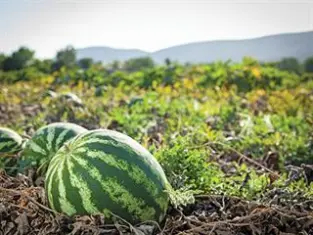
Weed control depends on a farmer’s particular situation. For example, where weeds are rife, a weedkiller may be needed.
Producers returning to markets?
Quite a few market insiders have told me that producers have had enough of supplying supermarkets and are stepping up their deliveries to the markets.

Planting watermelon seeds and seedlings
Success with watermelons, as with most fruit and vegetables, begins with getting the basics right.
Quality sells
Supplying a quality product is easier said than done. Within the farming context there are many challenges that have to be overcome before quality products can be produced.
Give your watermelons the correct nutrient mix
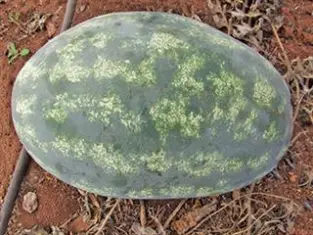
There are several important considerations when planning a fertiliser programme for your watermelon crop.
Project Rebirth going forward
Readers will recall my regular updates on Project Rebirth. Launched by the Institute of Market Agents of South Africa (Imasa) at its 2011 AGM, it seeks to facilitate the upgrading and improvement of the country’s fresh produce markets.

An early start to the watermelon season
Watermelons command a higher price earlier in the season. Because of this, you might want to choose a variety that’s ready sooner, even if it’s lower-yielding.
The Apac brand
Following a recent meeting at the Agricultural Produce Agents’ Council (Apac) office in Boksburg, we were each presented with an attractive shopping bag, a pen and a water bottle, all branded with the Apac logo.
Sharing market information
To ‘communicate’ is to impart or share knowledge. In this latter sense, communication between producer and market agent is crucial when it comes to determining price on a market floor.