
Jaco Botes’s chance encounter with tunnel farming nearly a decade ago resulted in a successful venture into agriculture after he swapped the construction industry for vegetable production.
“A friend of mine has been farming all his life. One night when we were braaiing, there was a problem with the boilers heating his tunnels on the farm, and I accompanied him to go and fix it. There was something about the farm that really piqued my interest, and I decided to erect my own tunnel on the plot where I was staying in Centurion,” relates Botes.
Guided by advice from his friend, Botes started growing cucumbers in 2017. His expansion plans soon meant that he needed to move operations to a bigger piece of land, and he secured an 8ha farm just outside of Krugersdorp in Gauteng.
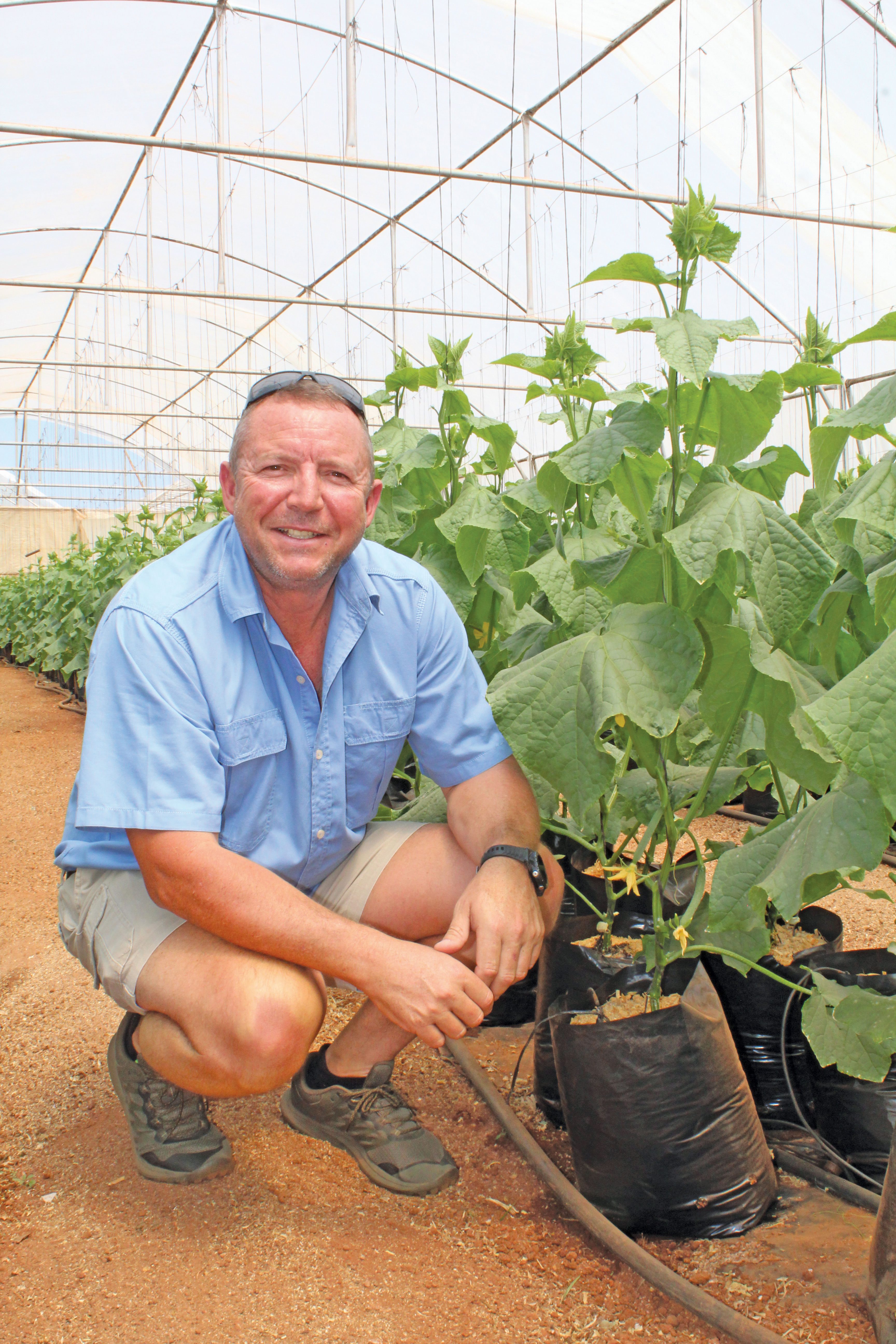
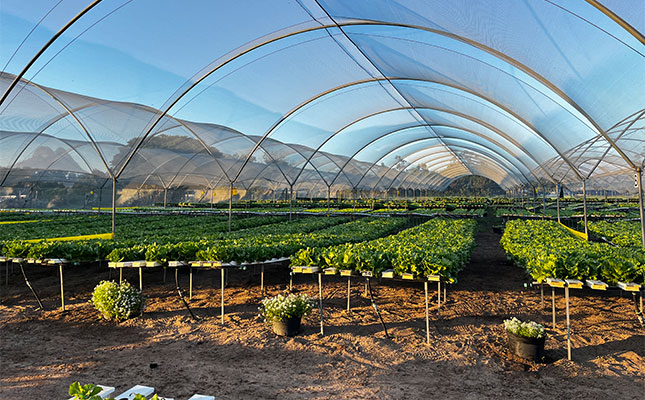
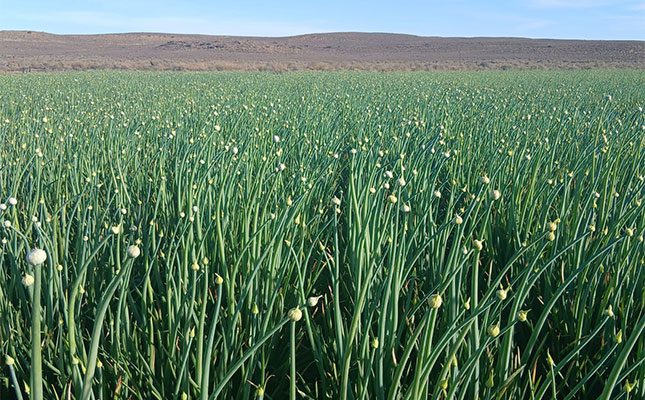
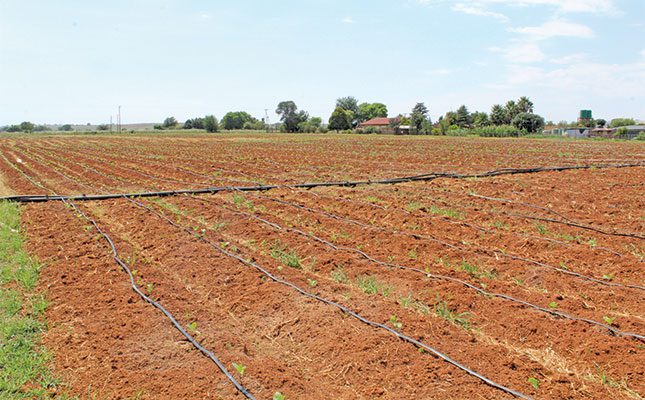
Today, he cultivates 4ha as open fields, with just under 1ha dedicated to 32 tunnels. Another farm, located in Derby, North West, some 70km from Krugersdorp, houses another 0,5ha of tunnels and 8ha of open fields.
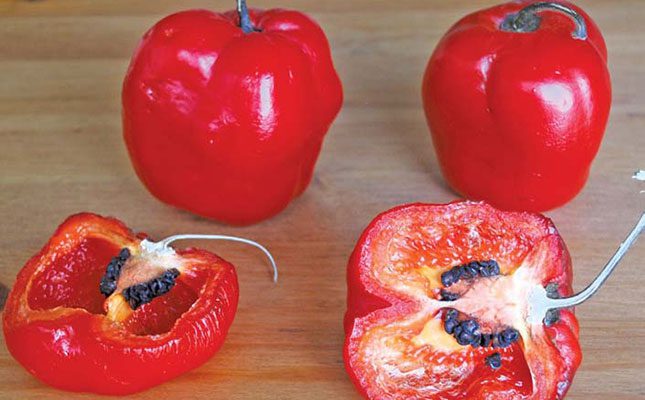
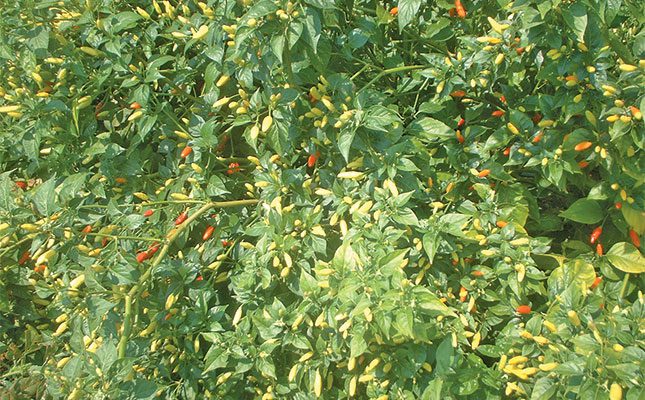
Botes has mostly settled on three crops across both farms, focusing on one proven variety for each: Rijk Zwaan’s Sharapova brinjals, Calabonita baby marrows, and Inyathi cucumbers. He adds other crops to the mix from time to time to test their feasibility and has, in the past, planted cabbage, broccoli, cauliflower, tomatoes, and peppers.
Tomatoes were one of the first crops Botes planted, but were ruled out after a bacterial cancer killed his plants two years in a row. Since this is a soilborne disease and significant chemical applications are required to get rid of it, he used this land to plant cucumbers in bags in tunnels instead.
While cabbage and spinach are easy to grow, high volumes on the market make for slim margins, and Botes believes that one needs to plant at scale to make them feasible. He found that although volumes of red cabbage on the market were lower, there was little demand for it.
Cauliflower achieves good prices, but is finicky to produce.
“Once the leaves start opening up and the head is exposed, it burns yellow from the sun and the market rejects it. At one stage we used elastic bands to tie the leaves together to protect the head, but this was labour intensive, and I didn’t find it worth the trouble.”
Broccoli is one of a handful of vegetables that can be planted in winter, but this means that most other vegetable farmers turn to this crop as well, reducing prices.
While the array of vegetables that Botes ultimately continues farming is mostly based on profitability, he cautions against making a call too quickly.
“There are too many variables that influence supply and demand to make a call on whether a crop is profitable or not if you are only taking one season into account. You need to be in the market for at least three years to be able to make a call, because the market is cyclical and there will naturally be highs and lows. The long-term average price will determine if the crop is profitable or not,” he explains.
With multiple production regions across the country, each with their own climates, Botes notes that adverse weather can quickly change the supply dynamic at the market, and therefore prices.
“In the vegetable industry, one farmer’s pain is another’s gain. There can be high rainfall in another area that increases fungal diseases, reducing vegetable supply.
“If you are supplying that same crop to the market but were not adversely affected by the rain, you could capitalise on high prices. But a few months down the line the situation could be reversed.”
Production timing
Botes’s farm is in production right throughout the year, but volumes on open fields are reduced in winter.
“The options I have for winter vegetable production aren’t particularly profitable. And by having them take up space in the fields, it means that when I want to start up production in spring, the fields are still filled with winter vegetables, delaying my start. So I would rather keep the fields fallow and use winter to clean the fields, do soil corrections, and let it rest,” he explains.
Cucumbers are cultivated throughout the year in the heated tunnels on the Krugersdorp farm. Since the Derby farm’s tunnels aren’t heated, they are not suitable for cucumbers in winter. Botes notes that cucumbers will not necessarily die in the cold (unless there is frost), but growth stagnates when temperatures dip below 12°C.
To get the most from this land, baby marrows are planted in the ground in the unheated tunnels in winter. Since baby marrows can’t withstand the cold in open fields in winter, Botes is one of the few farmers still in production during this time of year, earning him a premium on the market.
A further benefit is that the baby marrows are able to utilise all the nutrients gathered in the soil from the run-off from the cucumber bags in summer, reducing Botes’s fertiliser bill.
In spring, baby marrow production returns to the open fields, where they are accompanied by brinjals for most of summer.
Botes notes that while brinjals are a versatile vegetable, they aren’t that popular in South Africa, with most consumers utilising them in stews.
“Demand is therefore higher in winter, but this is when I am not in production. For the new cycle started last year, I planted them later than usual to see if I could stretch production beyond autumn to capitalise on higher prices.”
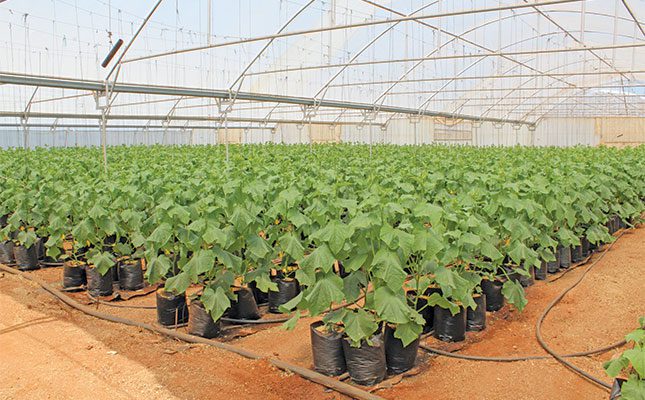
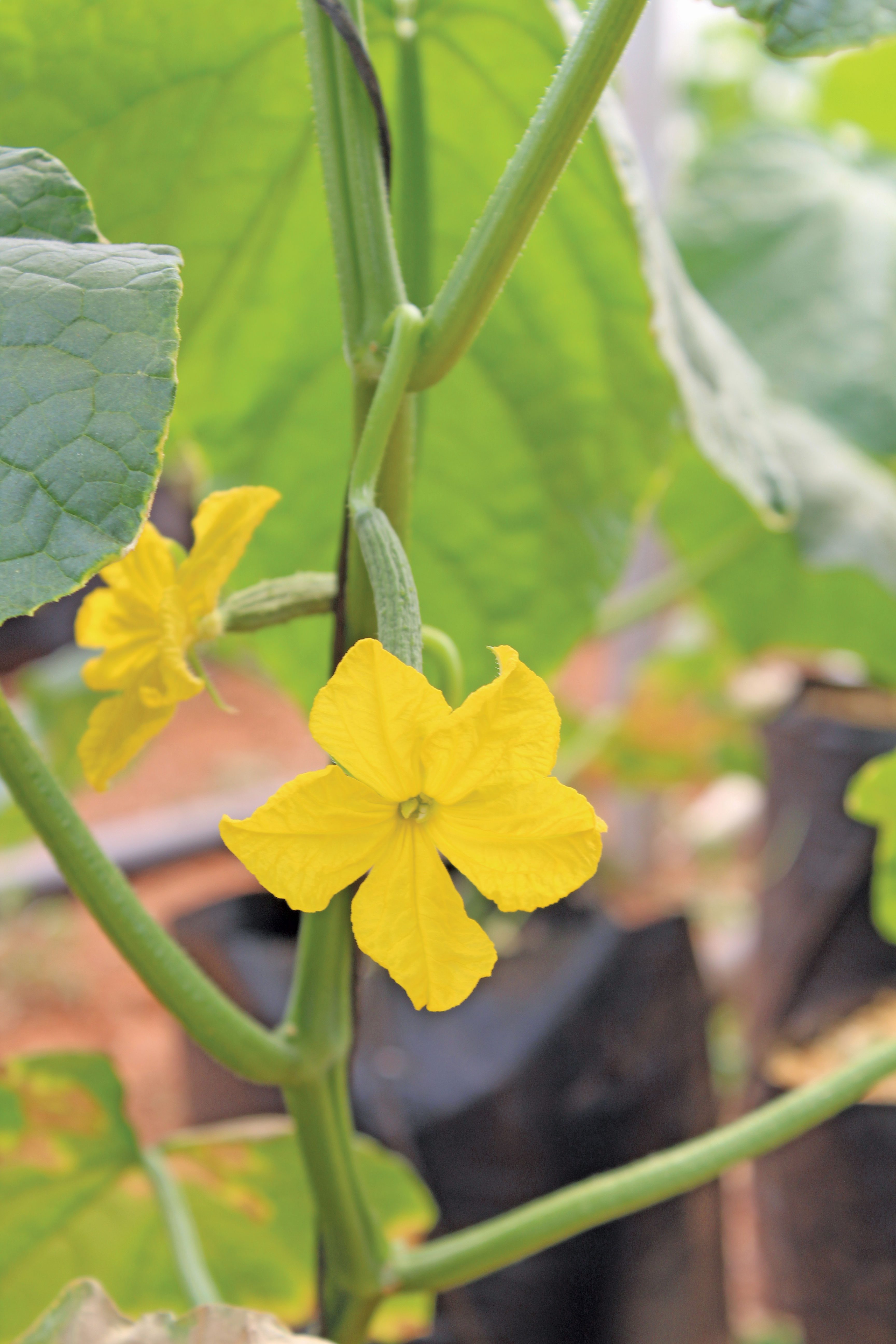
Cucumber seedlings are planted in bags filled with pine wood shavings, which are obtained from nearby timber companies. Each bag has its own dripper to supply fertigation.
Fertiliser for all the crops is mixed and applied according to needs of the specific crop, balanced with nutrients already inherent in the soil.
The plants take seven weeks to start producing cucumbers, which then continues for 12 weeks, with new cucumbers being harvested every two weeks. After 12 weeks, the plants and shavings are discarded and the cycle starts again with newly filled bags. Three such cycles are completed in the heated tunnels and two in the unheated tunnels.
The tunnels are heated by a coal-fired boiler that produces hot water, which runs in pipes in the tunnels around the plants.
Balancing costs and production
A key factor that makes Botes’s chosen crops viable is the way in which risks to the crops can be minimised. He produces his own seedlings, since this results in plants that are already adapted to the climate and water on his farm.
“There is a perception that producing seedlings is difficult, but it depends on the crop. For the crops I have chosen, I can easily produce my own seedlings.”
Since the growth medium used for the cucumbers is replaced after every cycle, there is no risk that soilborne diseases will build up around the roots. This makes managing diseases for cucumbers in bags easier than if they were planted in the soil. The main pest threat to cucumbers is red spider mite, which requires pesticide applications when infestations are high.
For cucumbers and baby marrows, powdery mildew and downy mildew are problematic. Botes notes, however, that applying pest control for these fungi is not feasible.
“The cost of the fungicides is high, and I’ve found that it is not justifiable to spray. Instead, I let the diseases run their course and when the plants die, I replace them.
“The other challenge is that baby marrows are prolific growers, and once in production, we harvest on Mondays, Wednesdays and Fridays. That doesn’t leave me with any opportunity to spray crop-protection chemicals, because the withdrawal period will extend the harvest interval beyond what is feasible.”
Building relationships
Farmers face numerous decisions that require trust between them and service or product providers.
“I look for people I can gel with. If we can get along and proactively sort out disputes, then we can walk the road together,” says Botes.
Having a trusted seed supplier means that Botes doesn’t have to plant extensive trials to test different or new varieties.
“I’ve had several seed suppliers over the years and have seen first-hand whose genetics are better and which suppliers have my interests at heart. Choosing a seed supplier is about forming a relationship with someone you trust, and whose product you trust,” he adds.
Botes utilises the municipal fresh produce markets to sell his produce, focusing mainly on the Joburg Market. He has tried several strategies over the years to ensure the prices he receives for his produce is fair.
“When I started farming cucumbers, I had an agent who obtained good prices. But when two of his other clients, who were larger cucumber suppliers, came onto the market, the prices I received were lower than theirs. My agent couldn’t give me an answer as to why my cucumbers received an inferior price.
“But being on the market floor regularly, I saw that my cucumbers were always last to be sold. I then moved to another agent,” he explains.
Botes had up to four different agents at one point to compare the prices they each obtained. However, he notes that this isn’t a good strategy, since he then competed against himself on the market.
“The buyers play off against each other to drive the prices lower. Being on the market floor is essential to find an agent you can trust, because only then do you see what produce is moving and at what prices.
“When the market is flooded with a specific product, you see who the agent is that works the hardest for you to get the highest prices. Any agent can obtain good prices when supply is low,” he says.
Botes has since settled on supplying one agent with his brinjals and baby marrows, and another with his cucumbers, since the respective agents are specialists in those crops. He has built a good relationship with both and notes that while disputes naturally arise from time to time, their good relationships mean that issues can be ironed out.
A lesson Botes has learnt to obtain better prices is that quality and volume consistency is key.
“Buyers want to know what they can bargain on getting and at what quality. If the agents know they can bet on your quality, then they are able to get higher prices. Providing them with consistency means they can better plan their marketing strategy. I therefore plan my crop production so that I am in the market for as long as possible.
“Consistency also helps to ride out the highs and lows. Every month has periods in which prices are high ot low. Some farmers time their production to catch the highs, but trends are never set in stone and consistency pays off in the long run.”