Rural safety has far-reaching implications for the entire country. When farmers face theft and violence, profit margins shrink, families abandon the countryside, and food production suffers, ultimately weakening rural economies.
With police services under strain and farm- related crimes often deprioritised, farm watches have become vital in protecting farmers and their communities. Across South Africa, well-organised rural safety networks are delivering tangible results, reducing crime and restoring peace of mind in the countryside.
“If we don’t patrol the area, no-one else will. Police are thin on the ground,” says Uys van der Westhuijzen, chairperson of the Centre of Excellence: Rural Safety at Agri SA.
He believes that farm watches play a crucial role in deterring crime. “There is always more criminal activity where there are no active patrols,” he says. Over the past year, Malmesbury Veiligheid, of which he is a member, has prevented an estimated R1 million in potential losses from livestock theft, either by intercepting attempted thefts or recovering stolen animals.
In the Eastern Cape, Coert Jordaan, chairperson of rural safety at Agri Eastern Cape (Agri EC), has seen similar results from the use of technology.
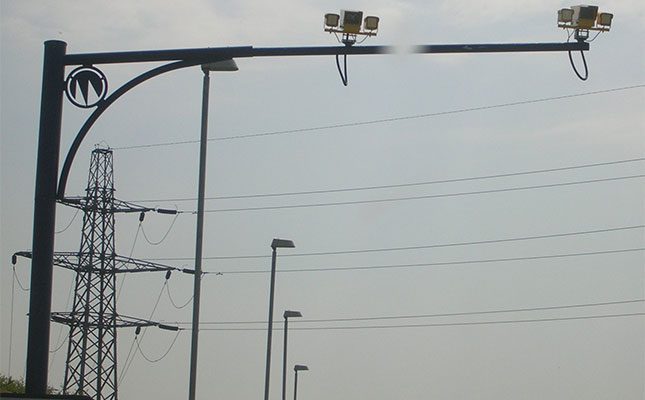
“Crime decreases in areas where security cameras monitor the roads. Our system has helped recover stolen livestock and assisted police in investigations into cash-in-transit heists and kidnappings. It’s a very successful system, but expensive to run. It wouldn’t be in place without the support of farmers.”
Securing the countryside
Jason Kümm, Agri SA’s rural safety officer, says that initiatives that have had the biggest impact on securing the countryside have been the cameras that agriculture has funded and that farmers are managing.
While there is a national network – the Eyes and Ears Initiative (E2) – individual farmer unions have their own complementary networks that bring vigilance to a regional level.
The E2 is a joint crime-fighting effort involving the South African Police Service (SAPS), Business Against Crime South Africa (BACSA), the private security industry and other approved non-private security role-players and law enforcement agencies. This collaboration was launched in 2019 under a formal memorandum of understanding signed by the SAPS national commissioner and BACSA.
Initially involving only the private security sector, E2 has expanded to include all approved private organisations, including formal agriculture and rural safety structures, businesses and Community Policing Forums (CPFs).
Kümm notes that outside of the E2, the cameras are most effective when they are erected and managed through a farmer’s union, rather than individuals. This ensures that the whole community and strategic locations are monitored, rather than just the individual’s own farm gate.
“Cameras should all be linked to a central platform or control room where everything can be monitored. These are generally linked to local and provincial police stations so that if a number plate is detected that is listed on the SAPS database, the E2 network is alerted.
The local networks therefore play a crucial role in tracking vehicles involved in crimes because they can keep track of where the vehicles are, even on smaller, rural roads.
“These camera systems run by farmers unions entail millions of rands that have been spent on hardware and monthly operational costs, providing an additional service to the state, at no cost to the state,” says Kümm.
Leading by example
The Eastern Cape has the most robust camera network in South Africa, and as a result, drastically reduced crime in the province. The system, coordinated by Agri EC, has around 300 cameras to monitor vehicle licence plates and 500 overview cameras. These are all monitored 24/7 by a coordinator and contracted security company from a central control room.
Jordaan notes that the camera network was the brainchild of Brent McNamara, CEO of Agri EC, who started the project in Alexandria. After crime drastically reduced in this area, the project was rolled out to other regions in the province.
Kümm was instrumental in setting up the central control room. Jordaan states that the cameras mean little if they are not monitored around the clock.
“Once the control room was in place there were many arrests that followed. The SAPS use footage from our cameras as evidence in court, which has resulted in a higher number of convictions.”
Jordaan notes that despite wide roll-out of the cameras in the province, there are still areas within the Eastern Cape that do not have them.
“The farmers need to fund the system themselves, and many farmers unions just don’t have the money. But we are seeing an increase in unions taking part as people see the importance of having cameras that monitor roads.”
The greater the spread of cameras, the greater the benefit.
“The systems can’t work in silos. If a bakkie is stolen at night, it can be a few towns away by the next morning and the cameras need to be able to track it wherever it moves. Just having cameras in your immediate vicinity is therefore not as effective as a provincially, and nationally linked system,” says Jordaan.
A key function of the system is its ability to identify, track and flag vehicles on the roads. If a suspicious vehicle is detected, licence plate recognition cameras flag and monitor the vehicle, creating a movement report that shows exactly at what time and where the vehicle has been over a specific period. This provides invaluable information to deter criminals, prevent crime and provide evidence in court cases.
Successful farm watches require co-operation from a wide network of role players. Van der Westhuijzen has seen first hand the difference buy-in from the local community can make.
Malmesbury Veiligheid is a farm watch operating in Malmesbury in the Western Cape. While it was started by the local farmer union Agri Malmesbury, it is today an organisation that serves residents and business that are not necessarily involved in the agriculture sector.
“We wanted to create an organisation that brought farmers and town people together, because our activities all influence each other and overlap. And ultimately, we are all affected by crime,” Van der Westhuijzen explains.
Malmesbury Veiligheid was started in 2019, and due to co-operation with Swartland Local Municipality and other role players, the Swartland Community Safety Forum (CSF) was eventually established. This forum includes farm watches, the local police, fire brigade, emergency services, the traffic department, security companies, local municipality and relevant governmental departments, as well as the West Coast District Municipality.
This forum has access via the E2 system and other service providers to an extensive network of cameras to monitor road networks. These have been funded by farmers, local residents and the local municipality.
Van der Westhuijzen explains that agri members of the forum have two-way radios that can be used in emergencies. This includes instances where livestock has been stolen.
“There is a panic button that sends an emergency signal to the SAPS District Operational Control Centre situated at the West Coast District Municipality’s Disaster Management Centre. Due to this colocation of these capabilities, emergency services like the police, traffic, ambulances or the fire brigade can be notified. The alerts are also sent to the E2 system so that suspects can be tracked where they travel on the roads.”
The extensive linkages between the organisation and the relevant state departments have been a key factor in the success of Malmesbury Veiligheid. Although the region battles the same issues faced by most across South Africa – understaffed police stations and limited vehicles – Van der Westhuijzen says that volunteers overcome this problem.
Farmers and community members volunteer to do patrols, but also to act as first responders if and when needed.
As a result of the co-operation, reaction times to crimes have improved as have the quality of the responses. Van der Westhuijzen notes that losses as a result of stock theft have decreased, as crime has either been prevented, or stolen livestock recovered.
Overcoming challenges
Setting up camera surveillance systems can be costly and prohibitive for many farmer unions.
To erect a camera on a pole at a T-junction costs around R120 000. There is then a monthly cost of R1 500 per pole to cover maintenance, insurance and monitoring services. If there are 10 poles in an area, it means a monthly expense of R15 000 for a farmer union.
This can be seen as a grudge purchase, considering that farmers already pay taxes that should fund the police in securing the country.
Jordaan notes that while there is often scepticism when a new project is started, attitudes quickly change when the benefits of the camera system become evident.
Jordaan says that since the system benefits the whole community, there are regions where private individuals and businesses unrelated to agriculture contribute to running costs. Funds can also be applied for from Agri Securitas, which is a private organisation run by businesses that raises funds to aid farm security.
A factor vital to the success of a farm watch is attaining co-operation from all role players. This includes consensus on where cameras should be erected.
“Farmers often argue for a camera to be placed by their farm gate. But there are many factors that determine where cameras should be placed to get maximum effect. When we started, we therefore drew a perimeter around the district and worked to ensure that all roads leading in and out of that district were covered by cameras. Then as funds allowed, we worked our way inside to cover a wider network of roads within the district. Rationalising where the cameras must be placed is therefore important to get maximum effect.”
Relationships with the SAPS can be challenging for farm watches. Van der Westhuijzen notes that these relationships are better in some areas compared to others.
“But regardless of the circumstances, farmer unions must strive to have the best possible relationship with the police. We know there are many frustrations, but there are good policemen that want to do their jobs as well.”
He adds that a greater challenge is the limited success rate of the National Prosecuting Authority.
“A case will finally make it to court but then dockets go missing and the criminals get off scot-free. This makes farmers despondent, which leads to lower reporting rates of crime as trust in the system has been lost.”
Despite South Africa having a robust National Rural Safety Strategy, there is limited implementation. Van der Westhuijzen quips that South Africa is adept at formulating world-class strategies, but deficient in implementing them.
“We have one of the best rural safety plans, but the structures don’t operate as they should despite there being detailed plans in this regard.”
In addition to keeping good relationships with the police, co-operation with Swartland Local Municipality has been a key factor in Malmesbury Veiligheid’s success.
Van der Westhuijzen says that every role player in a local community must understand the value the agriculture sector brings in prosperity to a region.
“If the police, local municipality, business and residents don’t understand the value of agriculture in keeping small towns functioning and ensuring food security, then you will struggle to get them to buy into rural safety. People think there will always be food and don’t make the connection between farm safety and food security. This is a threat that needs to be dealt with.”
He adds that the socio-economic circumstances facing South Africans means that crime is often the only resort for people to put food on the table.
If we don’t address poverty and joblessness on a much wider level, we will always struggle to control crime.”
The right approach
Van der Westhuijzen advises those considering starting farm watches in their regions to begin by conducting a thorough analysis of the problems. “Understand the local situation, what the crimes are that are being committed and by whom, and the ability of the people around you to assist in crime prevention. This includes the SAPS and farmers who could form part of a farm watch.
“Most importantly, the whole community, including farmworkers and all formal structures, need to be involved. There must not be gaps in surveillance, response and support.”
Kümm cautions that vigilante justice should be avoided at all costs. “Those involved in the farm watch must not bring personal politics into the mix. The farm watch must be used for its original intention – to reduce rural crime.
“Members must understand the parameters of what is legal and what is not. Only the police can arrest suspected criminals, for example. One can do a citizen’s arrest if you witness the crime being committed. Those involved in farm watches should relay information about crime to the police so that they can take action. A private citizen does not have the authority to take action themselves, or stop and search vehicles or people. ”
He notes that candidates for farm watches should be selected with care.
“Patrollers should be of sound mind, have received some form of security training and know how to use a two-way radio. They should also have a general understanding of the law and how to interpret it. Excessive force should never be used, and any action should be proportional to the threat level. An understanding of the Firearms Act and trespassing laws is paramount.”
When embarking on patrols, communication is vital. Farmers in the area must be informed about who is doing patrols, when and where. Kümm states that such details should be contained in a standard operating procedure that should be included in the farmer union’s safety plan. This plan must be shared with the local police.
Ensuring that the farm watch is sustainable over the long run can be challenging. Sustainability goes beyond just having enough funds to run the project, pay for fuel expenses and maintain the camera networks.
Kümm explains that sustainability is also about maintaining a robust network of patrollers who are committed to the cause.
“If they say they are available for two years, they must be. This goes for the committee and chairperson too. Farming is becoming harder and farmers have so much on their plates already, so it’s becoming increasingly difficult for farmers to find the capacity to do extra things like patrolling and serving on committees.
“Another issue is ensuring there are youth who can take part, learn the ropes and eventually take over from retiring committee members and patrollers.”
According to Kümm, the strength of any farm watch lies in its mindset.
“The goal isn’t just to protect one family or one farm, but to secure the entire community. That includes the petrol attendant, the local supermarket and the tannie running the tuisnywerheid. Everyone needs to stand together to fight crime so that every person and business can prosper.”
For more information email Jason Kümm at [email protected].