
Latest articles
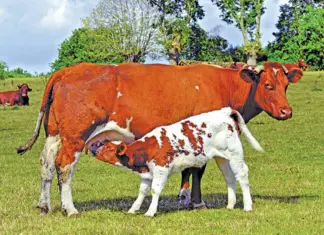
Breeding seasons in summer rainfall areas
The following guidelines and recommendations for cattle breeding seasons are applicable to a summer rainfall region and should be adapted accordingly for a winter rainfall region.
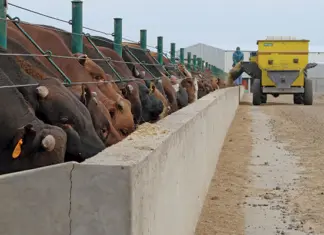
Stress in cattle
As part of an animal’s stress response, its body releases cortisol, a hormone that provides energy to help the animal escape the stressor. If the stress persists, however, the animal’s health will suffer.

Are top-priced genetics really worth it?
Logic seems to dictate that some livestock producers must suffer buyer’s remorse after purchasing an animal for an eye-watering price. Glenneis Kriel asked a few farmers whether their record-breaking acquisitions have paid off, and found the answer to be unanimous.

Beat the heat! How to care for livestock in extreme weather
South Africa’s increasingly common heatwave conditions pose a major threat to the country’s farmed cattle, sheep and goats, which often feed and live outdoors. Lloyd Phillips spoke to a number of experts in the field about the negative effects of extremely high temperatures on livestock, and practical methods a farmer can use to mitigate these.

The importance of having a breeding season
Optimal reproductive performance is crucial to the success of a beef cattle enterprise. A defined breeding season can help to achieve this.
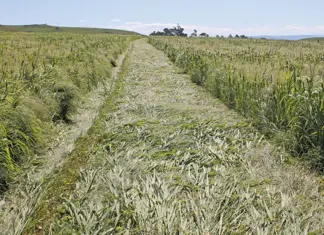
Proper planning: the key ingredient for quality stored fodder
To maximise kilograms of meat or wool produced per hectare, it is crucial to maintain a farm’s carrying capacity during winter. This invariably means producing high-quality stored fodder, and making sure there is enough of it. Deal Miles, a beef, mutton and wool farmer in the Cedarville area of the Eastern Cape, outlined his methods of achieving this to Lloyd Phillips.
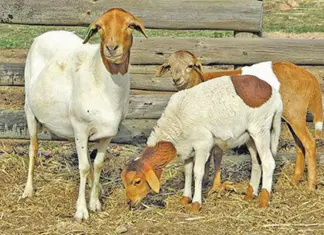
The basics of the Bapedi breed
These fat-tailed sheep, which are smaller than average, are kept for meat. They appear in various combinations of white, brown, red and black.

Biosecurity measures on an animal farm
With the increasing spread of infectious diseases, biosecurity needs to be taken seriously on every livestock farm.

When performance fails to live up to breeding values
Discrepancies between estimated breeding values and livestock performance have led some farmers to doubt the accuracy of these values. They are, in fact, excellent indicators, but animals may not be able to reach their genetic potential.

Rebuilding a livestock enterprise after a drought
In this article, Dr Louis du Pisani, national manager for production advice and development at the National Wool Growers’ Association, explains how to carry out post-drought recovery and reconstruction of a livestock enterprise to achieve optimal, lasting results.
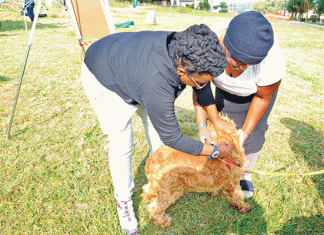

The basics of foot-and-mouth disease
Foot-and-mouth disease has drastically reduced South Africa beef exports, as importing countries buy animals and animal by-products only from FMD-free countries.

The advantages of sweet thorn
The sweet thorn tree has been appearing in increasing numbers. Yet this ‘invader’ should be welcomed by farmers, as it provides year-round feed and shelter, writes Roelof Bezuidenhout.

Basic chicken care: how to breed and feed
This article examines how to breed and feed chickens properly, as well as how to maintain good hygiene in order to keep the birds healthy and productive.

The basics of the Persian breed
This indigenous fat-rumped meat breed does well in arid semi-desert, savanna bushveld and coastal spekboom veld. The lambs mature early.

An animal health plan for the year from Dr Faffa Malan
Keeping sheep and cattle in top shape requires careful management and a balancing act between eliminating vectors and avoiding resistance build-up to medication. Lindi Botha spoke to veterinarian and MD of RuVASA Dr Faffa Malan about how to maintain a healthy livestock enterprise.

Watch out for epididymitis
This sexually transmitted disease could be the reason your lamb crop is smaller than expected. Roelof Bezuidenhout offers advice on prevention.

Basic chicken care
Chickens must be provided with a warm, dry sleeping area, and plenty of fresh, clean water.

Managing wireworm
A vaccine against wireworm has become a vital tool in helping to control the disease and thereby reduce contamination of pasture by the eggs of the parasite.

Boer goat facts and figures
The Boer goat, which is bred primarily for meat, is farmed very effectively in combination with cattle due to its browsing ability and its limited impact on the grass cover.