Animal identification has long been a cornerstone of livestock farming in South Africa, but rising stock theft, stricter legislation and the country’s renewed focus on traceability have elevated its importance significantly.
With annual losses from stock theft estimated at over R1,2 billion, according to the Red Meat Producers’ Organisation (RPO), compliance with identification laws is essential for ownership protection, market access and long-term sustainability.
According to Corine Steyn, manager liaison at the RPO, the level of compliance remains far too low.
“Unfortunately, a lot of commercial stock in South Africa are not marked, just as a lot of livestock belonging to emerging farmers are also not marked,” she says.
In addition, she explains that administrative backlogs at the Registrar’s office – especially after system changes and the collapse of the postal system – have delayed many brand certificates, further complicating enforcement.
The high cost of branding and tattooing equipment play a big role in the low level of compliance, especially amongst emerging farmers.
A clear legal framework: the animal identification Act
The Animal Identification Act (No. 6 of 2002) provides the legal foundation for livestock identification in South Africa. It is compulsory for all cattle, sheep, goats and pigs to be marked with a registered permanent identification mark. Regulations also prescribe identification requirements for species such as ostriches and horses.
Farmers must register a unique identification mark – a brand, tattoo or group mark – and apply it in accordance with detailed regulations. Marks must be placed in prescribed locations on the body, be of prescribed size, and must remain legible throughout the animal’s life.
Newly acquired livestock must be marked within 14 days of change of ownership, and species-specific age limits apply for animals born on the farm. Steyn notes that the age-related regulations are often misunderstood.
“Producers are not always aware of the ‘MUST, CAN and MAY’ age requirements for marking, and this causes many compliance problems,” she says.
Applying marks at the correct age is vital. Young animals brand better and heal faster, while marking too late often results in unreadable or distorted brands.
Branding, tattooing and tagging
Branding remains the most widely recognised and durable method of livestock identification, especially for cattle. Hot-iron branding is most common, although freeze branding is increasingly used for dark-coated animals.
Tattooing is commonly used for small stock and stud animals. When done correctly, tattoos are permanent and cost-effective, but they can be difficult to read at a distance. Dust, pigmentation and hair growth can reduce visibility.
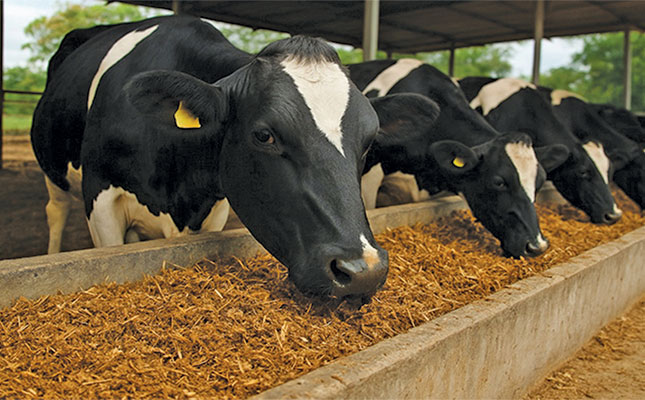
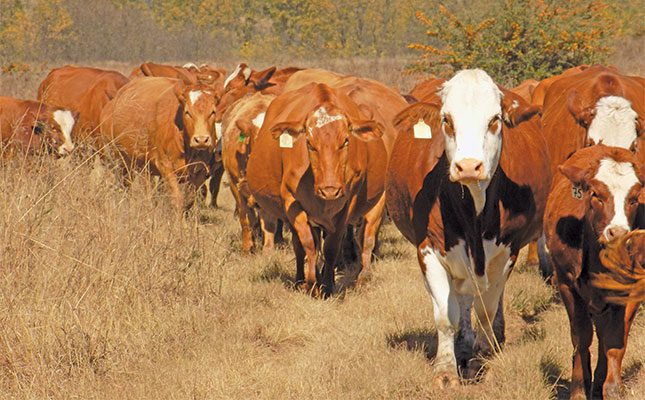
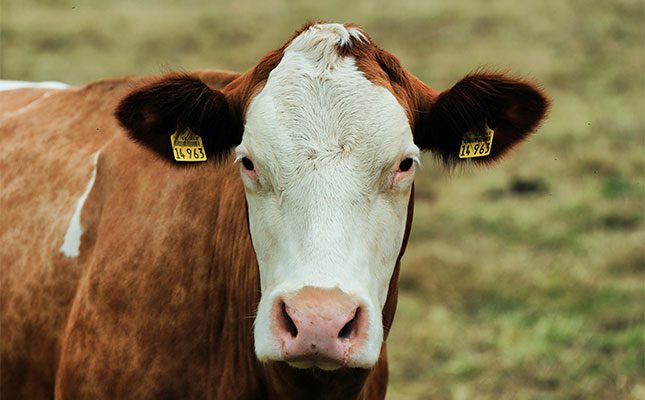
Ear tags – visual, RFID and EID – are valuable for herd management, record- keeping and genetic programmes, but tags alone are not recognised as permanent identification under the Act. Because tags can be lost or removed easily, they supplement but do not replace brands or tattoos.
A major issue, says Steyn, is poor branding technique.
“There is a lack of sound knowledge, especially when branding livestock.”
To assist rural and communal farmers, some provincial agriculture departments deploy accredited brand-mark operators, while transformation projects under South African Red Meat Industry Services have introduced mobile branding and tattooing units at dip tanks to support small-scale farmers.
Identification and its role in stock theft prevention
Livestock theft remains one of the agriculture sector’s most damaging threats. Thousands of animals are stolen annually, and many court cases fail because ownership cannot be proven.
Steyn is unequivocal about the importance of permanent identification.
“Branding or tattooing is a livestock farmer’s first line of defence. The registered identification mark is proof of ownership.”
During recovery operations, investigators immediately request:
- the farmer’s brand registration certificate;
- the livestock register; and
- tag numbers and descriptions.
“The first thing the South African Police Service (SAPS) looks for is a mark linking the animal to the owner,” Steyn explains. “Without it, the case weakens immediately.”
The aftermath of South Africa’s recent foot-and-mouth disease movement restrictions revealed major gaps in compliance.
“Nearly all auctioneers now turn away unmarked animals presented for marketing,” says Steyn.
This is driven by requirements in both the Animal Identification Act and Stock Theft Act (No. 57 of 1959). The latter requires removal certificates and transport documents to include proper identification. Without a permanent mark, these documents cannot be completed correctly, leaving buyers and sellers exposed.
The RPO’s role in supporting national compliance
The RPO plays a central role in livestock identification, stock theft prevention and producer education. Much of this work is coordinated through the National Stock Theft Prevention Forum (NSTPF).
“The NSTPF has existed since 1995 and has a footprint in all nine provinces,” Steyn explains. The forum includes AgriSA, TAU SA, NERPO, SAPS Stock Theft Units, Visible Policing, the NPA, the NSPCA, the Abattoir Association and several state departments.
“The relationship between the NSTPF, SAPS and the NPA is of utmost importance,” she says.
The NSTPF runs extensive awareness programmes in rural and communal areas.
“We host stock theft awareness workshops in both commercial and communal areas, and the success already shows in the stock theft statistics of provinces that have held these sessions.”
The forum also compiles the national Stock Theft Prevention Manual, used by SAPS investigators, prosecutors and livestock owners, and manages a centralised reporting system to improve intelligence and case coordination.
(A copy of this manual can be found at www.rpo.co.za)
Stud breeders and dual systems
Stud breeders often use microchips, society tattoos, EID tags and DNA verification. These systems serve breed improvement and genetic tracking functions. But Steyn stresses that they do not replace permanent identification.
“The two systems – physical identification and electronic identification – should always run in parallel.”
Technology: supporting, not replacing identification
Electronic identification tools – RFID tags, EID readers, blockchain traceability, and GPS collars – offer enormous potential.
These tools improve accuracy, automate record-keeping and support disease-control strategies.
“However, electronic identification can never replace physical branding or tattooing,” Steyn explains.
In addition, remote areas with poor connectivity face infrastructure challenges, and satellite-based solutions remain too expensive.
Consequences of Non-compliance
Non-compliance with the Act carries financial, legal and operational risks. Unmarked animals:
- complicate ownership disputes;
- weaken recovery efforts;
- reduce the likelihood of prosecution;
- may be refused at auctions or abattoirs; and
- create insurance difficulties.
Communal farmers face even higher risks due to mixed herds, grazing disputes and impoundments.
Steyn summarises it clearly: “If farmers want to increase their profitability and participate in high-value markets, animals need to be branded or tattooed and placed on a traceability system.”
Practical guidance
Farmers should do the following:
- Register your brand with the Department of Agriculture;
- Apply marks within legal time frames;
- Use ear tags to supplement permanent marks;
- Keep detailed livestock registers;
- Use removal certificates for all movements; and Participate in RPO and NSTPF programmes.
Conclusion
Branding, tattooing and tagging form the backbone of livestock identification in South Africa. Permanent marks protect ownership, support law enforcement and underpin future traceability requirements. With continued guidance from the RPO and the NSTPF, the industry is well positioned to modernise while retaining the legal certainty required to protect one of South Africa’s most valuable assets.
“Livestock owners need to take responsibility to ensure their animals are properly identified. Mark your animals – it is your first line of defence,” Steyn concludes.
For more information phone the RPO on 012 349 1102/3, or email [email protected].