

How to provide enough water for your herd
Clean drinking water is an absolute essential for livestock, says Shane Brody. If animals don’t get enough to drink or the quality of the water is poor, their health will suffer, and the farmer’s profits will decrease as well.
The ins and outs of water-use regulations and legislation
This article, the first in a series by Integrated Water Use License Application Management, is aimed at helping farmers to better understand relevant water-use legislation and regulations in South Africa.
Want higher prices for your calves? Dehorn them!
In crushes and while being transported on trucks, cattle with sharp horns can inflict severe injuries to one another, reducing the price of such animals. Dehorning is the only effective solution, says Shane Brody.
Flies are not just irritating; they can be dangerous
If you’re a livestock farmer, you’ll know that ticks can introduce many dangerous diseases to domestic animals. But did you now that stable flies and houseflies can also be a serious threat? Shane Brody explains.
Buying in livestock: do your research to prevent problems
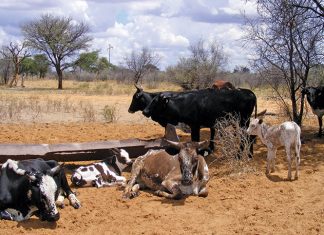
When purchasing livestock to start a new farming enterprise or increase the size of your existing herd, you need to make sure the arrivals will thrive. So do your homework well, says Shane Brody.
How to discuss your differences in a family business
Disagreements on operational matters need not be a problem for a family agribusiness. On the contrary, if members work together to solve their problems, the solutions will be that much better, says Trevor Dickinson.
How to spot the African and Asian blue ticks
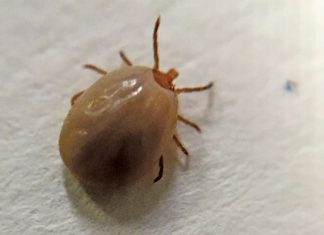
Prof Maxime Madder, Prof Ivan Horak and Dr Hein Stoltsz look at the African and Asian blue ticks, as well as the Karoo paralysis tick, and explain how farmers can spot the differences between these dangerous parasites.
Make your own electrolyte solutions
Sheep and goats that suffer from worm infestation or consume toxic plants can get severe diarrhoea, which can lead to dehydration and death very quickly. An electrolyte solution can save your animals’ lives.
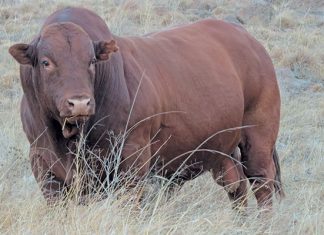
Choosing a good-quality breeding bull
A poorly bred beef animal will not produce high-priced meat cuts. Instead, the beef will be used for cheaper products such as sausages and mince. In turn, you will earn far less money, says Shane Brody.
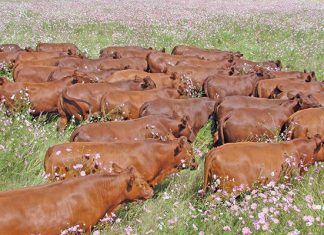
How to keep livestock calm and stress-free
Over and above their physical needs, animals have emotional needs, and these are often overlooked. Stress in livestock should be avoided at all costs, Leon Kruger, a lecturer at the University of the Free State’s Department of Animal, Wildlife and Grassland Sciences, told Annelie Coleman.
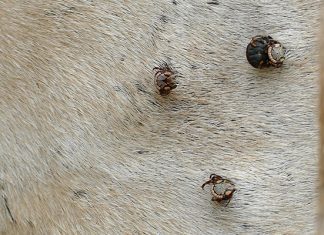
How to recognise the ticks plaguing your livestock
Prof Maxime Madder, Prof Ivan Horak and Dr Hein Stoltsz look at three important tick species in South Africa and their effects on livestock, and offer tips for farmers on how they can identify these pests.
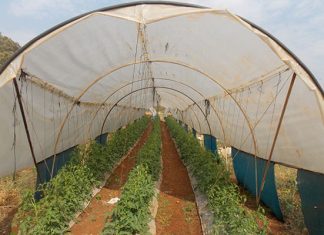
How to make a simple, sturdy plastic tunnel at minimal cost
Tunnels ensure faster growth and healthier plants. Bill Kerr explains how to construct a basic tunnel out of plastic sheeting draped over steel hoops. You’ll need a few basic tools and welding equipment.
Guard dogs: which breed is best?
Many experts will tell you that it’s essential to have a mixture of dog breeds on a farm. Some farmers, for example, have terriers that stay inside their houses at night, while their larger dogs stand guard outside.
Get the basics right, and you’ll make a lot more money
To compete successfully against commercial farmers, communal farmers need to upgrade their infrastructure, manage grazing properly and implement proper health protocols, says Shane Brody.
Pest and disease control in pearl millet production
Chinch bugs, nematodes, mildew, seed rot, rust and other pests and diseases are all threats to pearl millet. Here’s how to deal with them.
How to choose a guard dog for your farm
When it comes to protecting your life and belongings, dogs can be highly valuable assets. But since there are hundreds of breeds out there, selecting the right one to guard your family and farm can be a difficult task. Magda du Toit spoke to some experts to find out which dog breed would make a farmer’s best pal.
All you need to know about three-day stiff sickness
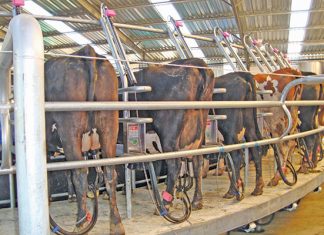
While the mortality rate of three-day stiff sickness is usually less than 1%, morbidity is high, with most animals never reaching the same level of production after recovery.
How agri insurance can help protect your business
With more diversification comes more risk, says Andries Wiese, national business development manager and head of agri insurance at Hollard. Producers need to work on a risk management strategy tailored to their business’s specific needs to protect them against loss and financial liability. He spoke to Susan Marais about how to approach this task, and where to get the right sort of advice.
Marrying into a family agribusiness
It stands to reason that without marriages, family businesses cannot continue. But the integration of in-laws into the business introduces complex dynamics. Trevor Dickinson suggests ways in which new spouses and family businesses can cope effectively.
Give your farm security a high-tech boost
Rural crime, including stock theft, can be fought or prevented by working together as a community and employing high-tech security systems. Willie Clack, vice-chairperson of the Red Meat Producers’ Organisation, and Francois van Zyl, marketing manager at Etse Electronics, spoke to Susan Marais.
- ADVERTISEMENT -
- ADVERTISEMENT -
MUST READS

- ADVERTISEMENT -



