
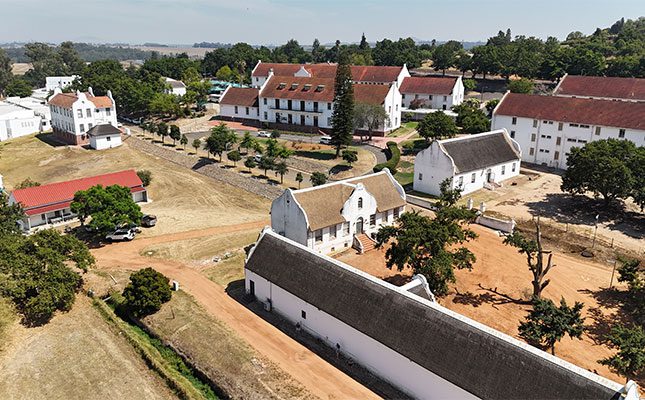
Elsenburg Agricultural Training Institute (EATI) was established in 1898 on a farm purchased by the Cape government. Of its first 27 students, only five graduated 18 months later. Pass rates have since improved, and in 2025, 225 students graduated.
In 1926, the college became part of Stellenbosch University (SU), beginning a 47-year partnership that ended in 1973 when the EATI returned to the jurisdiction of the Department of Agriculture.
Today, the Western Cape Department of Agriculture’s head office, which manages the EATI, sits atop a hill overlooking the campus, farmlands, and surrounding mountains.
Students and facilities
Located 14km from Stellenbosch in the Western Cape winelands, the EATI campus and farm comprises farmland, livestock camps, administration blocks, lecture halls, sports facilities, and residences.
Crops grown on the farm include 1,42ha under vegetables, cover crops, and grains, as well 6ha under apples, pears, peaches, citrus, olives, guavas, and almonds, giving the plant production students a wide variety of crops to work with.
A herd of 30 Holstein cows provides practical experience in the daily operation of a dairy farm, which includes dehorning, castration, body condition scoring, artificial insemination, and milking. Plans are under way to expand the on-site creamery, enabling training in cheese and yoghurt production.
Students gain practical training in wool handling and breed-specific management, working with the farm’s Merino, South African Mutton Merino, and Dormer sheep studs. They also participate in sheep-shearing competitions and attend Bonsmara and Simmentaler breed courses.
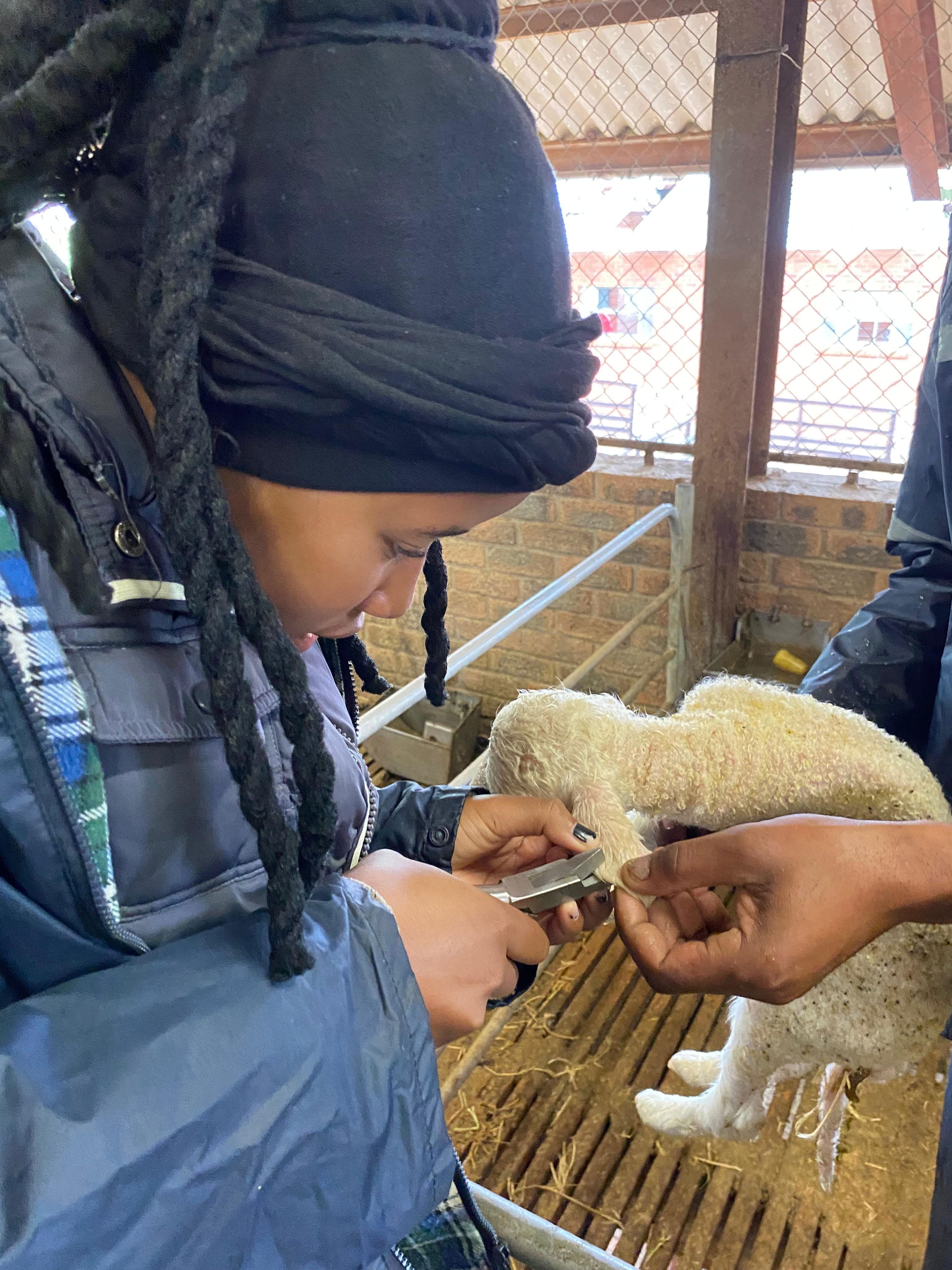
Students visit experimental and commercial farms to gain exposure to practices like crop rotation, conservation agriculture, greenhouse technologies, hydroponics, and flower farming. Meat science students tour abattoirs and butcheries, while dairy science students visit goat and cattle dairy farms.
More than 600 students were enrolled in 2025, nearly 300 of whom lived in the nine single-gender residences. Students have access to a cafeteria renowned for nutritious meals (with online booking for day students); a 24-hour computer laboratory; library; rugby and soccer fields; tennis, netball, and squash courts; and a gym.
Inclusion remains a priority at the EATI, with a male-to-female ratio of 60:40 and people of colour making up 48% of students.
The language of instruction is English, but the college follows a multilingual language policy, ensuring the inclusion of Afrikaans and isiXhosa.
Diplomas and degrees
The EATI’s three-year Bachelor of Agriculture (B.Agric) degree is offered in association with SU’s Faculty of AgriSciences. Students can specialise in plant production, animal production, cellar technology, cellar management, or extension (with either plant or animal production).
The three-year diploma option offers students a choice of four fields of study: plant production, animal production, plant and animal production, or cellar technology. The third year of the diploma includes a compulsory year of workplace integrated learning on commercial farms.
Generic diploma subjects include agribusiness, biology, agricultural engineering, and soil science. Specialised subjects cover agronomy and vegetables (or viticulture) for plant production students, and animal nutrition, dairy cattle, poultry, and small-stock science for animal production students.
The EATI also offers occupational certificates through its Agricultural Skills Development sub-programme. Candidates can qualify as an orchard and vineyard foreman (NQF Level 4) and livestock farm supervisor (NQF Level 3). These qualifications integrate theory and practical training and experience.
Wine and horses
With its wine cellar and horse stud, the EATI is uniquely positioned to offer cellar technology, cellar management, and equine studies.
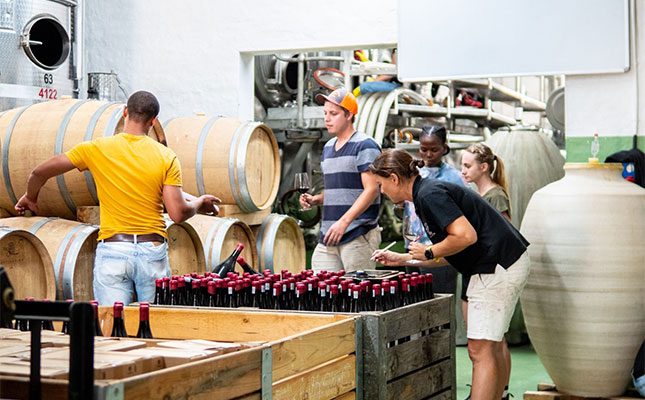
After completing their first two years of study, the major subjects for would-be winemakers studying cellar technology include cellar management, oenology, and viticulture.
Degree students choosing winemaking as their major complete a practical year in the on-campus wine cellar, while diploma students do their practical year on local wine farms.
Equine studies is a practice-intensive programme, admitting an average of only 12 students per year. Students must obtain a 70% pass mark, as required by the Equestrian Qualifications Authority of Southern Africa (EQASA), and book their examinations with the South African Network of Professional Instructors.
Module one subjects include horse handling, use of equipment, and a horse’s natural lifestyle and actions. Module two covers horse health and the lunging of a trained horse.
Subjects covered in module three give an in-depth understanding of horse health, hoof care, feeding and diet, and business management. This module culminates in the EQASA Professional Stable Yard Manager qualification.
Students are not required to own a horse but must have a matric certificate.
Training is supported by six horses, several livery horses, and the oldest Percheron stud in South Africa. Equine students work with these horses to gain exposure to breeding and stud management.
Exchange programmes
The EATI has various exchange programmes, specifically focused on winemaking students, and accommodates a minimum of 10 viticulture students from France every year.
Exchange agreements with the Centre de Formation Professionnelle et de Promotion Agricole in Beaune, France, and the Weihenstephan-Triesdorf University in Freising, Germany, facilitate curriculum development, research and innovation, as well as student and staff exchanges.
Applications and bursaries
Applications for the B.Agric degree open on 1 April each year and close on 31 July, and should be submitted electronically via the Stellenbosch University Online Application System. For enquiries, email [email protected], or phone 021 808 9111.
Applications for equine studies and the Diploma in Agriculture also open on 1 April but close on 30 June. All applications should be submitted via the EATI online application system.
The closing date for bursary applications is 30 September every year.
For more information phone Elsenburg Agricultural Training Institute on 021 808 5451, or email [email protected].