
Message from Minister of Agriculture, John Steenhuisen
When I look back on 2025, I am struck not only by how much was achieved, but by the spirit in which it was achieved.
Agriculture is a sector that demands patience, resilience and deep partnership, and this past year showed once again that the people who work the land, who manage our value chains and who guide our industries have these qualities in abundance.
As a country we faced global economic uncertainty, climatic pressures, and geopolitical shifts, yet South African agriculture grew in strength, confidence and unity.
This year reminded me that agriculture is more than an industry. It is a community. It is a network of farmers, scientists, labourers, exporters, policymakers, traditional leaders, youth, and communities who share a common purpose.
The achievements of 2025 reflect that shared purpose across seven core priorities that guide our work as the Department of Agriculture:
- Partnerships for growth
Partnerships sit at the heart of everything we do, because our success will always depend on the strength of the relationships that bind us to the sector. During 2025, we deepened collaboration with organised agriculture at national and provincial levels.
Early in the year, we convened introductory sessions with commodity organisations to strengthen communication, align policy and ensure that producers of every scale had a voice in shaping agricultural decisions.
This helped us identify regulatory bottlenecks, better understand industry needs and co-design solutions that support inclusive growth.
One of the most exciting examples of ‘partnership in action’ was the launch of the Jozini Smallholder Farmer Programme in KwaZulu-Natal.
Working with Unilever South Africa and the Provincial Department of Agriculture, we set in motion a programme designed not only to provide training, inputs and technical support, but also to connect farmers to sustainable markets – a shift in mindset from “grow and sell” to “grow to sell”.
It is a model that will support long-term prosperity in one of our rural regions and it has already inspired discussions about replication in other provinces.
Partnership thinking also shaped our engagement with the bee industry. In November, I spent time with beekeepers in the Western Cape.
The engagement focused on the department’s efforts in raising awareness on the importance of the beekeeping value chain and government’s role in improving bee production in South Africa.
When we think of agriculture, we often think of land, water, livestock, and crops. But without pollinators – particularly bees – our food system simply would not function.
2. A modern and progressive regulatory environment
Regulation must never stifle innovation. Our goal in 2025 was to modernise the rules that govern agriculture so that farmers and agribusinesses can adopt new technologies and respond more quickly to global shifts.
One of the most meaningful steps in this direction was the revocation of Leaf Services as an assignee under the Agricultural Product Standards Act.
This decision prevented unnecessary cost increases in the grain and bread value chains and was welcomed by industry and consumers alike. We also approved the inclusion of indigenous crops and medicinal plants under the Marketing of Agricultural Products Act, which formally recognises a R12 billion sector and opens new opportunities for small-scale farmers and traditional communities.
This decision gives indigenous crops the policy status they deserve and aligns with our values of sustainability, heritage, biodiversity, and economic inclusion.
To bring regulatory systems in line with modern practice, we moved the entire pesticide registration process into a digital platform that will be fully implemented by April 2026.
Once complete, it will eliminate paper backlogs and speed up approvals for new technologies that our farmers urgently need. We also published new draft export regulations to strengthen standards and improve our competitiveness in global markets.
3. Improving market access for South African agriculture
Market access has been one of the biggest successes of this year. South Africa regained access for fresh apples to Thailand and opened the Philippines for table grapes, we secured new protocols for avocados entering China and extended citrus access into Vietnam.
These wins were possible because of strong partnerships between the Department, industry and international partners.
Perhaps the most historic achievement was the stone fruit protocol which I signed in Shanghai in October. For the first time, China has opened its market to five categories of South African stone fruit under a single cooperative agreement.
This will unlock close to R400 million in the next five years and much more beyond that as consumer preferences evolve. This agreement is a powerful example of what is possible when diplomacy, science and industry work in concert.
The G20 Agriculture Working Group and Ministerial meetings also gave us the opportunity to elevate South Africa’s voice on global platforms. We advanced the philosophy of Ubuntu as a guiding principle for global food security and helped deliver the G20 Food Security Task Force Declaration, which commits the world to building more resilient food systems.
Closer to home, we worked with the government of Botswana to reopen exports of maize and wheat within two weeks of an unexpected disease-related suspension.
This intervention helped protect producers from significant losses and demonstrated the importance of strong regional relations.
Many of my bilateral meetings this year focused on pushing back against the European Union’s increasingly protectionist regulations, particularly those affecting our citrus through False Codling Moth and Citrus Black Spot requirements.
I have consistently made the case that our science-based systems must be respected. The facts support this. With a noncompliance rate of less than 0,03%, South African citrus is among the safest and most dependable anywhere in the world.
4. Providing effective support for farmers
It is critical that my department provides practical support that helps farmers grow sustainably. This year, we invested R1,7 billion in funding that supported more than 6000 farmers, with an additional R448 million allocated through the Ilima/Letsema programme to support household food production, which created more than 9000 jobs.
We continued our mentorship and youth empowerment programmes, placing over 3000 agricultural graduates in the sector and training more than 66 000 farmers through our extension services.
In September, I met with the Brazilian Vice-Minister of Agriculture and Livestock, Luiz De Alcantara Rua, and signed a landmark Memorandum of Intent, marking a new era for closer cooperation in the agricultural sector. Under this partnership, we will share best practices in sustainable agriculture, livestock farming systems, and training programmes.
One of the most meaningful milestones of the year was the progress we have made towards the integration of all 11 agricultural colleges into the higher education system. For decades, these colleges have operated outside the formal university and TVET framework.
Integrating them will ensure that their qualifications will be nationally recognised, internationally competitive and designed with the future of agriculture in mind.
My goal is that agriculture students will be exposed to coding, GIS mapping, biotechnology, climate-smart farming, and sustainable finance. These skills will prepare a new generation to lead South African agriculture.
We also intensified efforts to tackle stock theft and rural crime, working closely with the South African Police Services and traditional leadership to improve rural safety.
Through a partnership with Red Meat Industry Services, we advanced work on a national livestock traceability platform that will strengthen disease control and help tackle stock theft, which has become one of the most severe threats to our country’s food security, economic stability, and the sustainability of farming communities.
It is among the most frequently reported property crimes, with losses exceeding R1,3 billion in 2023.
The impact is devastating, particularly for smallholder and commercial farmers, many of whom are already under pressure from rising input costs, unpredictable climate conditions, and market.
I will continue coordinating with fellow ministers, such as the Minister of Home Affairs, Dr Leon Schreiber, as the porous 486km border with Lesotho remains a primary route for well-orchestrated stock theft operations.
Through this work we are building the foundations for secure rural communities where farmers can focus on production rather than protection.
5. Biosecurity is everybody’s responsibility
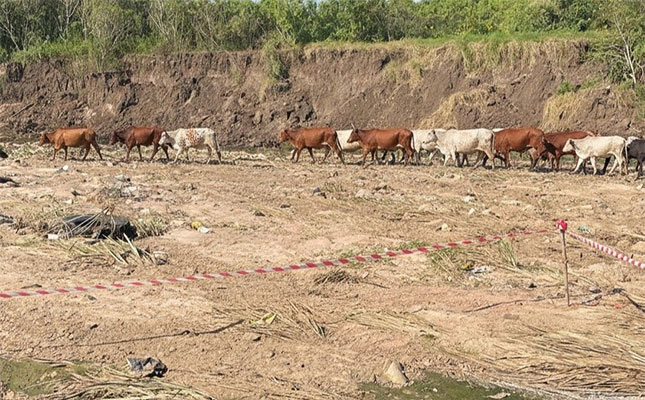
Biosecurity is the foundation upon which our entire sector depends. In response to the growing spread of foot-and-mouth disease (FMD), and the realisation that we needed a completely new approach to dealing with the disease, I convened a FMD Indaba in July.
This Indaba brought together government, veterinarians, industry, and researchers and resulted in a collaborative approach to preventing and managing outbreaks.
This was followed by my appointment of an Industry-Government Task Team that has significantly strengthened our capacity to respond to animal and plant diseases. The Department of Agriculture has embarked on a new policy direction, FMD-Free with Vaccination, which stems from the Indaba.
The first two months of the new year will see important developments in the implementation of the plan to achieve FMD-free with vaccination.
We have reached an agreement with the Botswana Vaccine Institute to supply us monthly from January with a million doses of FMD vaccine to vaccinate our national cattle herd.
The Livestock Identification and Traceability System will be implemented by the second week of January. This system was developed by the Council for Scientific and Industrial Research and there are already provinces that have started implementing the system. The system, through geo-location, will help us track the movement of vaccinated animals.
The task team is busy developing a Section 10 scheme in terms of the Animal Diseases Act, 1984 (Act No. 35 of 1984). This scheme will be announced by the end of January and will set parameters within the dairy and the feedlot industries for the vaccination programme.
Regulations will be reviewed regarding the emergency importation of vaccines, quarantine measures, and branding of animals in line with this new policy direction. The task team is also developing a new incentivised post-vaccination branding system.
To ensure more funds are being directed to the fight against FMD, all unspent Comprehensive Agricultural Support Programme (CASP) funding will be directed towards biosecurity and FMD control. Going forward, 5% of the CASP funding will be prioritised for FMD.
This year also saw the launch of our first national avian influenza vaccination programme, and the expansion of our partnership with the University of Pretoria’s National Biosecurity Hub, so as to enhance plant and animal disease surveillance, Sanitary and Phytosanitary measures, and graduate training.
I appointed two highly experienced veterinarians, Dr Emily Mogajane and Dr Nomsa Mnisi to lead the development of our national regionalisation framework, which will unlock trade opportunities by allowing disease zoning that aligns with international norms.
My goal is that we will soon have a farm-to-fork protocol that guarantees transparency and traceability in livestock movements, which is critical for preventing the spread of infectious diseases.
This will ensure that our livestock can be traced throughout the value chain, from farm to export, and ultimately enhance our standing in international markets by meeting the biosecurity standards required by many countries in their trade agreements.
Onderstepoort Biological Product’s turnaround remained a major focus. Although recovery will take time, new leadership, tighter oversight, and improved planning has created real momentum.
I am working with the Agriculture Research Council (ARC) to fast-track all processes necessary to resume vaccine manufacturing as soon as possible so that we can restore our vaccine self-sufficiency.
I firmly believe that a public-private partnership model, designed with strong governance and clear IP protections, provides the best opportunity to deliver this outcome swiftly and sustainably. Our shared vision is to restore South Africa’s vaccine production capacity and to build a resilient biosecurity system with global credibility.
6. Advocacy for a growing sector
Agriculture’s future depends not only on what happens within the sector, but also on the policy decisions made across government.
Throughout 2025, I engaged with key ministries on ports, rail, rural infrastructure, water licensing, municipal services, trade agreements and customs issues. This included writing to the Minister of Trade, Industry and Competition (DTIC), Parks Tau, to propose an automated wheat tariff mechanism, as the current manual system causes extensive delays between tariff triggers and their publication.
These delays distort the wheat market, create uncertainty for producers and traders, and allow subsidised imports to flood our market. I have also been championing the establishment of an Inter-Ministerial Task Team between the Department of Agriculture, DTIC, and the Department of International Relations and Cooperation.
A stronger alignment between these three ministries will allow us to unlock new economic opportunities, accelerate export growth, and position South African agriculture as a key global player. These intra-governmental areas often determine whether a farmer can plant, harvest, transport, or export profitably.
7. Improving food security
The National Food and Nutrition Security survey revealed the scale of hunger in South Africa, particularly in provinces like the Eastern Cape where more than 31% of households face insufficient access to food.
This is not only a human tragedy, but an economic threat. It is for this reason, that on World Food Day I joined communities in Gqeberha under the theme ‘Hand-in-hand for better food and a better future’.
We reaffirmed our commitment to a whole of society effort that includes school gardens, community food hubs, smallholder support, and the promotion of indigenous and underutilised crops such as amaranth, African leafy vegetables and Bambara groundnuts.
We also launched the World Food Forum Youth Chapter, giving young leaders a platform to shape the future of our food system. Our engagements at the G20, G7, AU and various global forums helped secure international partnerships that will support small scale farmers and community food systems in the years ahead.
Looking ahead to 2026
The achievements of 2025 have laid strong foundations for the year ahead. Employment in agriculture has risen by 2%, adding 14 000 new jobs and bringing total agricultural employment to 920 000.
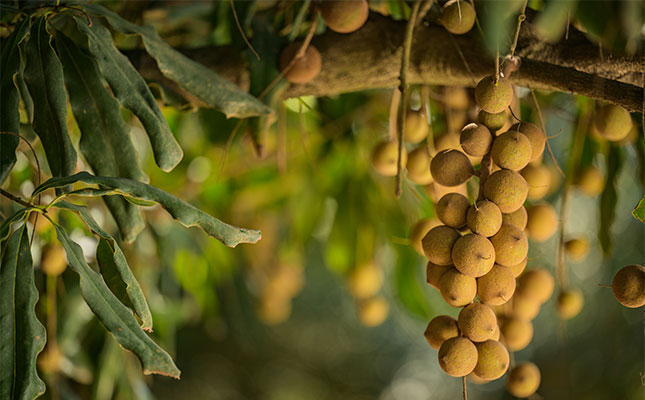
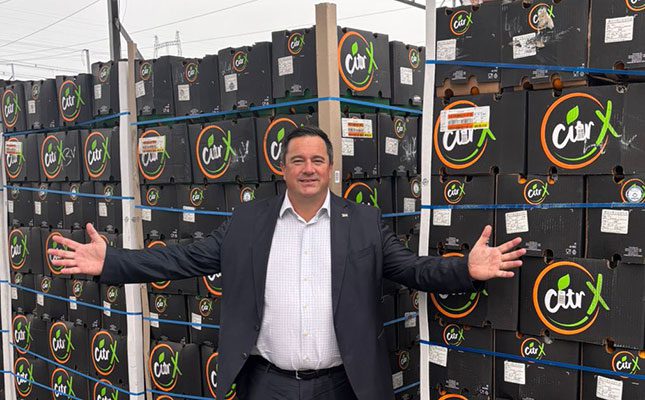
Citrus exports reached a record-breaking 203,4 million cartons, a 22% increase from 2024. These numbers reflect an industry that is growing in confidence and capability.
In 2026, I intend to build on this momentum. We will strengthen our partnerships, modernise more legislation, expand market access, deepen farmer support, intensify biosecurity reforms, advocate for the sector across government and drive a collective mission to end hunger.
Agriculture remains one of South Africa’s greatest assets. It is a sector that carries our heritage and shapes our future. It feeds our nation, anchors our rural economies, and places South Africa on the world stage.
The year ahead holds immense promise, and together we can turn that promise into progress.
– John Steenhuisen, Minister of Agriculture