
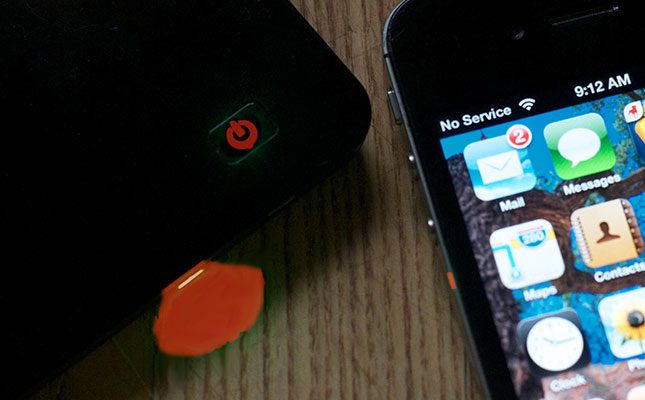
Below is a list of the most common reasons for weak cell signal:
- Insulation: thick walls, such as old stone, concrete slabs, or steel-reinforced structures, can block mobile signals and cause unreliable reception.
- Location: properties surrounded by hills, mountains, dense forests, valleys, or other natural obstacles may experience poor signal. The same applies to those in rainforests, deserts, or any low-lying areas.
- Remoteness: areas far from network towers often have little to no mobile coverage.
- Wire mesh (Faraday cage): some buildings use wire mesh to block external magnetic fields. This can prevent mobile signals from passing through.
How to fix dropped calls: the answer to awesome cell phone signal coverage
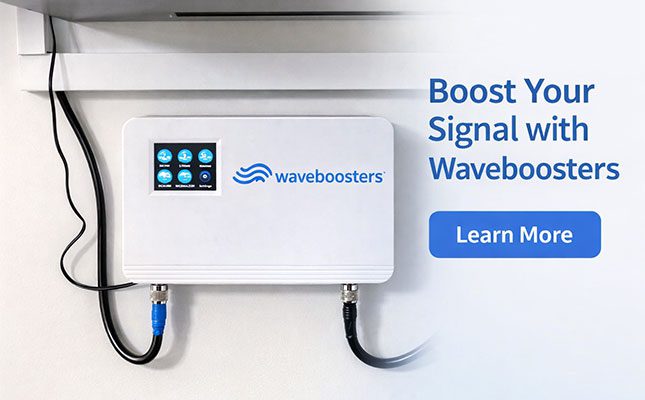
At Smartboosters, we provide long-term solutions to poor cell signal. Our signal boosters improve reception not just for cell phones but for any device that uses a SIM card.
- Advertisement -
The following are a few tips to consider to help you make an informed decision when choosing a signal booster:
Network provider
If you contact us for a quotation, we’ll ask a few questions to recommend the best solution for your needs. The first question is usually about your network:
- For 2G calls and SMS on MTN, Telkom, Rain, Cell C, and Vodacom, click here.
- To boost 3G Internet data nationwide in South Africa and across the continent, click here.
- For high-speed 4G LTE data with a signal booster, click here.
- For 2G and 3G coverage on MTN, Telkom, Rain, Cell C, and Vodacom, click here.
- For 2G and 4G coverage on MTN, Telkom, Rain, Cell C, and Vodacom, click here.
- To boost all networks at once, including 2G calls and SMS, 3G Internet, and 4G LTE data across South Africa and other parts of Africa, click here.
What is the area of coverage?
- Basic 250m² solution: perfect for improving signal in a home or small office, covering two to three small bedrooms with thin walls or open-plan areas. Outdoor use is possible with any booster, but make sure the receiving antenna is at least 10 m from the donor antenna to avoid interference. A weatherproof enclosure with a solar panel is recommended to protect the system. For indoor installations, place the outdoor antenna at a reasonable height on the roof, pointing toward the strongest signal or network tower if visible. Click here for the 250m² solution.
- 500m² solution: suitable for single- or double-storey homes or offices with thick walls and up to four bedrooms or medium-sized office rooms. This requires extra distributing antennas, splitters, and cables—a distributed antenna system ensures signal reaches all rooms and corridors. Click here for the 500m² solution.
- 1 000m² solution: ideal for double- or triple-storey properties with multiple walls and five to six bedrooms or office rooms. Roughly four indoor antennas are recommended, though a site inspection is ideal. Installation guidance or full setup can be provided. Click here for the 1 000m² solution.
- Larger coverage options: for full-range solutions of 1 800m², 2 500m², 4 000m², or 5 500m², click here.
For more information phone 031 813 5429, email [email protected], or visit smartboosters.co.za.
See Farmer's Weekly first on Google
Add as Preferred Source
Follow Farmer's Weekly on Google News
Follow on Google News
- ADVERTISEMENT-