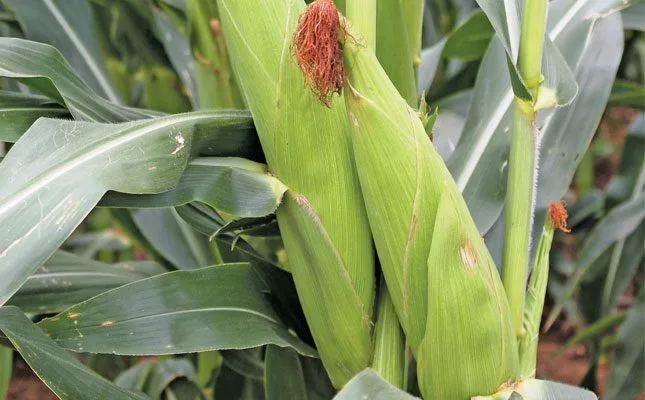

When we talk about variable speed drives (VSDs) in irrigation systems, the conversation often starts at the pump. In reality, it should start much further upstream – with the crop.
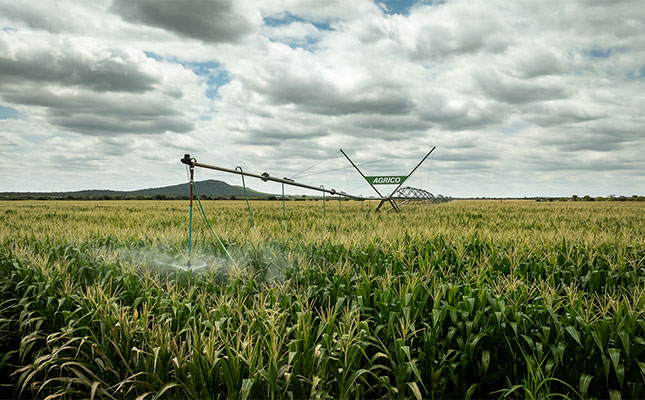
Every irrigation system exists to satisfy a seasonal water demand. That demand changes throughout the season, between zones, and even during the day depending on scheduling.
Once you understand the total process requirement – crop, irrigation method, pressure variation, and flow – only then does it make sense to talk about pump control. And this is where VSD technology starts to show its value.
The Traditional Approach
For years, irrigation systems have relied on fixed-speed motors. Control of the system is achieved using valves. If less pressure or flow is needed, a valve is throttled. If the system needs protection during start-up, the pump is started against a closed valve.
The challenge is that these systems draw extremely high inrush currents during start-up, often between 300% and 800% of the motor’s rated current. Mechanically, the rapid acceleration from standstill transfers torque abruptly into the water column. This is where surges, stress, and water hammer originate.
In many installations, a skilled operator is required to manage this process. Alternatively, expensive pressure-operated valves are installed, and when dealing with raw irrigation water, maintenance quickly becomes part of the equation.
What Changes With a VSD?
Instead of running the motor at full speed and controlling the system with valves, the VSD controls the speed of the motor itself. Because a VSD can produce full torque from zero speed, the pump can start slowly and smoothly. The acceleration ramp is programmed to match the velocity increase in the pipeline. Non-return valves open gently, and water hammer is virtually eliminated.
Even more importantly, the motor only draws the current required to achieve the process result, whether that is pressure or flow. There are no massive start-up peaks when programmed correctly.
This has three immediate effects:
- Reduced electrical stress;
- Reduced mechanical stress; and
- Lower maximum demand exposure (depending on tariff structure).
Eliminating Valves, Operators
When speed becomes the control mechanism, many traditional components fall away. Start-up valves are no longer required. Pressure control valves become unnecessary in many applications. Pumps can be started on timers or remotely without operator intervention.
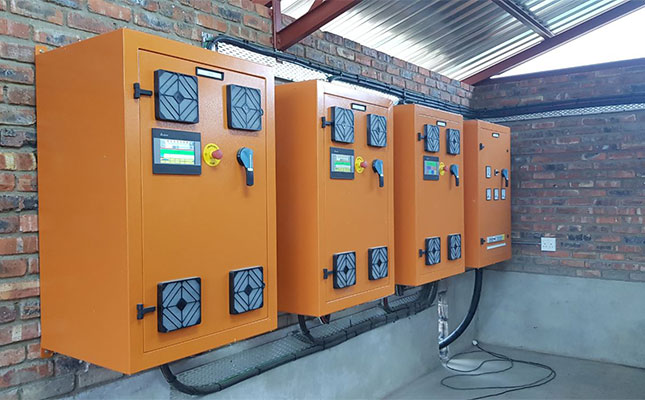
All field instrumentation – pressure switches, transmitters, emergency stops – can be connected directly to the drive inputs. No additional relays or interface hardware is typically required. The result is a simpler, cleaner installation with fewer maintenance points.
Built-In Process Control
Modern VSDs include on-board PID controllers. That means pressure or flow signals can feed directly into the drive, allowing the system to maintain constant pressure or flow automatically.
As irrigation zones open and close, the drive adjusts motor speed accordingly.Instead of fighting the system with valves, the pump simply runs at the speed the irrigation process requires.
Energy Considerations
A standard IE1 motor typically operates at a power factor of around 0,8 at full load. Because a VSD converts incoming AC to DC and then recreates a controlled sine wave for the motor, the input characteristics are fundamentally different to fixed-speed operation.
In practical terms, this can translate into improved electrical efficiency and reduced reactive impact on the supply. But the real energy story lies in the pump affinity laws:
- Flow is proportional to speed;
- Pressure is proportional to speed squared; and
- Power is proportional to speed cubed.
That last point is critical. A small reduction in speed can result in a significant reduction in power consumption. Instead of throttling excess energy through a valve, the VSD reduces the energy at the source. For systems that operate at partial load for long periods, which is common in irrigation, this becomes financially meaningful.
What About Payback?
In most agricultural installations, the payback period for a properly applied VSD falls between 9 and 14 months.
This comes from a combination of:
- Reduced maximum demand spikes;
- Energy savings through speed control;
- Elimination of control valves;
- Reduced maintenance; and
- Extended pump and pipework life.
Beyond the payback period, the savings continue.
Final Thoughts
A VSD is not just a starter; it is a process control device.
When applied correctly – and when the total irrigation requirement is properly understood – it transforms a fixed-speed pumping system into a responsive, automated, and energy-optimised installation.
For more information visit pfs20.com.