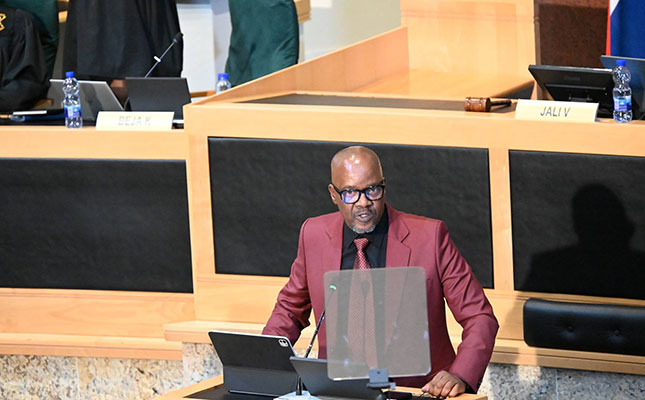

The budget was tabled and adopted during an online meeting by the Western Cape Government’s Standing Committee on Agriculture, Economic Development and Tourism (the committee), chaired by Noko Masipa from the DA. After being incorporated into the overall Western Cape Budget, it will be tabled in the Western Cape Provincial Parliament for final approval.
Other serious issues raised during the meeting by Western Cape Minister of Agriculture, Economic Development and Tourism Dr Ivan Meyer and head of the Western Cape Department of Agriculture Dr Mogale Sebopetsa were the uncertain global trading environment, climate change, and, in particular, rapidly declining dam levels across the province.
Partnerships key to Western Cape’s FMD response
Meyer indicated that his department’s partnership with private veterinarians is crucial to fighting foot-and-mouth disease (FMD) as part of its ongoing 21-point response plan.
“No state department in South Africa has the standalone capacity to manage FMD. With only eight state vets, it’s impossible to safeguard nearly half a million livestock without private-sector involvement. That’s why we’ve already registered 26 private vets to support our efforts,” he noted.
According to him, the provincial Department of Agriculture has also partnered with Stellenbosch University for laboratory support.
“This must be a partnership between government, academia, and the private sector. We don’t want the Western Cape to succeed alone; we want South Africa to succeed,” Meyer added.
“The demand on our veterinary systems is rising sharply, but our capacity is not. Even with a R128 million budget increase and conditional grants, the pressure remains immense.”
In his presentation to the committee, Sebopetsa warned of the risks of FMD to the Western Cape’s sizeable livestock industry.
“The fact is, it remains a massive risk to the livestock export market in the Western Cape, a subsector worth about R18,5 billion and supporting more than 50 000 jobs,” he explained.
Key risks from war in Middle East
Sebopetsa said it was uncanny that the first cases of COVID-19 in South Africa were reported in early March a few years ago, and that many lessons could be applied as the world faces growing uncertainty due to the escalating war in the Middle East.
“Our initial assessment is that there will be increases in the prices of production inputs. Supply chain disruptions will probably be similar to what we witnessed in the years of the COVID-19 pandemic, or even worse. It’s a threat to the market diversification strategies that have been developed over time,” he said.
Meyer added that he has commissioned a study on the risks and effects of the war in the Middle East.
“I will soon take recommendations about the economic impact of the Middle East crisis on the Western Cape economy and agriculture in particular to the Western Cape Government Cabinet. This crisis [extends beyond] the Middle East; it affects the whole of Europe and other parts of the world, too.”
Increased funding for new work
Some of the new funding allocations in the budget include African Market Activations (R5,5 million), mobile abattoirs to advance market access through agro-processing (R5 million), the manual removal of alien species to improve water resilience (R2,75 million), and the development of an online export certification system (R4 million).