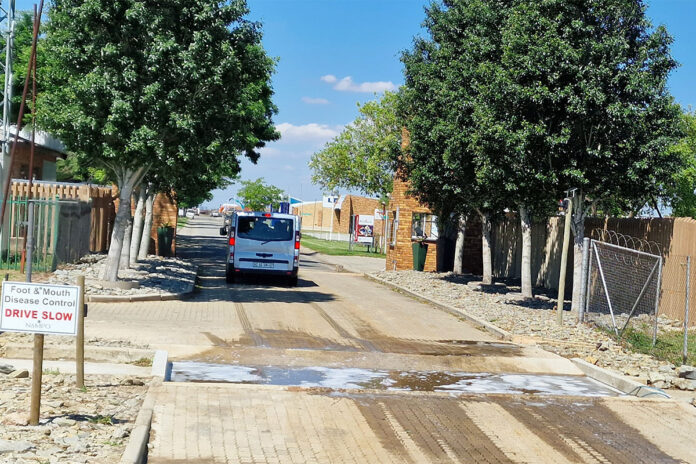
Loubser told Farmer’s Weekly the event, held at the Nampo grounds outside Bothaville on 2 and 3 October, was significant because it was the first major livestock show north of the Orange River where livestock could participate across multiple competitions and exhibitions under current disease control conditions.
“This year, Nampo Alfa is the first event north of the Orange River where there are really livestock participating in the different events. We could do this because vaccinations reached a critical mass,” Loubser said.
Following an industry protocol
According to Loubser, vaccination was a prerequisite for every animal exhibited at the show, with organisers following an industry protocol developed by veterinarian Dr Danie Odendaal and adopted by major livestock exhibitions across the country.
“That is the prerequisite for every animal that is here. They must be vaccinated and they must comply with the protocol,” Loubser said.
The protocol includes veterinary inspections before animals leave their farms, oversight at exhibitors’ premises, and further veterinary checks at the showgrounds.
“We followed that protocol. It is not only us; it is all major shows. The protocol dictates how we should keep animals safe and ensure that we don’t create risks. We have a vet at the show to check all animals,” Loubser explained.
He added that while FMD has dominated discussions across the livestock sector in recent years, it should not be the sole focus of animal health management.
“Livestock biosecurity is not only FMD. FMD is one of the major challenges, but there are many others that still need to be managed and maintained,” Loubser pointed out.
More animals than expected
Despite widespread concerns that disease restrictions and compliance requirements could reduce participation, Nampo Alfa recorded a stronger turnout of animals than many anticipated, Loubser said.
“We are very proud to say that we have more animals here this year than last year and even the year before. Everyone expected this year to be smaller than last year. That is not the case,” he said.
According to Loubser, the strong turnout reflected growing confidence among breeders in the biosecurity measures being implemented by organisers and the livestock industry more broadly.
“There is considerable confidence among breeders, which is why they brought their animals. They felt it was safe to do so,” he said.
Loubser added that livestock exhibitions continued to provide significant value to breeders.
“The marketing value for breeders to bring their animals is great,” he said.
Loubser noted that the exhibition featured a range of livestock competitions, exhibitions and evaluations, giving breeders an opportunity to showcase their genetics and engage with fellow producers, buyers and industry stakeholders.
A decade of championship support
One of the highlights of the livestock programme is the Old Mutual Wealth Interbreed Championship, which this year celebrates its 10th anniversary, Loubser said.
He added that the championship had endured through a challenging period for the livestock sector, during which disease outbreaks and uncertainty affected events across the country. Loubser also acknowledged the role of partners such as Old Mutual Wealth, which continued backing the competition during difficult years for the industry.
Speaking at Nampo Alfa, Karel Fourie, executive financial adviser at Old Mutual Wealth, said the company chose to remain involved when uncertainty around FMD placed pressure on livestock producers and agricultural events.
“Through the whole FMD situation, people asked us why Old Mutual was still here. The short answer was that when markets are rough, we don’t bail,” Fourie said.
“FMD is hurting our country and hurting our farmers, but we as Old Mutual said we would stand behind our farming community and behind our people.”
He said the company remained committed to supporting initiatives such as the Interbreed Championship and the broader farming community.
For more information, visit nampoalfa.co.za.