
Brazil is world renowned for coffee production, and although the country is a major producer of Arabica coffee, the coffee consumed most in Brazil is the Robusta variety. Most of the coffee is produced by about 290 000 small-scale producers.
The country trades coffee with more than 120 countries and, in 2025, the export revenue reached a record US$15,5 billion (about R251 billion), with nearly 40 million bags shipped abroad.
Family tradition
In Araraquara, in the heart of the interior of the São Paulo state in Brazil, the Delpasso family is one of these small coffee-producing families.
For them, it all started when João Delpasso and his son, Lorival, purchased a small piece of land. They have always been passionate about Brazil’s coffee culture and, when they bought their property in 1999 on the outskirts of Araraquara, they planted their first coffee trees.

Today, the third generation, Luka and his brother, Bruno, are taking production to a new level. The terroir is ideal for coffee cultivation. “We have the ideal altitude, a good climate, and good soils. We are able to grow specialty coffees to cater to our market, and we can do this with dedication and respect for nature,” says Luka.
According to him, they focus on the production of specialty coffee, embracing the entire process from cultivation to processing, marketing, selling, and education.
Adding value
Luka graduated in agronomic engineering, but his love of coffee and the land brought him back to the family business. After doing a great deal of research, he expanded their plantings and started the roastery with Bruno. They created the Café Delgraan brand with the aim of entering the entire coffee value chain, focused on quality. The brand name was created from ‘Del’, from the family surname Delpasso, and ‘Graan’, from the Dutch word “grain”.
According to Luka, their mission is to cultivate excellence, transforming coffee production from the cultivation of seedlings to the cup, while never forgetting about their socio-environmental responsibility.
They wish to offer a unique experience that creates lasting memories for their customers. “We wish to be recognised as a reference point in specialty coffee, integrating innovation, respect for nature and excellence at each stage, and to offer unique sensory experiences from planting to the cup,” explains Luka.
Because they wish to have control over the entire process, they propagate their own seedlings. “We strive for quality at every step,” he adds.
The extended family is involved in the cultivation of coffee and other crops on a total of 7ha, of which 1ha is at their headquarters near the city, while another 6ha is leased. They plan to acquire additional land so that they will have a total of 15ha for production.
Harvesting and processing
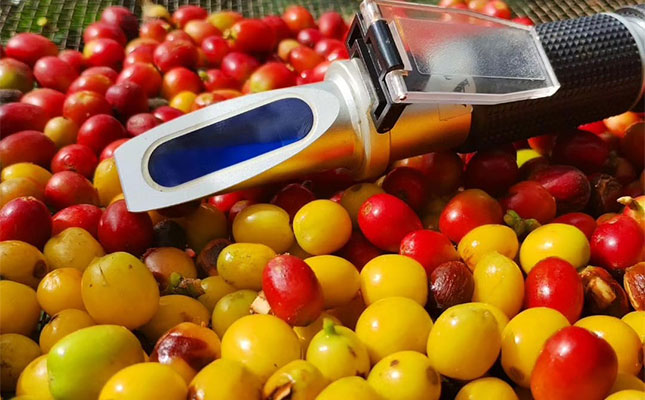
The coffee is hand-picked three to four times per season at one-week intervals. The last pick is the lowest quality, and those beans are not mixed with the earlier harvest.
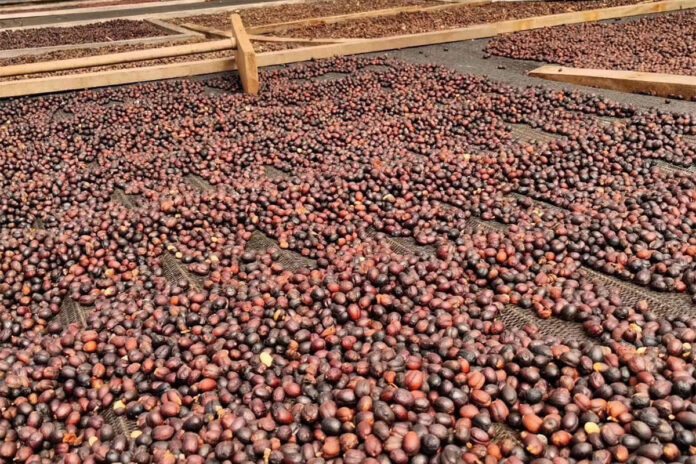
After harvesting, the coffee cherries are dried on suspended, covered terraces. This prevents the cherries from coming into direct contact with the soil or, in the case of rain, from picking up moisture.
Their average yield is 40 bags/ha, and they also employ seasonal workers during peak periods. The cost of production is US$3500/ha (R56 600).
Both Luka and Bruno studied the art of roasting and became master roasters. They also completed barista courses. They specialise in a medium roast coffee and strive for an intense aroma characterised by a full body, medium acidity, and low bitterness. According to Luka, they develop a roasting profile with chocolate, cacao and almond notes.
Working with nature
He says that because they have an inherent respect for nature, they ensure that they comply with environmental laws to prevent pollution and promote sustainability.
“We take care to produce and manage our crops in such a way that we conserve the fauna and flora in our environment. We follow agroforestry and organic production principles to ensure that we maintain and protect forests, rivers, springs and animals.”
He explains that they are intentionally integrating coffee trees with other crops, as well as other trees. Other crops planted include bananas, avocados, mangoes, various legume crops, as well as trees for timber.
“We combine agriculture with forestry to create a more integrated and diverse system. We started in 2012 with a small monoculture coffee plantation, but in 2021 switched to agroforestry and intercropping. We found that although our production is a bit lower, the quality of our beans are better. This system fits in with our philosophy of farming with the land.”
He stresses that they do not use pesticides.
“For pest and disease control, we use biological products, and for nutrition, we use green manure, manure, and an organic foliar feed. Although we have problems with nematodes, we found that the intercropping, and planting different crops on different pieces of land help with nematode management.”
Sharing the coffee experience
The family also focuses on agri-tourism and welcomes visitors not only to taste its coffee, but also to experience the entire coffee journey – from planting, to enjoying an exquisite cup of home-grown and brewed coffee.
Luka’s parting words: “We care about our reforestation. Although we have a small property, we still conserve 20% of our natural environment.”
For more information, email [email protected] or visit cafedelgraan.com.br.