
As one of the country’s largest public investments in child well-being, the National School Nutrition Programme (NSNP) plays a vital role in keeping learners focused and fed, delivering a daily meal to more than nine million children in nearly 2 000 of the poorest schools.
While the programme has earned praise for its reach and positive impact on learning, there is growing recognition that closer collaboration with the agriculture sector could unlock far greater value.
The NSNP is a government initiative run by the Department of Basic Education that provides at least one nutritious meal a day to learners in primary and secondary schools. Its core purpose is to support learning by ensuring that learners are adequately fed during school hours. Suppliers are contracted to source and deliver food to schools, where volunteer food handlers prepare the meals.
Although the programme has faced criticism over the past year for inadequate food provision, food fraud, and corruption, it is widely regarded as a success. Dr Marc Wegerif, senior lecturer and Development Studies Programme coordinator at the University of Pretoria, and a principal investigator for the Department of Science, Technology and Innovation and the National Research Foundation’s Centre of Excellence in Food Security, describes the NSNP as “one of the most important interventions in terms of food security in the country”.
“Speaking to parents and teachers, it is clear that it has an enormously positive effect on children’s ability to learn. Without the programme, many children would spend the entire school day hungry. This success must be acknowledged so that the programme is protected and continues to be resourced,” says Wegerif.
Protecting the programme also means improving what can be improved, a task made more difficult by a tight budget. About R4,13 a day is allocated for a primary school learner’s meal, while R4,33 is allocated for a high school learner. This is the full amount given to a supplier to source ingredients, deliver the food, and still make a profit.
Adjustments in this margin have contributed to past quality issues, with foods such as soya mince and maize meal being thinned to the point where nutrient levels were inadequate.
University of Pretoria nutritionist Dr Carmen Muller notes that, because the NSNP meal is often the only hot meal a child receives in a day, the quality of the meal is critical.
Getting more from the national menu
Muller explains that the NSNP meal is designed to provide about 30% of a child’s daily macro-nutrient needs. “It’s not everything they require, but it helps. The menu could be better, but the budget is too small to make major improvements.”
She notes that the NSNP meals are well planned in the official guidelines, and considerable work has gone into designing menus that meet learners’ needs. In practice, however, what is served often differs from what is prescribed.
“Sometimes delivery is an issue. If a school is supposed to receive carrots on a certain day and the delivery doesn’t arrive, they must make another plan.”
Menus also vary between provinces and even between schools.
Wegerif notes that schools in Gauteng and the Western Cape provide breakfast as well as lunch, which has a significant positive impact since it ensures learners start the day with food in their stomachs.
The breakfast is mostly sponsored by private companies, and Wegerif believes that extending the breakfast programme to the rest of the country would be a good start in improving childhood nutrition.
He’d also like to see more fresh produce and fruit on the menu. “It’s there, but it’s limited. Increasing the range would strengthen the diet.”
To address shelf life and quality issues, provinces increasingly rely on precooked and ultra heat-treated foods, which also reduces the risk of ingredients being watered down. Fresh produce, on the other hand, is more dependent on seasonality and the availability of cold-chain facilities, which many schools lack.
Although the NSNP recommends potatoes as part of the suggested foods, they do not appear on most provincial menus. Earlier this year, Potatoes SA conducted a proof-of-concept trial at five Gauteng schools to test the feasibility of adding potatoes to the meal plan. Learners who ate potatoes as part of their lunch were more focused and energised and reported feeling “fuller for longer”.
Muller explains that whole foods and unrefined complex carbohydrates such as potatoes provide nutrient-dense energy that supports children’s daily functioning.
“As a naturally unrefined whole food with a high satiety level, potatoes help children feel full for longer, while also supplying important vitamins, minerals, and small amounts of high-quality protein, all of which contribute to better learning capabilities.”
She adds that because potatoes are whole foods served in their natural form, they cannot be diluted or adulterated the way that prepacked processed food often can. This means each child receives the full nutrient value.
“Nutrients in whole foods are also more bioavailable, whereas nutrients added through maize biofortification are not absorbed as effectively. I’m not saying maize should be removed, but we need carbohydrate diversity to improve nutrition,” says Muller.
What’s on the menu?
The Department of Basic Education’s National School Nutrition Programme entails a set weekly menu that partaking schools should follow. The menus are based on Food-Based Dietary Guidelines and consist of protein (soya, fish, milk, sour milk, and beans) fresh fruit and vegetables, and a carbohydrate. A variety of protein is served, with soya not being served more than twice a week.
The menu includes foods that provide the essential nutrients necessary for growing children. This includes pilchards, maas, milk and soya mince for calcium and vitamin A, and chicken livers and spinach for iron and zinc.
The menu currently in use includes lunch for all schools, with most receiving breakfast as well.
Monday
Breakfast: Creamy instant maize meal (vanilla).
Lunch (primary and high school): Processed chicken liver stew with rice and yellow vegetables in season.
Tuesday
Breakfast: Instant sorghum porridge.
Lunch (primary and high school): Soya mince stew with rice and green vegetables in season.
Wednesday
Breakfast: Creamy instant maize meal (strawberry).
Lunch (primary and high school): Sugar beans stew with samp and yellow vegetables in season.
Thursday
Breakfast: Instant sorghum porridge.
Lunch (primary school): UHT milk with pap and fruit in season.
Lunch (high school): UHT milk/pasteurised maas with pap and fruit in season.
Friday
Breakfast: Creamy instant maize meal (vanilla).
Lunch (primary and high school): Pilchard stew with pap and green vegetables in season.
Source: Department of Basic Education
Impractical school food gardens
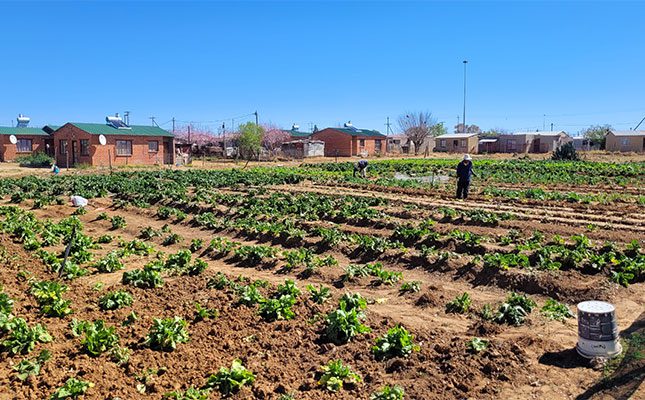
Recognising the challenges in increasing fresh fruit and vegetable supply, the Department of Basic Education encourages schools to farm their own vegetables to supplement food provided through the NSNP. This however presents challenges of its own, and Muller and Wegerif both agree that it is unrealistic to expect such food gardens to deliver sufficient produce.
“Food gardens are dependent on having access to enough water and land, which many schools don’t have. Then they need access to farming equipment, inputs and knowledge. Some schools have managed, but most don’t,” says Muller.
Wegerif notes that having school gardens are beneficial in teaching children about agriculture, but this should form part of the curriculum and can’t be seen as a viable way to improve nutrition.
“I’ve visited many schools that have dysfunctional food gardens. Farming is not easy and requires dedication. In most urban settings tunnels and irrigation would need to be erected to obtain proper output. But considering crime rates in the urban areas, the probability of the infrastructure being stolen is high.”
He explains that instances where school gardens have been successful are where there is a farmer that has contracted the land to produce food, and there is an economic incentive to keep the garden going.
“But this does not form part of the nutrition programme. The farmer could however become a supplier for the nutrition programme.”
A win-win for nutrition and transformation
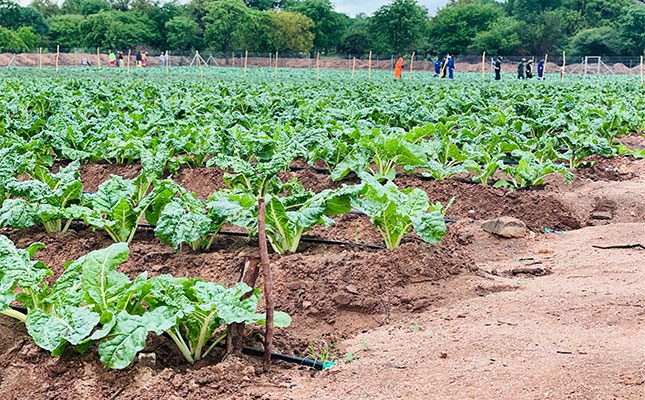
Wegerif is a strong advocate for linking local farmers, and especially black farmers, with the NSNP, to allow South Africa to achieve significant progress in driving transformation in agriculture, and childhood nutrition.
He says that the easiest wins in agricultural transformation can be achieved with explicit requirements to buy fresh produce from small-scale black farmers, combined with greater support from agriculture departments and other agencies for these farmers to be suppliers of the NSNP.
“The NSNP budget is over R9 billion, which means government can leverage these funds to drive significant change.”
Wegerif points to the concept of home-grown school feeding (HGSF), which is a global term for sourcing food from local (own country or province) suppliers to drive economic, social and environmental transformation. Examples can be seen in Brazil where food is sourced from small-scale farmers, and in the EU where organic farmers are favoured.
“If the South African government was to mandate that food must be procured from black farmers, or black-owned companies, the immense purchasing power of the state can be used in a strategic, proactive and innovative manner to drive transformation in the agriculture sector. This has been a significant missed opportunity to date.”
In Wegerif’s book, School Food, Equity and Social Justice, published in 2022, he notes that currently most food supplied to the NSNP is produced by South African companies, making it a de facto HGSF programme. This is however changing as multinationals and foreign food companies take over local businesses.
“For example, in 2018, one of the largest dairy companies was bought by foreign investors, while in 2019, one of the largest food companies – involved in maize milling, rice processing and bread baking – was taken over by the transnational corporation PepsiCo.
“Without an objective to explicitly promote HGSF, the NSNP misses an opportunity to transform the agriculture sector and create local food systems that build and retain wealth in local communities,” Wegerif states in his book.
His research points to companies that secured NSNP supplier contracts in Gauteng and Limpopo that are almost all black-owned small- to medium-size companies, indicating some economic transformation success. But the depth of the transformation is severely limited as these companies source most food from large, often white-owned, bulk food suppliers.
“The Gauteng NSNP tender to supply schools from 2020 to 2023 specifies that 30% must be subcontracted to small businesses with majority black ownership and also involving designated groups, such as youth and women. These, however, can be and often are other intermediate suppliers or service providers that are not primary producers. For example, one supplier explained that a black-owned company they buy from is an agent that buys milk in bulk from the corporate manufacturer and repackages it. In such an operation, most value still goes to the same large food processors, even importers, with no change at primary production level either.”
Simply switching to black farmers is however challenging. The NSNP suppliers interviewed by Wegerif for his book, who were all black, indicated a willingness to buy from black farmers, but that it had to work from a business perspective.
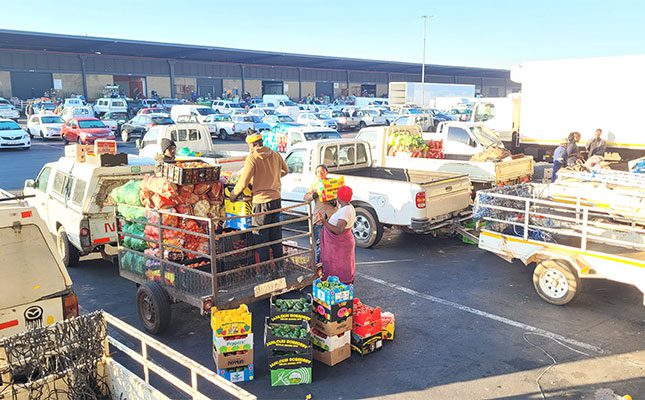
“The suppliers noted that there are greater transaction and transport costs involved in going to larger numbers of small-scale farmers to secure the needed supplies. The large bulk suppliers on the other hand had the experience and equipment, such as storage and vehicles, to fill large orders on time, in some cases delivering the required produce directly to the schools.”
Wegerif’s research shows that there are examples of success.
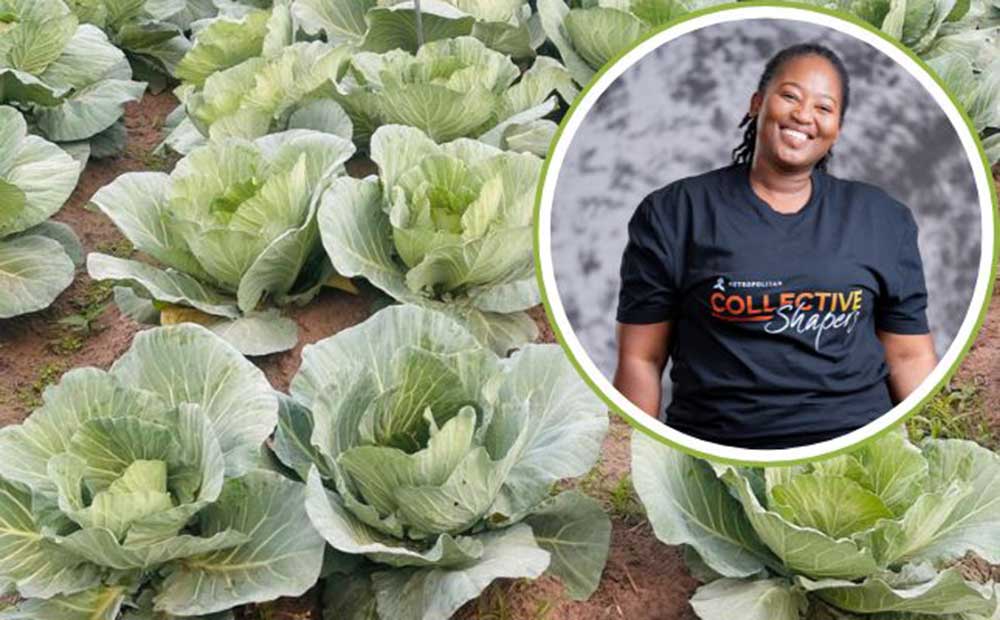
“One black farmer, farming on 6ha of land in Limpopo, sold butternut and cabbage to two different NSNP suppliers for three years. This presented a win-win as the farmer had a consistent buyer for her produce.”
Wegerif says achieving these objectives requires collaboration with other government departments and non-government agencies, especially in the agriculture sector.
“Changes to procurement policies must not jeopardise the NSNP or interrupt food supply. A coordinated, gradual approach must therefore be taken to build capacity among black farmers and get supply chains in place.”
Proving success for long-term sustainability
Evaluating the impact of the NSNP is critical for ensuring its long-term effectiveness and sustainability. As one of the country’s largest public investments in child nutrition, the programme has the potential to influence health, learning outcomes, and future productivity on a national scale. Yet, there is a notable absence of comprehensive studies that track its impact over time.
Wegerif laments that existing research is limited to smaller studies, which do show positive benefits, but do not offer a comprehensive national picture.
“We spend all this money on the programme, yet we don’t allocate funds to prove that it works. Stronger evidence is essential both to improve the programme and to secure additional funding.”
In terms of moving the needle on childhood stunting as a result of malnutrition, Wegerif says that progress has stalled. “This is one of South Africa’s persistent challenges since 1994. Progress was made until around 2004, but even then levels remained high.
“One criticism of the NSNP is that it begins too late, as it only targets school-aged children. We need interventions in the first thousand days of life. Strengthening nutrition support before children reach school age would be a critical step in addressing long-term developmental outcomes.”
The NSNP is one of the country’s most powerful tools for supporting child nutrition and learning. Its successes show what is possible when resources are directed towards children’s well-being, but its shortcomings highlight the need for greater collaboration between food producers and food suppliers.
Ensuring that every learner receives a nutritious, dignified meal each day will require continued investment, meaningful evaluation, and the political will to prioritise children’s health. Strengthening the programme is not only a matter of feeding learners today, but of safeguarding the country’s future.