The African Growth and Opportunity Act (AGOA), which provides duty-free access to the US market for thousands of qualifying African goods, expired in late September 2025.
At the time, economists and trade experts warned that delays in extending the Act risked disrupting African exports, undermining business confidence, and weakening long-standing trade ties between sub-Saharan Africa and the US.
The House of Representatives (the House) voted overwhelmingly in favour of extending AGOA, with 340 lawmakers supporting the bill and 54 opposing it.
The proposed legislation would extend the Act until the end of December 2028. It now awaits consideration by the US Senate and, if approved, will be signed into law by President Donald Trump.
For South Africa, the outcome is far from certain. The country’s relations with the US have deteriorated in recent years amid disputes over trade policy and foreign affairs, including South Africa’s military exercises with China, Russia, and Iran.
Reports in the media indicate that, ahead of the House vote, South Africa requested that Iran withdraw from the joint naval exercise ‘Will for Peace’ in False Bay, Western Cape, to avoid further inflaming tensions with the US.
US lawmakers condemn SA’s moves
Senior US lawmakers have openly criticised South Africa’s actions. Jim Risch, chair of the Senate Foreign Relations Committee, accused the country of undermining its stated non-aligned stance by cooperating militarily with US adversaries, questioning its AGOA eligibility.
He added that South Africa’s actions signalled hostility towards the US, justifying tougher action by the latter.
Despite the political headwinds, Agbiz chief economist Wandile Sihlobo said the AGOA renewal and continued inclusion of South Africa would be “valuable to our farming industry, the auto sector, and others”.
In 2024, the US accounted for about 4% of South Africa’s total agricultural exports of US$13,7 billion (around R252 billion), Sihlobo noted.
Exports remained strong in the first half of 2025, with exporters such as citrus growers, macadamia producers, and fruit juice exporters accelerating shipments during a 90-day pause on higher US tariffs.
As a result, agricultural exports to the US rose by 26% in the second quarter of 2025 to reach US$161 million (R2,9 billion), he added. However, exports cooled in the third quarter of 2025, declining by 11% year-on-year to US$144 million (R2,5 billion).
The export basket remains largely unchanged, dominated by citrus, grapes, wine, fruit juices and nuts.
These industries are particularly exposed, as they make up the bulk of South Africa’s US-bound agricultural exports.
Sihlobo warned that failure to secure its AGOA eligibility could significantly erode South Africa’s competitiveness. He added that without the Act, South African products would likely face tariffs of around 33% under most-favoured-nation rates, compared with 10% for export competitors such as Chile and Peru, giving them a substantial price advantage.
Some relief has come from recent US decisions to exempt certain food products from reciprocal tariffs, including fruit juices, cocoa, spices, avocados, citrus, beef, and selected fertilisers.
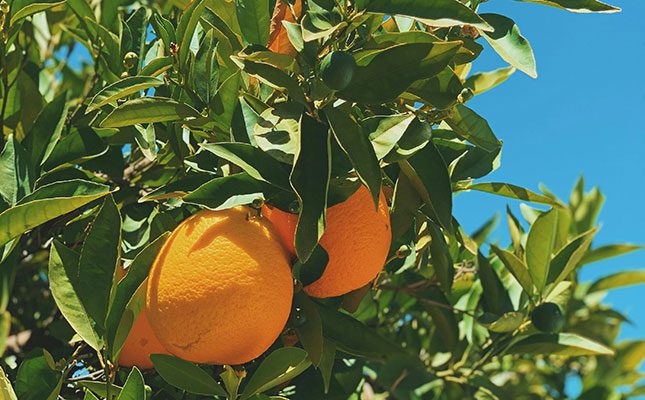
From a South African perspective, oranges, macadamia nuts, and fruit juices stand to benefit, though most other agricultural products still face steep duties.
A separate Senate bill proposes a shorter AGOA extension and a full review of US–South Africa relations, potentially linking benefits to foreign policy alignment.
For South African farmers and agribusinesses, the coming weeks will be crucial as US lawmakers decide whether AGOA continues to underpin the country’s access to one of the world’s most valuable markets.