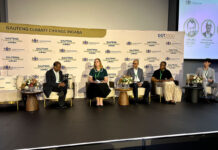

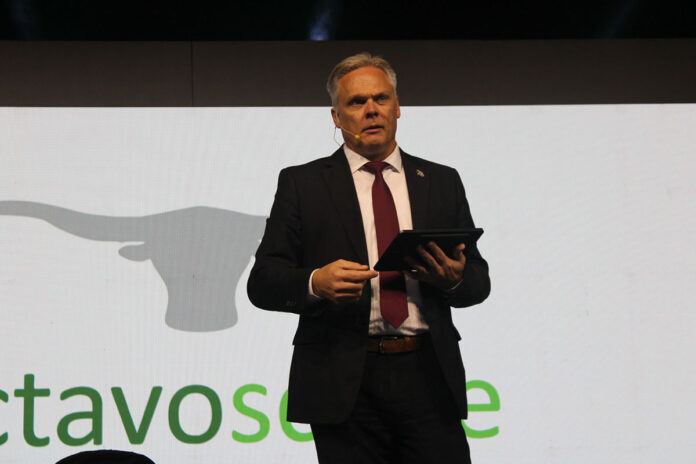
Speaking at the Octavoscene Foot-and-Mouth Disease Symposium at the Heartfelt Arena in Pretoria on Friday, Aucamp also revealed that South Africa has vaccinated the country’s entire dairy herd and more than eight million cattle nationally as government intensifies efforts to regain the country’s FMD-free status.
Broader industry representation
Aucamp said he was committed to ensuring broader representation on the advisory structures guiding government’s response to the outbreak.
He announced that Dr Theo de Jager, chairperson of Saai, and veterinarian Dr Danie Odendaal would join his FMD advisory committees. Aucamp added that vaccine manufacturers would also be invited to participate in some meetings to strengthen collaboration between government, scientists, industry and the private sector.
“It is important to me that all farmers are represented in these structures,” he said.
Eight million animals vaccinated
Aucamp said government had significantly expanded its vaccination campaign in an effort to restore South Africa’s FMD-free status with the World Organisation for Animal Health (WOAH).
“We have imported a total of 15 million vaccine doses up to date and, to break the cycle of transmission and restore our international FMD-free status, we aim to vaccinate 80% of the national herd by December 2026,” he said.
According to Aucamp, by 17 July, more than nine million vaccine doses had been distributed and just over eight million animals vaccinated. Of these, 4 917 609 belonged to commercial farmers and 3 107 234 to communal and emerging farmers.
KwaZulu-Natal, North West, the Eastern Cape and the Free State have each vaccinated more than one million animals.
“Furthermore, the entire dairy herd is already vaccinated. It is a remarkable achievement that shows what we can accomplish when we remove barriers,” he said.
New self-vaccination portal
Aucamp also announced that the Department of Agriculture had launched a new online platform enabling livestock owners and farm managers to apply to become authorised persons who may vaccinate their own cattle against FMD.
The system follows the recent settlement of litigation over FMD vaccination and represents the first time South African livestock owners will be able to vaccinate their own cattle within an official regulatory framework.
The online process consists of three steps: applying to become an authorised person, submitting a notice to vaccinate and reporting back after vaccination. Aucamp said empowering farmers to vaccinate their own livestock would accelerate efforts to regain South Africa’s international disease-free status.
Regional co-operation remains essential
Aucamp, who marked one month in office, said controlling FMD would require closer co-operation between government, industry, researchers, veterinarians and farmers, adding that disease control could not be achieved by government alone.
“Disease control knows no borders,” he said, emphasising that recent outbreaks had demonstrated the transboundary nature of the disease and that stronger regional co-operation was essential.
He acknowledged that the current vaccination campaign had initially been slowed because suitable vaccines were not readily available within the Southern African Development Community (SADC), forcing South Africa to import vaccines from outside the region in limited consignments.
Aucamp said every imported vaccine had to be scientifically matched to circulating virus strains before use and assured delegates that regulatory measures had been implemented, in collaboration with health authorities, to ensure imported vaccines were safe and effective.
Science-led approach
Looking beyond vaccination, Aucamp said South Africa’s FMD strategy had to remain firmly science-based and incorporate controlled animal movement, surveillance, biosecurity, traceability and strict compliance with animal health regulations.
“If animals continue to be moved without following prescribed procedures or obtaining the necessary permits, we will continue to see the spread of disease,” he warned.
Aucamp also committed government to strengthening the country’s veterinary capacity by appointing additional personnel where needed and called for long-term investment in veterinary services, infrastructure and institutional capacity to improve South Africa’s resilience against animal diseases such as FMD, African swine fever and avian influenza.
He praised the collaboration already taking place between the ministerial task team, the Industry Coordination Council and departmental officials, and encouraged the private sector to continue working alongside government to strengthen the country’s animal health system.