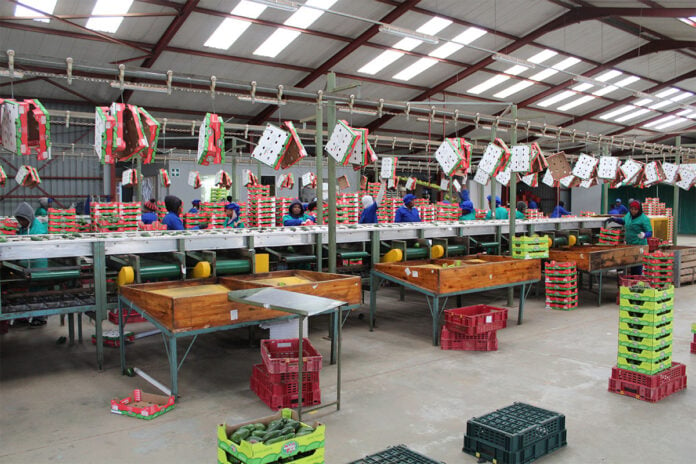
Speaking at the South African Subtropical Growers’ Association (Subtrop) Marketing Symposium held in Skukuza, Mpumalanga, last week, Tracy Davids, a director at the Bureau for Food and Agricultural Policy, highlighted the vulnerability of avocado growers to fluctuations in export prices and freight costs.
She explained that a reduction of just R10 per 4kg carton, equivalent to approximately €0,50, could reduce farmgate revenue by around R17 000/ha.
This sensitivity to relatively small price changes is particularly concerning given that input costs have generally risen faster than inflation and agricultural commodity prices.
Davids said South Africa’s avocado exports had continued to grow, but the increased volumes had not translated into higher rand-based returns in 2026.
“Freight rates have risen sharply, while the strengthening rand eroded the benefits of slightly higher euro-denominated prices achieved this year,” she said.
The pressure was compounded by growing competition in South Africa’s main export markets, particularly from Peru, which remained the dominant supplier during the South African marketing window.
According to Davids, avocado export prices declined by 16% year-on-year in 2025, despite recording average annual growth of 8% between 2021 and 2025.
Nevertheless, she noted that avocado production margins remained healthy, while long-term opportunities for growth persisted. Demand in the EU was still increasing, and the longer-term trend in export prices remained positive despite expanding global supply.
However, Davids warned that South Africa’s heavy dependence on the EU and UK markets remained a significant risk, particularly as growers faced increasingly stringent requirements relating to maximum residue limits of crop protection chemicals and packaging. Closer alignment of UK and EU regulations could also introduce additional compliance challenges for South African producers.
Greater efficiency needed
With input costs continuing to rise, Davids emphasised that improving yields would be essential to maintaining the financial sustainability of horticultural production.
She anticipated that future production growth would increasingly come from higher yields rather than expanding planted areas, given the limited opportunities for further expansion.
“Furthermore, reducing alternate bearing, improving yields, and increasing pack-out percentages are among the most important opportunities to strengthen profitability.
“However, on-farm improvements alone will not be sufficient. The movement of produce from farms to vessels is a major source of cost, risk, and uncertainty, which ultimately reduces farm returns. The cost of doing business needs to be reduced rapidly to maintain the industry’s long-term sustainability,” Davids said.
She added that improved infrastructure and port performance would therefore be critical to ensuring that South African fruit remained competitive internationally.
Selling fruit profitably
The need to shift attention from production growth to marketing returns was echoed by Edrean Ernst, director of information systems at Allesbeste and chairperson of Subtrop, whose address was delivered by Subtrop CEO Derek Donkin.
Ernst reported that South Africa had exported 21 million cartons of avocados in 2026, an increase of 16% on the previous year, supported by favourable growing conditions. However, the larger crop had coincided with difficult marketing conditions.
Fruit from Peru and Brazil, which arrived in the EU earlier than usual, had contributed to an oversupply in that market by week 17, while production from Kenya, Morocco, and Spain had also increased.
Ernst cautioned that securing access to new markets did not necessarily translate into meaningful sales. India and China, for example, had imported only a handful of containers, while India’s 30% import tariff remained a significant obstacle.
He emphasised that the industry’s priority needed to shift towards creating demand and supplying fruit that consistently met consumers’ expectations.
“Growing more fruit is no longer our main challenge. Selling it well is,” Ernst added.
Davids similarly highlighted the importance of diversifying export destinations to reduce reliance on traditional markets. She explained that although exports to destinations such as Russia, the United Arab Emirates, and the Philippines were growing, they remained relatively small.
However, Davids cautioned that expanding into the EU and other markets would not be easy in an increasingly competitive global environment.
For growers, the challenge would therefore be to combine greater on-farm productivity with improved market returns and lower supply chain costs, ensuring that higher production volumes translated into sustainable profitability, she concluded.