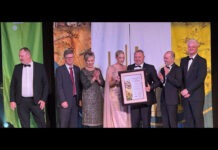

The congress agenda included infrastructure maintenance and disaster management, particularly for drought, foot-and-mouth disease (FMD), and fuel shortages. Producers raised pressing issues around diesel and fertiliser availability, as the wheat planting season was under way.
In his address, AWC CEO Jannie Strydom updated delegates on progress with disaster management protocols for maintaining drought management infrastructure, as well as the current fuel and fertiliser crises.
Strydom opened with AWC’s plan for drought assistance on farms. He explained that regional agricultural organisation managers can contact AWC to request support for a particular area. It would then approach the Department of Agriculture (DoA) and other industry role players to discuss possible relief measures.
He added that these applications were once limited to drought-prone regions such as the Karoo and Southern Cape but are now open to any regional organisation seeking relief or assistance.
Strydom also addressed queries about Eskom grid maintenance and small-scale embedded generation systems (SSEGs), which many farmers use, particularly solar units. He noted that some units are not properly registered, which can pose serious risks when grid maintenance is carried out.
Lodine Redelinghuys, marketing operations manager at Eskom, said: “We have a backlog of SSEG registrations, but farmers can still submit applications for processing until 30 September, without registration fees.”
FMD status in the WC
Louis Wessels, manager of legal services at AWC, gave a brief overview of the province’s current FMD status, stating that the most notable development between AWC and state entities is the implementation of 24/7 traffic monitoring by the Western Cape Traffic Department in and around high-risk FMD areas.
He explained that traffic officers stop every vehicle transporting livestock to ensure transport documentation is in order.
“The major roadways entering the Western Cape must have checkpoints. To keep the disease under control in the Western Cape, we must monitor the livestock entering and exiting the province,” Wessels added.
Fears over fuel and fertiliser
The two most pressing concerns for representatives were fuel and fertiliser availability, given import halts and supply chain disruptions linked to the conflict in the Middle East.
Producers remain anxious about future fuel supply and potential price spikes, as many farmers are either unable to continue operations or are depleting their existing reserves.
“AWC was present at the Western Cape Disaster Management Centre meetings, where the Fuel Industry Association of South Africa ensured us that the reserves were stable, yet co-ops informed us that they were not receiving any fuel,” Strydom said.
He explained that this has caused delays for many farmers and severely affected their operations, especially grain producers who are now entering planting season.
Strydom added that co-operatives have been receiving diesel since 1 April, but noted a backlog of at least two weeks, meaning not all fuel stations have received the necessary supply.
He said AWC will distribute questionnaires to members to determine how many producers are still experiencing fuel shortages in their area, with the aim of gathering clear evidence to raise the concern with the DoA.
Strydom also reminded congress members that, from 1 April, diesel rebates can be claimed on 100% of eligible use, up from the previous 80%.
Issues of fertiliser costs and availability go hand in hand with those of fuel. Prices have spiked significantly due to shipping disruptions through the Strait of Hormuz. Countries such as Qatar are major producers of raw materials such as urea and cannot get shipments through the strait.
Congress representatives questioned why the DoA does not negotiate directly with producers.
AWC President Villiers Loubser said: “As of now, we have little to no availability of imported fertiliser. Our biggest challenge lies not only in the planting season but also in what follows, including soil maintenance.”
Grain SA regional manager MJ Swart added that Grain SA has approached the Fertiliser Association of South Africa to request greater transparency on imports and projected supply outcomes, but has yet to receive feedback.