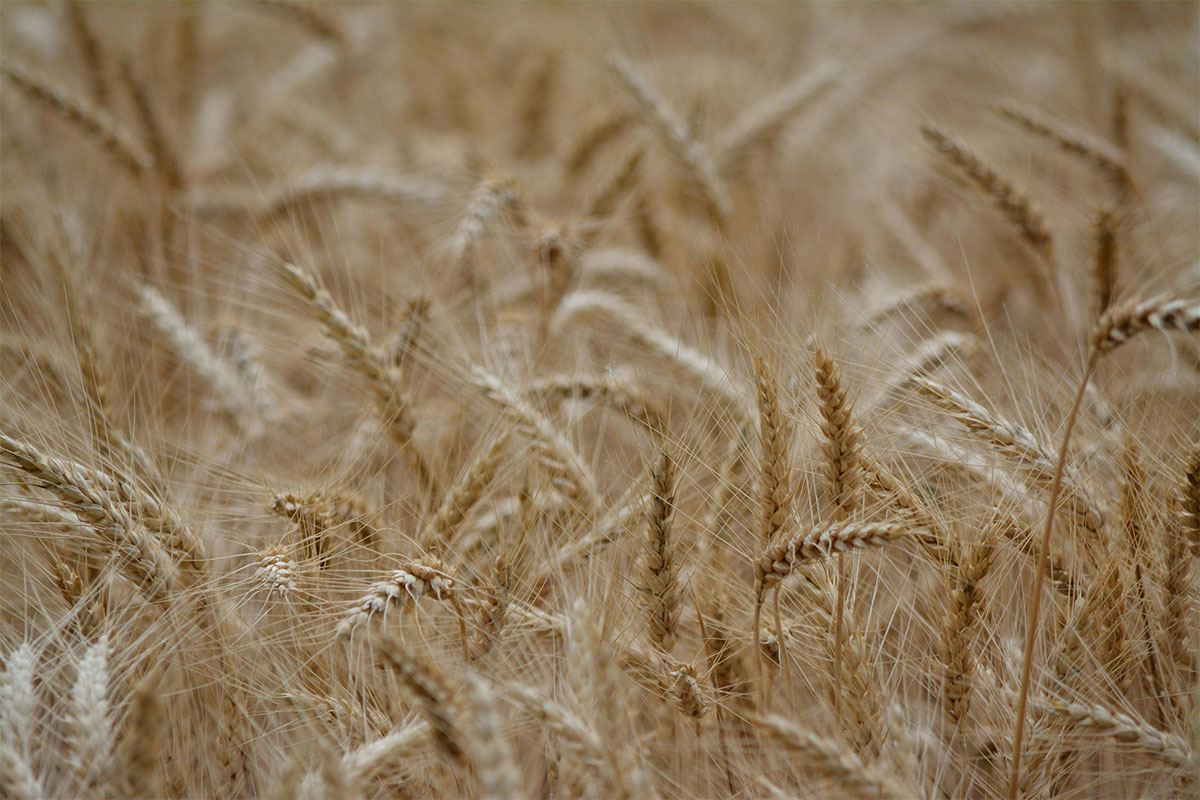
According to the Crop Estimates Committee’s (CEC) 2026 winter grain intentions to plant report, wheat plantings are expected to decline by around 6% to 486 400ha this season.
Thabile Nkunjana, a senior agricultural economist at the National Agricultural Marketing Council, said multiple global shocks continue to place pressure on input costs for local producers.
“Several shocks in the input value chain, including the [war] in Ukraine, [higher] global shipping costs, and now the conflict in the Middle East, mean that input prices remain high. Wheat producers must factor this into their area planting decisions for the upcoming season, alongside climate conditions such as El Niño and competition from alternative winter crops like barley, canola, and oats,” he told Farmer’s Weekly.
These pressures come amid abundant global wheat supplies, which are weighing on local and international wheat prices. At the end of April, South African wheat was trading at R5 700/t, a year-on-year (y/y) decline of around 8%.
Farmers shift to alternative crops
Wandile Sihlobo, chief economist at Agbiz, said in a recent newsletter that wheat farmers are under greater strain than those who produce other winter crops.
“South Africa’s winter crop farmers face a challenging start to the 2026/27 production season. Lower commodity prices resulting from ample global wheat supplies are one challenge. But the sharply higher fuel and fertiliser prices are an even more pressing challenge,” he said.
He added that while wheat plantings are expected to decline, farmers are increasingly shifting towards alternative winter crops with stronger profitability prospects.
“The 2026/27 canola plantings could increase by 8% from the previous season to 189 175ha. This will be the largest canola planting on record, also because of the switch from the typical wheat-growing regions as farmers seek higher profitability.”
Barley plantings are expected to increase by 5% y/y to 101 900ha, while oats plantings are forecast to rise by 10% to a record 39 000ha.
Dependence on imports raises concerns
Nkunjana said South Africa’s dependence on imported wheat continues to complicate the situation, noting that the country imports about 50% of its annual wheat consumption, estimated at approximately 1,85 million tons for the 2025/26 marketing year.
He explained that this reliance on imports leaves the country vulnerable to global price shocks and undermines local competitiveness.
“In the 2003/04 marketing year, South Africa started importing more than one million tons of wheat. Prior to that, the average annual [volume] imported was 458 518t. A decrease in area plantings and an increase in consumption led to the jump in imports,” he added.
Local farmers compete against heavily subsidised producers
In addition, Nkunjana said local wheat farmers receive far less government support compared with competitors in major wheat-exporting countries.
“In 2023, South African farmers growing wheat under irrigation each received US$808 (around R15 160) in agricultural support, whereas farmers in major wheat-exporting markets such as Australia, the EU, the US, and Canada received between US$7 251 (R136 070) and US$134 142 (R2,5 million),” he explained.
“As a result, local wheat farmers become unprofitable, and the industry’s capacity to compete is affected.”
Global surplus weighs on prices
Sihlobo added that the global wheat surplus has significantly contributed to weaker prices.
The International Grains Council forecasts global wheat production for the 2025/26 season at a record 845 million tons, up 5% y/y, driven by large harvests in regions such as the EU, Russia, the US, Canada, Australia, Ukraine, Argentina, China, and India.
Global stocks are also forecast to increase by 10% to 289 million tons, adding further pressure on prices.
While the outlook may be difficult for producers, lower wheat prices may offer some short-term relief to consumers. However, economists warn that continued pressure on profitability could threaten the long-term sustainability of South Africa’s wheat industry.
More clarity on actual winter crop plantings is expected when the CEC releases its preliminary area estimates on 28 July 2026.