
Based on current fuel price indications, diesel with 0,05% sulphur content is expected to decrease by 88c/ℓ, and diesel with 0,005% sulphur content by 95c/ℓ.
Speaking to Farmer’s Weekly, Grain SA agricultural economist Gerhard Burger said the diesel price drop should be viewed as operational relief rather than a game changer for farm margins.
“The price drop on its own won’t transform profit margins, but it will provide much-needed cash flow relief for farmers, especially during harvesting and land preparation,” he explained.
He added that the farmers who stand to benefit most are those with highly mechanised production systems reliant on diesel-powered infrastructure.
“These are typically irrigation farmers using diesel pumps. Farmers located far from silos also face higher transport costs and will benefit greatly from cheaper fuel.”
However, Burger cautioned that the price decrease is unlikely to trigger major changes in planting, harvesting, or mechanisation strategies.
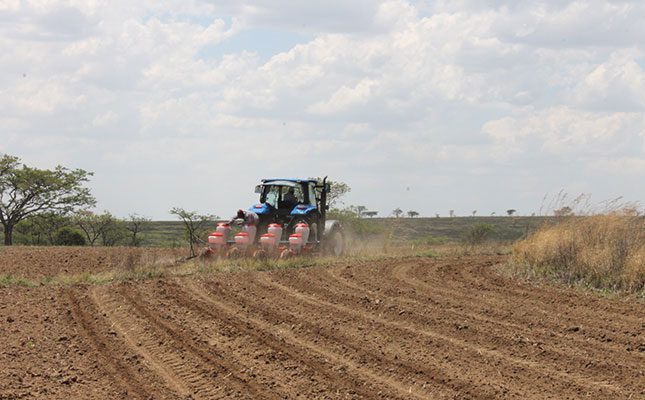
“Diesel usage on a farm is generally inelastic, and producers already try to keep fuel consumption as low as possible. Lower fuel prices may encourage timely harvesting, reduce the temptation to delay operations due to costs, and support optimal tillage or planting practices rather than cost-cutting shortcuts,” he explained.
In this context, he added that the diesel price cut is an enabler of efficient operations, rather than a driver of new investment decisions.
Transport and logistics relief remains constrained
Burger said the impact on transport and logistics costs is expected to be limited. Farmers who own their own transport fleets may see immediate benefits, while those relying on contracted transport could experience only partial or delayed savings.
“Typically, a decrease in fuel prices provides some relief, but it does not lead to a significant overhaul of logistics costs. Reductions in contracted transport depend on agreements with service providers,” he explained.
He added that deeper structural challenges remain: “Poor road quality and other infrastructure constraints continue to add to costs. While lower diesel prices help, they are not enough to significantly reduce overall transport and logistics expenses.”
Burger also warned that farmers should not assume the lower prices will last.
“Diesel and oil are imported, making prices highly sensitive to exchange rates, global oil markets, and geopolitical decisions. Farmers should treat this as short-term relief, not a new baseline,” he said.
Planning decisions should continue to account for potential price increases, particularly during periods of rand weakness or as winter approaches.
Fertiliser, electricity costs still bite
Compared with other major input costs, the diesel price reduction offers only partial relief.
“Diesel savings do not offset fertiliser costs, which remain structurally high and volatile, or electricity costs, which continue to rise well above inflation,” Burger said.
He added that for input-intensive production systems, increases in fertiliser and electricity prices still outweigh any diesel savings.
Regarding overall profitability, Burger expects the impact to be modest but meaningful.
“For most farmers, the benefit will be welcome. It can help protect profit margins but is unlikely to significantly increase them. The real drivers of profitability remain yields, local and international commodity prices, and rainfall and weather patterns,” he concluded.