According to a media statement issued by the Free State Department of Agriculture, Rural Development and Environmental Affairs (the department) on 17 July, the latest clinically confirmed cases were detected in the Boshof state veterinary area (two cases) and the Smithfield state veterinary area (six). This brings the total number of confirmed cases in the province to 687 across 19 local municipalities.
The department said 181 outbreaks had been successfully resolved, with affected properties meeting all the requirements for quarantine to be lifted following the prescribed disease control measures.
The highest number of confirmed outbreaks remains in the Kroonstad state veterinary area (119), followed by Heilbron (94), Frankfort (74), Bethlehem (67), Sasolburg (64), Ladybrand (46), Boshof (44), Welkom (43), Warden (43), QwaQwa (29), Bultfontein (25), Smithfield (16), Bloemfontein (12), Fauresmith (eight), and Thaba ‘Nchu (two).
Despite reported progress with the vaccination campaign, Free State Agriculture (FSA) says the outbreak has not yet reached a turning point.
“It is still spreading,” Dr Jack Armour, commercial manager at FSA, told Farmer’s Weekly.
More than 1,2 million cattle vaccinated
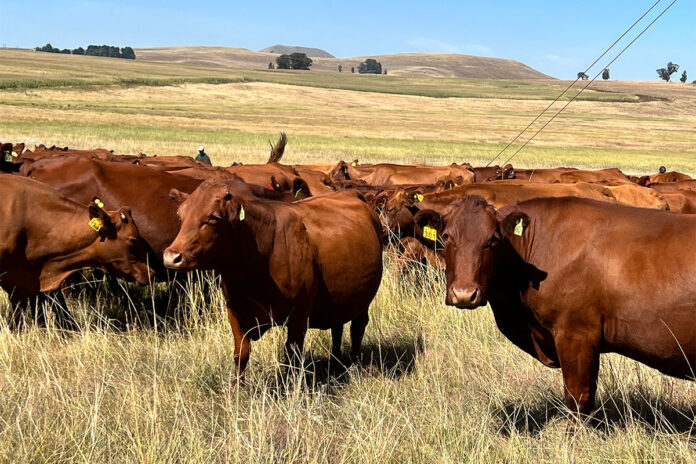
The department said that to date, 1 252 160 cattle had been vaccinated with either the Biogénesis Bagó or Dollvet vaccines as part of the national risk-based vaccination strategy.
The campaign continues to prioritise infected farms, neighbouring properties, epidemiologically linked premises, and other high-risk areas identified through veterinary risk assessments.
The department acknowledged that vaccine availability remains limited, adding that applications for vaccination continue to exceed its current capacity. Nevertheless, it encouraged producers to continue submitting vaccination requests to assist with future vaccine allocation and planning.
Armour said that while the vaccination programme has likely slowed the spread of the disease, he believes a faster rollout could have prevented many outbreaks.
“It most probably has [slowed the spread], but if it was done better and quicker, with more vaccine available, it would have prevented many animals and areas from being infected,” he added.
Under-reporting is a concern
In its statement, the department expressed concern that some livestock owners still fail to report suspected FMD cases, despite this being a legal requirement under government’s national FMD control measures gazetted on 8 July.
The department warned that failure to report suspected infections compromises disease surveillance, delays quarantine and control measures, limits vaccine planning, and increases the risk of further spread. It also noted a decline in compliance with basic biosecurity measures on some farms.
Armour agreed that under-reporting remains a significant problem.
“We are quite sure that, unfortunately, many farmers don’t report, jeopardising their neighbours and the campaign in general,” he said.
He attributed this to several factors, including the financial impact of quarantine, the perception that animals grazing on open pasture often recover with limited production losses, the stigma associated with reporting outbreaks, fear of lengthy movement restrictions, opposition to vaccination among some producers, and a growing mistrust fuelled by misinformation.
Biosecurity and economic pressure
According to Armour, state veterinarians have identified poor biosecurity practices on farms operating across multiple properties as an important contributor to the spread of the disease.
“The state vets report that the big spreaders are farmers with multiple farms who drive from one farm to the other without applying biosecurity,” he said.
The department has urged livestock owners to report suspected cases immediately, isolate affected animals, restrict farm access, maintain strict cleaning and disinfection protocols, obtain the necessary permits before moving cloven-hoofed livestock from quarantined premises, and keep accurate identification, vaccination, and movement records. It stressed that these legally enforceable measures remain essential for containing the outbreak.
Armour added that the prolonged quarantines have had a severe economic impact on many producers.
“Many farmers’ associations and stud breeders have had to cancel regular annual sales, hugely affecting cash flow,” he said.
He explained that producers without alternative farming enterprises have been particularly hard hit, with some forced to market livestock under Red Cross permits at substantially reduced prices while their grazing was depleted and animals lost condition.
Booster vaccination delays persist
Regarding booster vaccinations, Armour said ensuring cattle receive them on schedule is one of the livestock industry’s biggest concerns.
He explained that current capacity to administer booster and follow-up vaccinations remains inadequate, noting that cattle vaccinated with the Botswana Vaccine Institute vaccine should receive a booster within approximately four months if they are not slaughtered.
He added that FSA is aware of a dairy herd in the province where vaccinated cattle later became infected after not receiving the required booster dose.
Armour urged producers not to become complacent.
“It is each farmer’s responsibility to maintain their own biosecurity. Even if the virus can spread by air and it may be inevitable that it gets to you, applying biosecurity measures still reduces the chances significantly and makes your own product safer and more saleable. It’s good management practice going forward regardless,” he said.