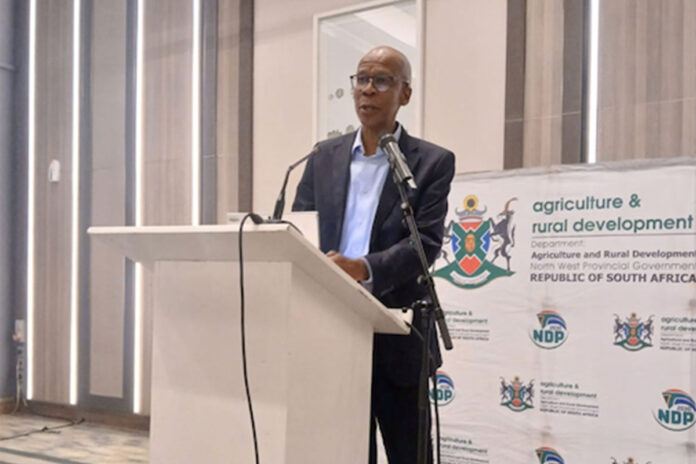
Addressing delegates at the two-day South African Bee Industry Organisation’s (SABIO) BeeCon 2026 event at Sun City, North West, on 30 June, Department of Agriculture Director-General Mooketsa Ramasodi said the strategy will strengthen the entire beekeeping value chain, from pollination services and honey production to research, environmental conservation, and export development.
“The department is committed to ensuring that the South African beekeeping industry remains resilient, competitive, and sustainable,” he said, adding that the National Beekeeping Strategy is expected to be finalised during the 2026/27 financial year following extensive consultation with industry stakeholders.
Ramasodi described beekeeping as a strategic industry underpinning food security, agricultural productivity, and rural economic development.
Honeybees pollinate an estimated 80% of South Africa’s fruit crops, with managed colonies often doubling yields in commercial orchards.
He warned, however, that the industry faces mounting pressure from habitat destruction, declining forage resources, climate change, pests and diseases, environmental contamination, and other human-induced threats.
“If left unaddressed, these challenges could undermine both agricultural productivity and ecological stability,” he explained.
Disease management takes priority
Among the department’s immediate priorities is combating American foulbrood (AFB), a bacterial disease threatening honeybee colonies around the world.
Ramasodi said the department has commissioned and funded the Agricultural Research Council to conduct a national survey of AFB to determine its prevalence and impact in South Africa. The research will support the development of both an AFB management strategy and the broader National Beekeeping Strategy.
Beyond disease management, the strategy proposes sweeping reforms to strengthen the industry. Key interventions include creating a more coherent legislative framework covering bee diseases, biosecurity, honey quality standards, pollination services, imports and exports, and measures to combat honey adulteration. The department will also consider dedicated national bee legislation to provide greater regulatory certainty.
Institutional support will be strengthened through expanded extension services, dedicated bee industry officials, ongoing technical training, and improved coordination between national, provincial, and local authorities.
To improve industry governance, the department also proposes establishing an apicultural advisory committee to advise both the bee industry and the minister of agriculture on matters affecting the former.
Research and market access
Research will be one of the strategy’s central pillars. Priority areas include AFB management, challenges associated with the Cape honeybee (Apis mellifera capensis), bee forage development programmes, pollination research, and capacity building throughout the value chain.
Recognising growing concerns about product integrity and export competitiveness, Ramasodi said South Africa also requires accredited laboratory capacity for bee disease diagnostics, honey testing, adulteration detection, pesticide residue analysis, and export certification. Finalising a national residue monitoring plan will further strengthen access to international markets.
The strategy also proposes establishing a honey value chain round-table forum and reviving formal engagement between the department and SABIO to improve collaboration across the industry.
Long-term sustainability
Ramasodi acknowledged that the loss of bee forage, as well as hive theft and vandalism, continue to undermine the industry’s growth. He said the department will intensify training for extension officers and work with the industry, research institutions, and other government departments to address these challenges while reviewing legislation affecting the industry.
Concluding his address, he said beekeeping should no longer be viewed as a peripheral agricultural activity.
“The future of our food systems, biodiversity, agricultural productivity, and environmental sustainability is inextricably linked to the health and survival of honeybees,” he said.