
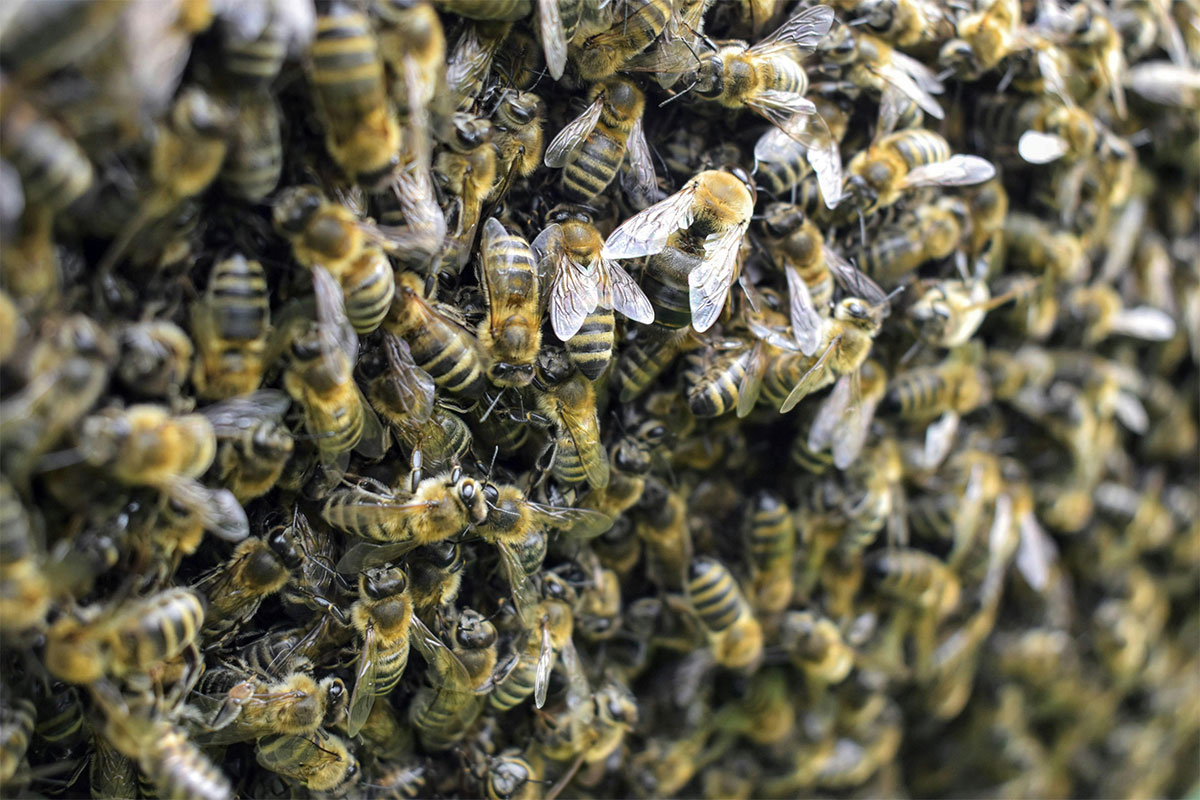
Concerns are growing that reduced access to diverse and reliable forage is weakening colony resilience, increasing dependence on supplementary feeding, and exposing structural vulnerabilities in the commercial pollination system.
Speaking to Farmer’s Weekly, Mike Allsopp, senior researcher at the Agricultural Research Council, said there is limited direct monitoring of forage availability in relation to beekeeping activity, so researchers must rely on long-term production trends to track changes.
“In South Africa, honey production has declined by approximately 70% over the past 40 years, despite a significant increase in managed honeybee colonies. This suggests that forage availability has dramatically declined over this period, probably across beekeeping regions,” he said.
He added that declining forage is already affecting colony health and placing additional strain on beekeeping operations.
“The decline in forage leaves colonies food-stressed, requiring substantial periods of carbohydrate and protein supplementation to sustain them, placing great pressure on beekeeping and pollination services.”
Weather stress on bee forage systems
Allsopp explained that while changing weather patterns are influencing floral cycles and nectar flows, extreme weather events, such as increasingly common flooding and fires, have a far greater effect on bee forage and colony losses.
He added that shifts in vegetation patterns are reshaping the relative importance of key forage sources.
“The loss of vast swathes of Eucalyptus in South Africa has resulted in the remaining gums being even more critical in sustaining bees and beekeeping in South Africa. In the Western Cape, fynbos has become a critical resource in sustaining bee numbers, and crops like canola and sunflower are critical in sustaining colony growth and reproduction,” he said.
Risk to commercial pollination systems
Allsopp added that the long-term implications could be severe for agriculture if forage decline continues unchecked.
“The decline in forage in South Africa places the entire commercial pollination industry at risk, with beekeepers across the country struggling to find safe and sustainable sites for their bee colonies,” he said.
“The entire commercial beekeeping industry is extremely vulnerable, and its collapse would have a dramatic impact on agriculture in South Africa.”
He said a coordinated national response is urgently needed: “A national pollination and forage strategy is urgently needed to improve forage security, to the benefit of everyone in South Africa.”
Pressure on small-scale producers
For small-scale beekeepers, the challenges are already visible on the ground. Dawn Noemdoe, founder and beekeeper at HoneyatDawn in Paarl, Western Cape, said declining forage is directly affecting colony recovery, honey yields, and the financial viability of new entrants.
“For smaller producers, declining bee forage directly threatens colony strength and honey yields. My operation relies heavily on wild bee removals. These rescue colonies take considerable time to build up. Low forage availability severely delays this recovery. The alternative supplementary sugar feeding introduces heavy input costs that are incredibly difficult for a new apiary to absorb during its start-up phase,” she explained.
She added that access to land remains one of the biggest hurdles for emerging beekeepers.
“We are consistently competing for space against large, established commercial operations with pre-existing relationships.
“Furthermore, because we do not own the land that our apiaries occupy, any forage enhancement, such as planting bee-friendly cover crops or trees, requires strict landowner approval. This heavily restricts our ability to proactively improve the local ecosystem.”
Despite these constraints, Noemdoe has developed a seasonal forage strategy across multiple landscapes.
“Although regional baseline data is limited, my current operation leverages three distinct seasonal forage zones to maintain colony health. In winter, my hives rely on indigenous fynbos and buchu [Agathosma spp.]. They transition to commercial canola fields during flowering, before finishing the cycle on local Eucalyptus stands,” she explained.
“Partnering with landowners for mutually beneficial foraging access is the only way forward for emerging producers in the agriculture sector, but it took me a year to access these three sites, and it is still not ideal for my bees to thrive,” Noemdoe concluded.